
Rep. Sharice Davids’ work around the 2026 FIFA World Cup shows why host-city leadership cannot begin at kickoff. By the time fans arrive, teams check into base camps, buses start moving, and stadium gates open, the real leadership test has already been underway for years.
Kansas City’s World Cup role made that clear. The region hosted six matches, served as a home base for four national teams, and entered the tournament with expectations of roughly $650 million in economic activity. Those numbers made Kansas City one of the most important U.S. World Cup case studies, especially because it was the smallest host market in the North American tournament footprint.
Davids, who represents Kansas’ 3rd Congressional District, helped frame that opportunity through the Congressional FIFA World Cup 2026 Caucus. Her work connects federal coordination, local infrastructure, public safety, transportation, small-business readiness, and long-term community benefits. That makes the story a natural fit for the Leadership category at aplevante.org, where sports infrastructure is not only about venues, but about the people and systems that prepare communities for global events.
It also fits the broader discussion around World Cup 2026 infrastructure planning. The World Cup is a stadium event on the surface, but its most important civic lessons often appear in the streets, buses, clinics, security plans, neighborhood businesses, and public agencies that make the event work.
Why The World Cup Caucus Matters Beyond Washington
The Congressional FIFA World Cup 2026 Caucus may sound like a policy detail, but it speaks directly to how mega-event leadership actually works. No host city can manage the World Cup through local enthusiasm alone. The event touches transportation, security, immigration, health care, tourism, commerce, emergency management, and international coordination.
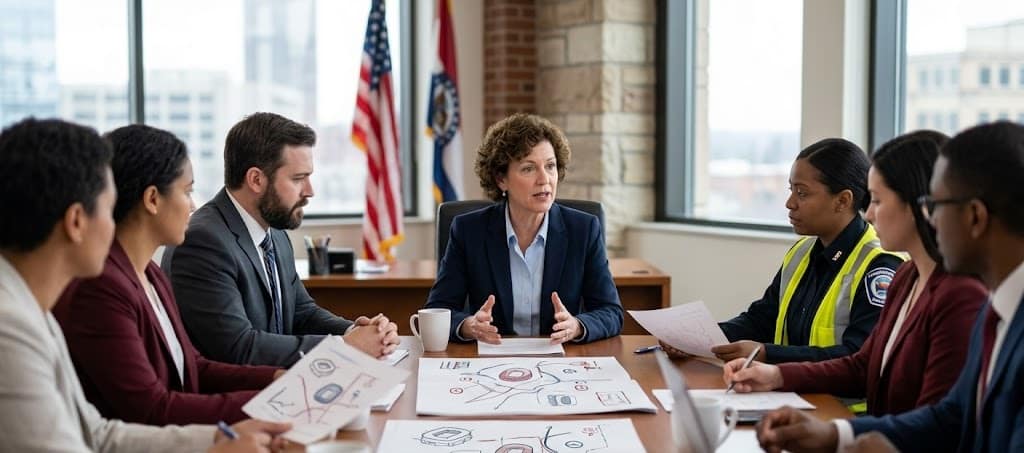
That is why Davids’ role matters. By founding and co-chairing the caucus, she helped create a federal forum for World Cup preparation before the event became a daily headline. Her office’s World Cup remarks emphasized Kansas City’s six-match role, four national-team base camps, and expected regional economic impact.
The leadership lesson is that preparation has to start long before visitors land. A World Cup host city needs a federal-local bridge because the tournament brings international pressure to local systems. Stadium operators can manage the venue. Local governments can manage streets and services. But the federal layer matters for security funding, border coordination, federal agency cooperation, and national-level planning.
Davids’ caucus work shows that leadership is not only standing at a podium during the tournament. It is convening people early enough that public agencies and local partners are not improvising under pressure.
How Kansas City Became A Regional Infrastructure Test
Kansas City’s World Cup assignment was never just about one stadium. FIFA’s Kansas City host-city schedule placed six matches at Kansas City Stadium, including a high-profile knockout-stage role. But the operational footprint reached far beyond matchdays.
Kansas City also served as a base-camp region for four national teams. That meant the metro area had to support training facilities, hotels, team security, diplomatic coordination, fan movement, media attention, and local transportation across multiple weeks. A team base camp is not a ceremonial title. It creates daily operational demands.
Kansas Reflector reported that the area’s World Cup preparation included a major transportation expansion, temporary diplomatic offices, and dedicated health-care infrastructure to support visitors. That is the kind of detail that defines real sports leadership. It is less glamorous than a full stadium, but more important for whether a host region functions.
The World Cup also exposed Kansas City’s regional character. The event moved across Missouri and Kansas systems, bringing together local governments, state agencies, federal offices, tourism groups, police departments, health systems, transportation providers, and private partners. In that environment, leadership is coordination.
Davids’ role was important because she helped articulate the event as a regional opportunity rather than a one-day spectacle. The question was not only whether Kansas City could host soccer. The question was whether the region could use soccer to strengthen infrastructure and civic readiness.
Why Transportation Became A Leadership Issue
Transportation is where World Cup leadership becomes visible to every visitor. Fans may not notice the months of meetings that shaped a route, but they immediately notice if buses are late, signs are unclear, airport connections are weak, or matchday traffic overwhelms local streets.
That is why Kansas City’s ConnectKC26 plan became a central part of the host-city model. KC2026’s official transportation network was designed to move visitors and residents to the airport, matches at Kansas City Stadium, the FIFA Fan Festival, and regional attractions. The goal was not only to get people to games, but to make a spread-out metro area feel navigable for international visitors.
That matters because Kansas City does not function like some denser global soccer cities. It is a car-oriented region with major destinations spread across state lines. World Cup visitors arriving from Europe, South America, Africa, Asia, and elsewhere may not understand local distances, highway patterns, rideshare rules, or matchday access unless the system is clear.
Transportation also affects equity. A host city that relies only on cars risks making the tournament harder for residents without easy vehicle access. A better plan creates options for fans, workers, volunteers, and locals who need to move around during the tournament.
Davids’ earlier World Cup Community Conversation on transportation showed that leadership starts by asking these questions before the crowds arrive. That is the difference between event management and infrastructure leadership.
How Public Safety Planning Moved From Security To Community Readiness
Public safety is another area where leadership has to begin early. A World Cup host city needs police coordination, emergency medical planning, crowd management, severe-weather procedures, visitor communication, and health-care readiness. It also needs those systems to feel welcoming rather than intimidating.

Davids’ office highlighted public health and safety planning as part of its World Cup Community Conversation series, bringing together local, state, regional, and federal leaders with public agencies and community experts. The public health and safety conversation included emergency management, police departments, hospitals, public health departments, and federal security partners.
That kind of planning shows how World Cup leadership has changed. Public safety is no longer only about matchday policing. It includes hospital capacity, heat planning, visitor information, language access, crowd movement, and coordination among agencies that may not normally operate together at this scale.
Congress also passed $625 million to support safety and security efforts in World Cup host cities after a bipartisan push from Rep. Davids and Rep. Emanuel Cleaver. That federal funding matters because host cities should not be asked to absorb global-event security demands with ordinary local budgets.
The leadership lesson is clear: if a city waits until the tournament begins to solve public safety questions, it is already behind. Davids’ approach treated safety as a planning ecosystem, not an emergency reaction.
Why Small Businesses Needed A Seat At The Table
World Cup leadership also includes the local economy. Mega-events often promise business impact, but that impact depends on preparation. A restaurant, hotel, shop, vendor, shuttle company, or neighborhood business cannot benefit fully from the World Cup if it does not know when fans are coming, where they are moving, and what operational changes to expect.
Kansas City’s projected economic impact made small-business readiness especially important. Davids’ early Community Conversations were designed to address not only transportation and safety, but also small-business needs and regional coordination. That matters because local businesses are often asked to absorb the disruption of a mega-event while larger institutions capture the biggest visibility.
The right leadership model brings those businesses into planning early. It helps them understand visitor patterns, event schedules, language needs, staffing pressure, payment systems, parking changes, security perimeters, and marketing opportunities. It also gives them time to adjust inventory, hours, and staffing.
For Kansas City, this was not just about downtown matchday spending. With four national teams based in the region and visitors moving across multiple communities, the economic opportunity extended into hotels, restaurants, retail districts, training-site areas, and fan gathering spaces.
That is why Davids’ caucus and community-conversation model matters. It treated the World Cup as a regional small-business challenge, not only a stadium windfall.
What Johnson County United Added To The Leadership Model
Johnson County United added another layer to the regional leadership story. The initiative brought local leaders together to coordinate planning and community engagement ahead of the World Cup, with Davids participating as part of her broader work connecting federal, state, and local partners.
The Johnson County United launch shows why World Cup preparation could not be contained inside Kansas City’s stadium district. Visitors, teams, workers, and media move through a region. Training facilities, hotels, restaurants, neighborhoods, and civic services all become part of the event footprint.
This is where leadership becomes less about one title and more about distributed responsibility. Johnson County leaders, Kansas City planners, state agencies, transit providers, hospitals, businesses, and federal offices all had to understand their role. The caucus created a policy bridge, but regional initiatives created the ground-level coordination.
That model is especially important for future U.S. events. The United States is built around metro regions, not only central cities. A World Cup match may be assigned to one host city, but the operational burden often spreads across counties, suburbs, airports, training facilities, and business districts.
Kansas City’s example shows that leadership starts by acknowledging that geography.
Why Leadership Starts Before The First Match
The phrase “leadership starts before the first match” is not just a slogan. It is the main lesson from Davids’ World Cup work.
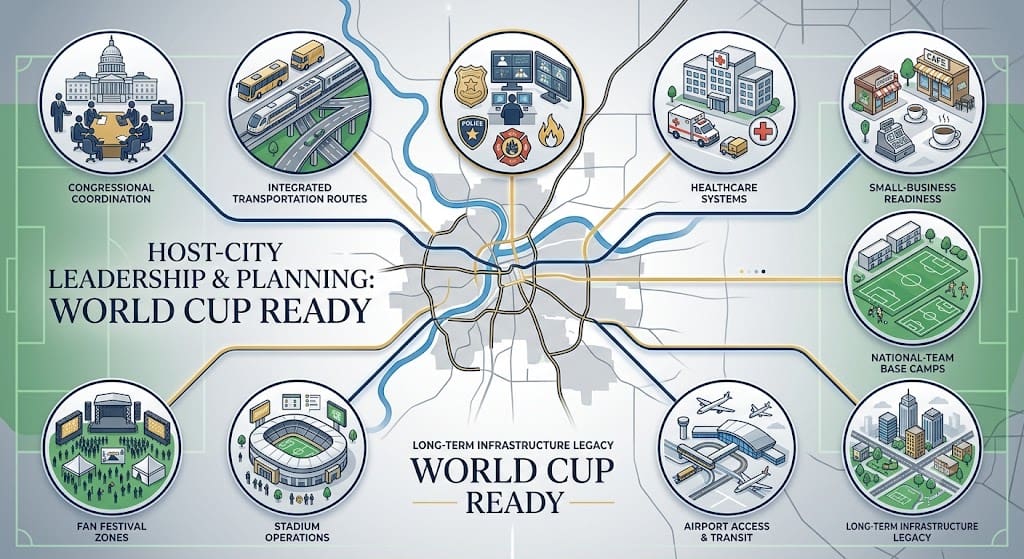
By the time the first whistle blows, host cities need transportation plans, health systems, public-safety coordination, small-business outreach, fan information, volunteer structures, emergency protocols, federal partnerships, and economic-development strategies already in motion. The first match should be a test of planning, not the beginning of it.
Davids’ approach shows how elected leadership can support sports infrastructure without turning the story into politics-first content. The caucus was useful because it helped align institutions around a sports event that had real civic consequences. The strongest version of that work is practical, regional, and measurable.
Kansas City’s World Cup role proved that the smallest host market can still become a leadership model if it prepares early and coordinates widely. The region did not only host matches. It built transportation systems, coordinated public safety, planned for health needs, supported team base camps, and positioned the tournament as a long-term economic and civic opportunity.
That is the leadership lesson for future U.S. host cities. The World Cup rewards the cities that understand the event before the world arrives.
What Other Host Regions Can Learn From Kansas City
Kansas City’s experience offers a useful blueprint for future sports infrastructure planning. First, host regions need federal-local coordination early, especially for events with international scale. Second, transportation should be treated as a core part of fan experience, not an afterthought. Third, public safety must include health care, emergency response, heat planning, crowd flow, and communication. Fourth, small businesses need preparation time if they are expected to benefit from visitor spending.
The final lesson is that leadership should leave something behind. The value of the World Cup should not disappear after six matches. Transportation knowledge, public-safety coordination, regional business networks, international-hosting experience, and civic confidence can all become part of the region’s long-term sports infrastructure.
Rep. Sharice Davids’ World Cup Caucus matters because it shows how that legacy begins. It begins before the first match, before the first flight arrives, before the first fan boards a tournament bus, and before the first national team steps onto a training field.
For Kansas City, the World Cup was a global soccer event. For U.S. sports infrastructure, it was also a leadership exam. Davids’ work shows that the best host cities start taking that exam years before the scoreboard turns on.