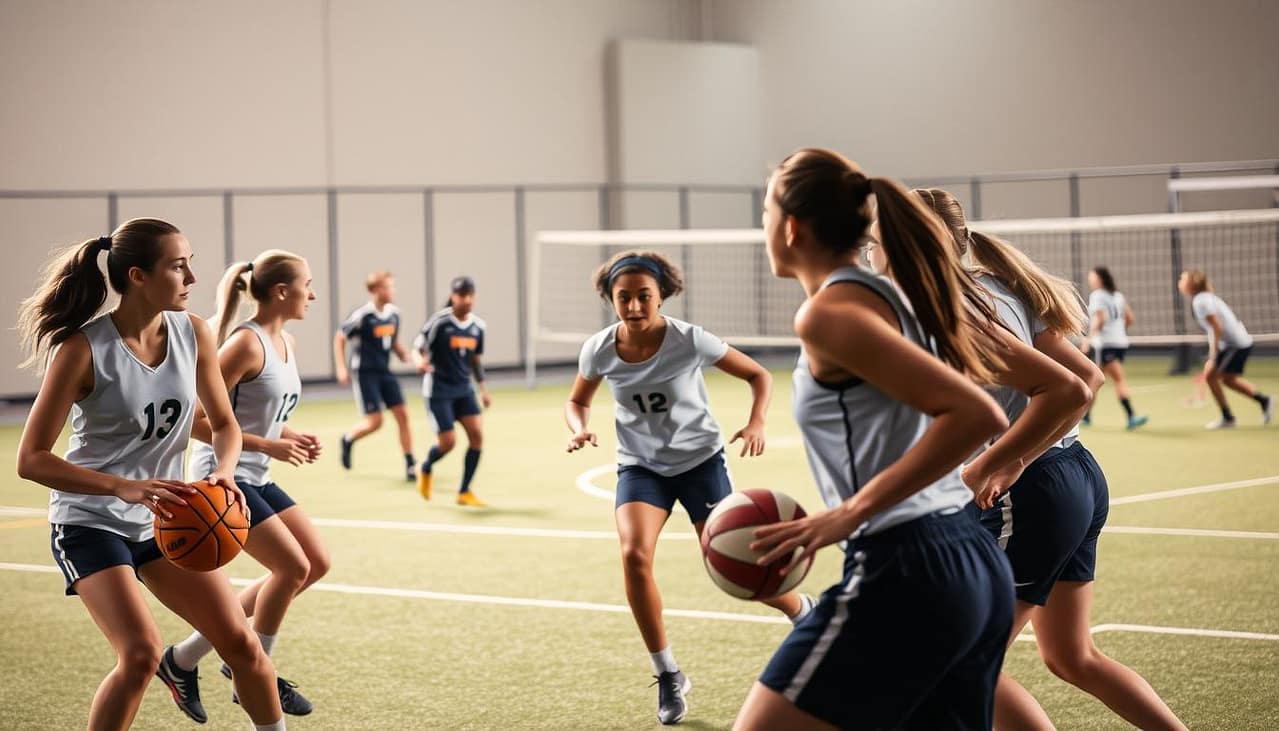
Imagine a world where we created synthetic grass to make competition fair. But then we forgot about the real grass. This is the joke of equity in sports, where old barriers stay even after years of “progress” that feels fake.
Canadian Women & Sport’s new plan is to shine a light on this issue. They compare it to stars in the dark, showing how systems can block our way instead of guiding us.
Their $1.8 million grants program wants to help sports groups grow. But let’s get real. What does “capacity-building” mean when athletes face barriers in the locker room? It’s not just about equal pay. It’s about making sports accessible to everyone.
Inclusion efforts can sometimes push people away. When diversity plans seem like just a formality, are we just showing off trophies? The real change comes from changing the whole system, not just adding a few lights.
As we explore these ideas, let’s think: Who gets to decide the rules in sports? The answer could change what a level playing field really means when we stop looking for fake fixes.
Gendered Barriers to Participation
Imagine showing up to a race where your lane ends at puberty. This is what it’s like for girls in sports. While suburban moms talk about snacks, Indigenous girls face locker rooms without water. The 2022 Rally Report shows that 76% of girls benefit from sports but one in three quits by adolescence. Why do they leave? Let’s look at why they’re excluded.
The gap between suburban and rez areas is huge. White middle-class areas might complain about “participation trophies,” but they have them. In contrast, 55% of Indigenous girls say programs are poor. Menstrual products are seen as contraband, not necessities. (Pro tip: Try a layup while managing tampon supplies.)
The dropout numbers show a harsh truth: sports systems fail girls. Once they turn 14, the support fades. No funding for travel teams, coaches who doubt girls’ competitiveness, and outdated budgets. It’s not just a drop-off—it’s a push away.
Let’s tackle the barriers like a halftime whiteboard session:
- Facility gaps: 43% of rural schools lack girls’ locker rooms
- Transportation traps: 2-hour bus rides for away games
- Hidden costs: $800+ annual fees per athlete in urban areas
These aren’t mistakes—they’re choices. When Title IX is ignored, sports become a privilege, not a right. So, are we building athletes, or just keeping a boy’s club with better hairstyles?
Title IX and Other Legal Policies
Billie Jean King’s tennis legacy and today’s debates over transgender athletes have a common thread. It’s a 51-year-old law that’s been stretched too far. Title IX was meant to break down barriers, not deal with pronouns. Now, we’re arguing if “equal opportunity” means hormone levels, while girls’ programs are cut fast.
The Women’s Sports Foundation guidelines show the law’s original plan. It was to have coed teams when possible, ban sex-based quotas, and fund programs equally. But, some schools, like Alabama, have created “separate but equal” volleyball leagues, which is as voluntary as participation trophies.
Institutions often avoid accountability in three ways:
| Tactic | Example | Outcome |
|---|---|---|
| Ghost Budgeting | Counting male-only football gear as “shared facilities” | Girls’ teams get 23% less funding (NWLC, 2023) |
| Roster Relabeling | Calling cut women’s teams “club sports” | 1 in 3 colleges use this loophole |
| Selective Enforcement | Only investigating schools with Title IX complaints | 82% of violations go unreported |
Recent court battles show the law’s challenges. When Idaho banned transgender girls from sports in 2020, judges compared it to 1960s segregation. They said equity means everyone deserves a seat at the table.
But we shouldn’t idealize the past. Before Title IX, only 1 in 27 girls played sports. Now, 1 in 3 do. We’ve made progress, but we’re not there yet. We’ve traded old sexism for new loopholes – like celebrating a parachute that kind of worked.
Building Women’s & Girls’ Programs
Creating girls’ sports programs is more than just organizing charity events. It’s architectural warfare against years of ignoring girls’ sports. The idea that funding is low because of lack of interest is a myth. When Canada gave 95% of equity-seeking grants to inclusive programs, girls’ hockey participation tripled in just six months. This shows that without fields, you can’t fill teams.
School-community partnerships in sport are the game-changers. Imagine local businesses sponsoring equipment and schools providing facilities. This creates a cycle where success attracts more investment. Canadian Women & Sport’s 10,000 Leaders Initiative shows how this works, turning empty lots into sports hubs. Their success comes from treating community support like an investment that grows over time.
| Funding Model | Success Rate | Key Advantage |
|---|---|---|
| Corporate Sponsorships | 68% Retention | Brand visibility + tax breaks |
| Municipal Grants | 82% Launch Rate | Long-term infrastructure |
| School-Community Partnerships | 91% Sustainability | Shared resources + local pride |
The pink tax in sports gear is another challenge. Why do girls’ cleats cost 18% more than boys’? Smart programs buy in bulk and work with manufacturers for fair prices. Minneapolis’s “KickEqual” campaign cut costs by 40% using this strategy.
When asking for sponsorships, think Mad Men meets Title IX:
- “Empowerment per impression” metrics replacing vanity metrics
- Corporate logos on jerseys traded for scholarship guarantees
- Sponsor “draft picks” highlighting top female athletes
The goal is to make access to funding easier, not a scavenger hunt. When a 12-year-old goalie focuses on her game, not her gear, that’s when greatness starts.
Tackling Stereotypes and Bias
Why do we confuse confidence with aggression when it’s in braids? The Devine/Howe study shows a harsh truth. Racialized girls don’t participate less because they lack skill. It’s because sports culture uses stereotypes like “angry Black girl” or “submissive Asian teammate.”
The “nice girl” complex is a silent killer of athletic dreams. It polices girls’ bodies more than their skills.
Think of the locker room as a cultural lab. Black girls are seen as too intense for assertive play. Asian athletes get praised for being “graceful” for a point guard. These aren’t compliments; they’re microaggressions in sweat-wicking fabric. This leads to a 23% drop in sports participation among Black girls by age 14 compared to white peers.
The Bias Playbook: Three Coaching Fouls
- Mistaking cultural communication styles for attitude problems
- Praising “natural ability” instead of developed skill
- Using Eurocentric beauty standards to judge athleticism
| Stereotype | Reality | Coaching Fix |
|---|---|---|
| “Aggressive” Black athlete | Strategic leadership | Film analysis sessions |
| “Delicate” Asian player | Technical precision | Strength training metrics |
| “Uncoachable” Latina | Passionate engagement | Bilingual play diagrams |
The solution isn’t just sensitivity training. It’s cultural competence as core curriculum. Imagine coaching manuals that treat intersectional awareness like X’s and O’s. “Bias timeouts” during practice film reviews. Recruitment that values community-specific mentorship over generic pep talks.
When Seattle’s Rainier Valley High implemented inclusive coaching practices, their girls’ soccer retention rate jumped 41% in two seasons. Coaches learned to decode cultural cues. They recognized a player’s silent nod as comprehension, not defiance. They stopped confusing protective hairstyles with “unprofessional” appearance. Most importantly, they let athletes define their own competitive identities.
This isn’t about political correctness. It’s about recognizing that every whistle blast echoes societal biases. The court isn’t level until we stop mistaking cultural capital for character.
Promoting Female Leadership in Sports

When men discuss menstrual products in the locker room, we face a leadership issue. Rugby Canada’s “tampon policy fumble” shows why we need more women in charge. It’s time to change the game.
The Problem: Only 22% of NCAA athletic directors are women. Yet, men are leading efforts to address period poverty in women’s sports. It’s like having Vegetarian Times edited by steakhouse chefs – it’s not just awkward, it’s dangerous.
- Rugby Canada’s transgender policy backlash stemmed from excluding athletes in decision-making
- 87% of sports equipment budgets are approved by male-dominated committees
- Only 3 Fortune 500 sports CEOs are women
Our sports equity advocacy toolkit needs a new chapter: From Locker Rooms to Corner Offices. Here’s the plan:
- Create bench-to-boardroom pipelines through mentorship programs
- Extend Title IX to mandate 50% female representation in athletic departments
- Require gender-balanced hiring shortlists for C-suite roles
Why This Works: When the WNBA got Cathy Engelbert as commissioner, revenue soared 67% in three years. Female leaders don’t just solve tampon policies – they bring in new revenue by understanding half the market.
The real power move? Treating leadership parity like playoff brackets – no participation trophies, just enforceable quotas. Because sometimes equality needs a hockey stick to shatter those last glass ceilings.
How to Measure Progress
Let’s get real – equity without data is just fancy confetti. If you’re not tracking measuring inclusion in sports like it’s the NFL combine, you’re in the wrong league. The Canadian Centre for Ethics in Sport (CCES) relies on trust, not spreadsheets, for transgender athlete guidelines. Sport Canada, on the other hand, has a metrics dashboard that tracks everything from who’s benched to who’s scoring.
| Metric | CCES Approach | Sport Canada Approach |
|---|---|---|
| Transgender Participation | “Self-identification” policy | Annual hormone level tracking |
| Resource Allocation | Estimated budget splits | GPS-tracked facility usage |
| Injury Response | Generic concussion protocols | Gender-specific recovery timelines |
The real game-changer is Sports resource mapping that goes beyond counting gear. We’re talking about heatmaps of locker room mirrors and broken showers. It’s about whether female athletes get the same injury comeback stories as men.
And let’s not forget the ultimate metric – Championship Tears Per Capita. When was the last time a women’s team victory was celebrated with the same enthusiasm as men’s? Until we measure the snot-to-medal ratio across genders, we’re just keeping score on a napkin.
Local Champions
You know that scene in Field of Dreams where the voice whispers, “If you build it, they will come”? Turns out, the real magic happens when you steal it, repurpose it, and fill it with screaming tweens playing dodgeball. Meet the unsung architects of community sports facilities equity – the ones turning “closed for business” signs into open-door policies.
Alison Spitzer’s playbook is all about training coaches. But it’s more than that. It’s about creating a team of rural access revolutionaries. Imagine former Walmart cashiers drawing up soccer plays in the electronics aisle. Or retired teachers leading Zumba classes in the toy section. It’s not just urban renewal – it’s suburban judo.
Our map of grassroots glory includes:
- Indigenous basketball leagues transforming residential school sites into courts echoing with resilience
- Detroit’s roller derby grandmas body-checking stereotypes (and occasionally each other)
- Arizona desert towns using abandoned mining equipment as jungle gyms
The secret sauce? Big-box store conversions – the ultimate middle finger to corporate blight. That dead Toys”R”Us? Now a multi-sport hub smelling faintly of nachos and victory. The formula’s simple:
- Secure lease through creative guilt-tripping (“Think of the children!”)
- Salvage shelving for makeshift bleachers
- Profit? Well, not exactly – but you’ll get the best dodgeball arena this side of a post-apocalyptic sports utopia
These local champions aren’t waiting for permission slips from city hall. They’re rewriting the rules of rural access one repurposed parking lot at a time. They prove sometimes, the best way to level the playing field is to build it from the rubble of late-stage capitalism.
Next Steps for Communities
Changing community sports needs sharp strategies. We must move past slow, complex processes. Here’s how to change the game:
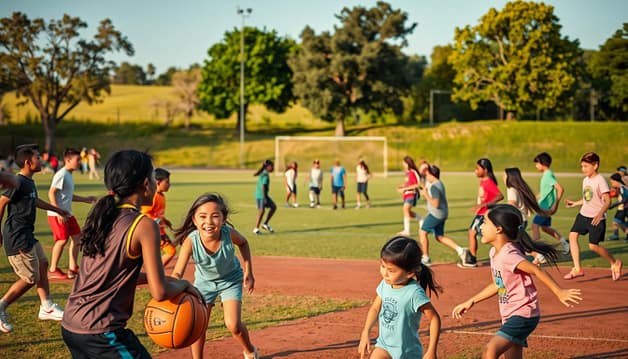
Forget about slow grant applications. 3D-printed adaptive equipment can turn rec centers into innovation hubs. Imagine a volleyball net adjuster for wheelchair athletes, made in minutes. It costs just $12 in filament but changes lives.
Gatekeeper Jujitsu
Why wait for field time? Hijack existing systems instead. In Canada, 63% of girls drop sports by late teens. Introduce “Sports lotteries” to fill spots without traditional sign-ups. Give priority to non-English speakers and offer materials in Spanish, Mandarin, and ASL for better language access.
The Certification Trojan Horse
Now, coaching clinics include equity modules. Coaches learn to be inclusive without realizing it. It’s sneaky but works like a well-timed alley-oop.
Scholarship Swagger
Use 5% of booster club funds for afterschool community sports equity stipends. Give out cash for gear, transit, or babysitting. No 12-year-old should have to choose between sports and school supplies.
The Pop-Up Revolution
Turn old malls into 90-day sports labs. Zoning laws don’t like this idea! Start with parkour, then queer-friendly kickball. Let the community decide what stays. It’s democracy meets dodgeball.
These ideas aren’t just theories. They’ve been tested by rec leagues across the country. The real win is when a girl who 3D-printed her shin guards becomes your nephew’s coach. That’s how we change cultures.
Conclusion
Imagine a world where sports fairness is a given, not a court battle. Title IX’s fight in 1972 is echoed today in debates over transgender policies. The Women’s Sports Foundation predicts a 25% rise in female athletes by 2030. But, numbers alone can’t fix cultural issues.
Real fairness in sports isn’t about DNA tests or laws. It’s about making sure everyone has a chance to play. Serena Williams didn’t need permission to change tennis. The WNBA’s 2023 season showed fans want real sports, not stereotypes.
Progress in sports isn’t always straight. It’s like a relay race. Local leagues are just as important as the Olympics. Let’s focus on creating spaces where everyone can play, like trans kids and seniors.
The real victory isn’t just winning games. It’s about changing the rules for everyone. So, the next time you hear cheers, think: Are they for the leaders or the game-changers? Rings shine brightest when they show the diversity of the crowd.