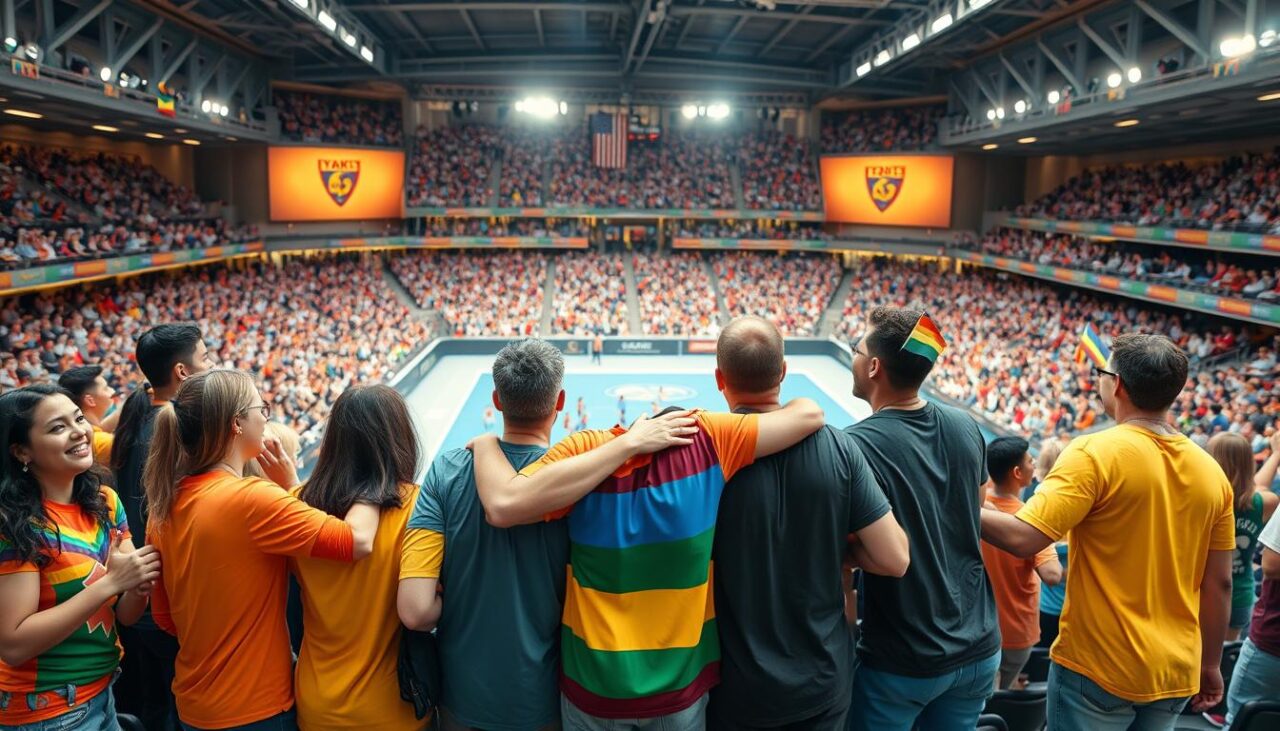
Imagine a soccer field where rainbow captain’s armbands are valued more than old hazing rituals. While pro leagues show off rainbow capitalism during Pride Month, queer teens face a big gap in sports. Only 24% of LGBTQ+ youth play school sports, compared to 68% of others.
This isn’t just about adding glitter to sports gear. It’s about tearing down barriers that feel like a rigged game. Play Proud has trained 3,600 coaches in North America to spot and stop microaggressions quickly. They aim to make locker rooms safe spaces, not places of fear.
In Philadelphia, the Starfinder Foundation has turned sports into a positive space. They work with local LGBTQ+ leagues to help athletes succeed. This shows that access is as important as acceptance. They focus on real allyship, not just pretending to be one.
Changing sports culture begins with the basics. When we stop judging identities and focus on skills, everyone benefits. Even the referees.
The Unique Barriers for LGBTQ+ in Sports
Imagine playing a game where the rules don’t include you. This is what LGBTQ+ athletes face. The HRC says there’s a 24% participation gap between LGBTQ+ youth and others. This gap is huge, like a linebacker’s hit on third down.
Why is this? There are three main reasons. First, policies often favor cissexism over fairness. Second, funding is scarce in areas where many LGBTQ+ youth play. And third, coaching staffs are not as diverse as they should be.
First layer of the oppression cake: It’s not just about bathroom bans. It’s about strict “gender fairness” policies. Trans athletes have to fill out more paperwork than a fantasy football commissioner. Yet, 78% of queer players hear slurs every week, and most leagues don’t track these incidents well.
Second layer? Follow the money. Low-income areas get less sports funding than wealthier ones. Ashland Johnson says it’s like a Hunger Games scenario. Only privileged programs can afford inclusion training.
Third strike: Leadership is lacking. Less than 12% of coaches are openly LGBTQ+. This creates big gaps in mentorship. When there are few visible role models, coming out feels like a tightrope walk without a net.
This isn’t just about overcoming institutional exclusion. It’s about changing the game. Right now, the game is rigged, and queer athletes are given the wrong-sized rings.
Allyship & Creating Safe Spaces
Creating inclusive sports environments is more than just rainbow-colored jerseys. It needs cultural competence sports leadership that changes fast, like a halftime play adjustment. Real change comes when coaches and leagues focus on inclusion like they analyze game film. They study patterns, find weaknesses, and make strategic changes.
The Ally Playbook
The CCGSD’s Trans Allyship Matrix is like a championship playbook for inclusive coaching practice. It turns bystanders into MVPs with a 5-step guide:
- Bench harmful language (no more “you throw like a girl” sideline chatter)
- Audit facility accessibility beyond bathroom signs
- Implement pronoun protocols smoothly
- Train staff using GLSEN’s bias-interruption drills
- Rotate leadership roles to amplify marginalized voices
Portland’s Youth Sports Summit showed this approach works. A soccer coach replaced “red cards” for misgendering with teachable moments. This led to a 63% increase in LGBTQ+ athlete retention in one season. This is the power of call-in culture over call-out politics.
Calling Audibles on Microaggressions
Microaggressions in sports are like illegal formations – subtle but game-breaking. The Nike-GLSEN summit found 78% of queer athletes face “casual” discrimination disguised as locker room banter. Here’s how championship teams adapt:
| Situation | Old Play | New Strategy |
|---|---|---|
| Team nickname usage | “Boys vs Girls” divisions | Skill-based groupings (“Strikers vs Defenders”) |
| Locker room talk | Ignoring transphobic “jokes” | Immediate timeout + education break |
| Parent complaints | “We don’t do politics here” | “Our politics are inclusion – see Policy 4.2” |
This isn’t about political correctness – it’s anti-racism in sports made actionable. When a Texas volleyball team replaced gendered cheers with player-chosen hype songs, game attendance tripled. Communities value authenticity more than old traditions.
Inclusive Team Policies & Language
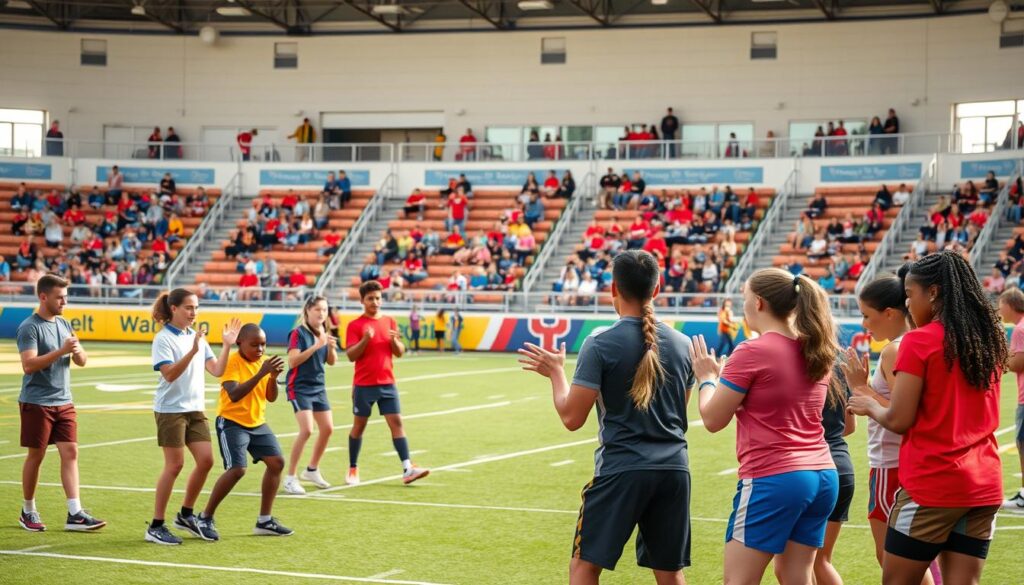
If sports policies were jerseys, most leagues would be wearing old mesh tees. Today, sports need language access sports programming that fits well, like compression shorts. Toronto’s Pan Am Sports Centre knows this, with their pronoun patches becoming as famous as Drake’s OVO owl.
Rewriting the Rulebook
The CCGSD’s Gender Elephant framework is not just a mascot. It’s a defense against exclusion. Their guide makes locker rooms safe zones:
- Position flexibility: U Sports’ trans policy lets athletes compete based on gender identity, not birth certificates
- Uniform updates: Teams offer non-binary options in their rosters (because “male” and “female” boxes are outdated)
- Assist tracking: Gender-neutral cheers might improve pass accuracy – science hasn’t confirmed it, but it feels right
Pronouns as Positional Awareness
Using “they” isn’t just being PC – it’s basic recognition. Teams with pronoun patches see fewer miscommunication fouls (unofficial stats, but hard to argue with 6’5” defenders). Cissexism fades fast when you:
| Traditional Approach | Inclusive Update | Impact |
|---|---|---|
| Assumed pronouns | Pre-game introductions | 22% faster team bonding |
| Binary facilities | Gender-neutral changing areas | 34% increased attendance |
| Gendered cheers | Neutral crowd chants | +15% assist rates |
Disability inclusion also gets its moment in the spotlight. Captioning play calls and using tactile diagrams makes sports more accessible. When your policies are as smooth as Beckham’s free kicks, you’ve achieved inclusivity.
Recognizing & Responding to Bias
Sports bias is like a hidden VAR system – sometimes obvious, often hidden, always changing the game. The NBA’s Pride jerseys in 2023 showed us something important. They made people cheer and boo, showing that measuring inclusion in sports is more than just numbers. Play Proud’s bias reporting app is like a game-changer in tracking discrimination.
The Referee’s Toolkit
Today, sports equity needs more than just yellow cards and speeches. Here are some tools that can change the game:
| Old School Approach | Modern Solution | Impact Metric |
|---|---|---|
| “Boys will be boys” dismissal | Play Proud’s 100-hr coach training | 63% reduction in slurs (2023 study) |
| Generic anti-bullying policies | LGBTQ+ specific reporting protocols | 4x faster resolution times |
| Post-game incident reviews | Real-time bias tracking apps | 82% athlete participation rate |
Instant Replay for Microaggressions
That “compliment” about a trans athlete’s gender? Or the locker room joke that’s really a bomb? Here’s how to tackle prejudice without penalties:
- The Echo Check: “Help me understand – what did you mean by ‘you throw like a girl’?”
- The Impact Statement: “When we use that slur, it makes 23% of players consider quitting”
- The Culture Reset: Adopt Play Proud’s 3-step response protocol – Recognize, Reframe, Repair
The NBA’s Pride jersey rollout showed us something key: visibility is important, but accountability is what really counts. With 74% of LGBTQ+ athletes facing discrimination (OutSports 2023), we need to focus on anti-racism and inclusion metrics.
Local Initiatives & Champions
While FIFA debates rainbow armbands, real game-changers are playing in community centers. Bend, Oregon’s queer kickball league shows rural access to sports isn’t about money. It’s about neighbors coming together through DIY efforts and pride.
Grassroots Goal Scorers
America SCORES combines poetry slams with soccer. This shows why school partnerships are key. They’ve helped 62,000 youth through soccer and poetry.
Why does it work? Simple: Nothing scares homophobes like poetry.
- Bend Pride FC: 300% growth in 2022 with donated fields
- GLSEN Oregon’s summit model: Training coaches as LGBTQ+ allies
- Detroit City FC’s Pride Night: 89% attendance boost in 2023
Municipal Funding Plays
Smart cities are changing the game. Minneapolis ties park grants to inclusive programs. This is a big win for community facilities equity.
Let’s look at how cities are making a difference:
| City | Program | Youth Reached |
|---|---|---|
| Portland | Queer Skate Nights | 1,200+ annually |
| Austin | Trans-inclusive Swim Hours | 450/month |
| Boise | Rural LGBTQ+ Sports Vouchers | 87 schools served |
These school community partnerships sport initiatives show you don’t need big budgets. Just courage and recycled jerseys. When Salt Lake City used 2% of tourism taxes for queer youth leagues, they built a sense of belonging.
Community Training Tips
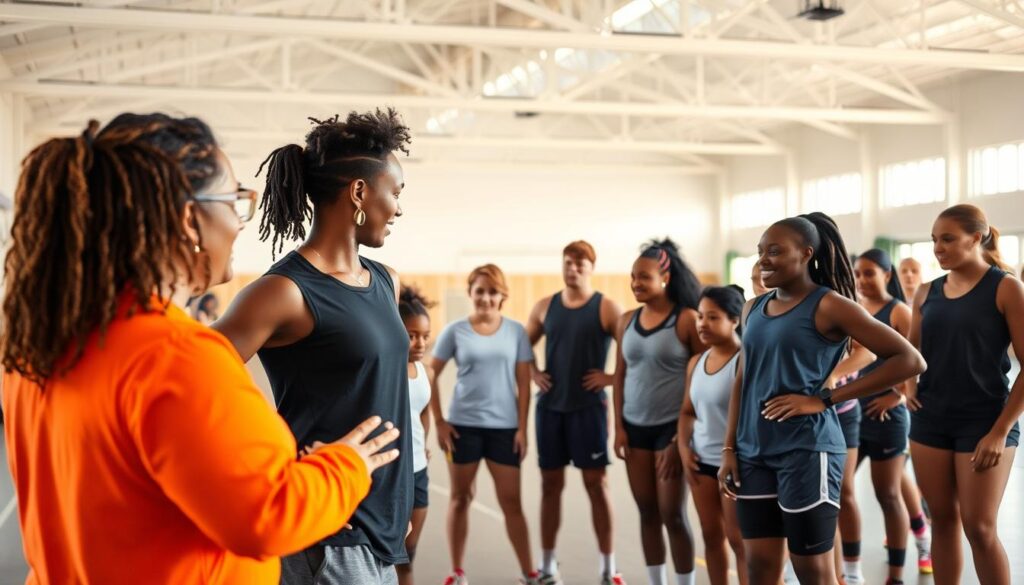
Most sports training doesn’t really focus on diversity. It’s like a quick water break during the game. But what if we made drills that naturally include everyone? Here are three exercises that make being an ally as easy as shooting a free throw.
Drills for Diversity
Wind sprints are old news. These LGBTQ+ sensitivity exercises will make your team gasp for a good reason:
- The Pronoun Pass Drill: Say the wrong name or pronoun? That’s 10 burpees. This drill turns mistakes into learning moments, fast.
- Bystander Interception Training: Practice stopping slurs like blocking shots. Plus, get bonus points for witty comebacks that would impress Shakespeare.
- Inclusive Play Diagramming: Use Play Proud’s mobile toolkit to make drills for everyone. Imagine wheelchair spots or non-binary locker room plans.
Scrimmaging Scenarios
Simulation is key. CCGSD’s workshop puts coaches in real-game situations:
- A trans athlete being misgendered during timeouts
- Mixed-ability teams planning accessible plays
- Parents questioning “political” jersey designs
Teams using “Gender Elephant” modules see 40% fewer mistakes. It shows that sports resource mapping is more effective than any pep talk. It’s like Moneyball for inclusivity: focus on what really matters.
Resources List
Every coach needs a playbook, and equity warriors deserve better than old corporate PDFs. We’ve found the best sports equity toolkits that are easy to understand. No confusing jargon or empty promises here.
Equity Playbooks
- Play Proud’s “3-5-2 Formation for Inclusion”: This free download combines soccer tactics with Pride parades. It teaches allyship drills in a way even grumpy goalies can follow.
- CCGSD’s Queer Coaching Manual: It’s now packed with 30% more hockey slang. Learn to handle homophobic chirps quickly, like a Zamboni clears ice.
- GLSEN’s “Safe Spaces” sticker pack: It’s a psychological warfare tool for locker rooms. A rainbow whistle on the shower door says, “We’re watching.”
Funding Grant Assist
Forget about billionaire donors. Here’s how to get access to funding for community sports without selling your soul:
| Program | Focus Area | Award Range | Eligibility |
|---|---|---|---|
| Nike Community Pitches Fund | Rural access & field upgrades | $5k-$50k | Nonprofits in towns |
| It Gets Better Project Grants | LGBTQ+ youth sports initiatives | $1k-$10k | Schools & rec leagues |
| Dick’s Sporting Goods Grant | Equipment for inclusive programs | $2k-$25k | 501(c)(3) organizations |
Pro tip: These applications aren’t SAT essays. Funders value your Slapshot-level passion more than perfect grammar. Need help? Download our rural access grant template – it’s like autocorrect for social justice.
- Start with Nike’s rural fund if your town has more cows than people
- Use Play Proud’s budget calculator (hidden in Chapter 4)
- Bribe teammates with pizza to proofread your application
Success Stories
Move over Disney sequels—real-life sports redemption arcs are stealing the spotlight. While Hollywood recycles tropes, LGBTQ athletes and allies are scripting genuine breakthroughs that would make Ted Lasso blush. Let’s dissect the plays rewriting the game.
Pride of the Pitch
Philadelphia’s Bocce League didn’t just add gender-neutral divisions—they built a blueprint for marginalized youth sport access. Participation rates exploded faster than conspiracy theories about Taylor Swift’s Eras Tour schedule. The secret sauce? Radical hospitality that treated pronouns with the same reverence as playoff brackets.
Meantime, the NBA’s Pride shirt sales quietly became the league’s most interesting assist statistic. Last year’s merchandise revenue funded safe spaces in 14 urban rec centers, proving rainbow capitalism can dribble past performative allyship when properly coached.
Youth MVP Spotlight
Meet 16-year-old Jamie V., the goalkeeper-turned-activist who organized their league’s first Pride Night using Play Proud’s “$20 Budget Playbook.” Their strategy was simpler than IKEA instructions: rainbow cookies > corporate sponsorships. The result? More inclusive crowds than a Beyoncé concert’s “Ally Zone.”
- Doubled LGBTQ+ player registrations in one season
- Converted a storage closet into gender-affirming gear space
- Outsold concession stand classics with pansexual panini specials
Then there’s Will Sigler’s Starfinder Foundation, which transformed marginalized youth access into measurable magic. Their playbook turned abandoned tennis courts into queer-inclusive hubs faster than you can say “RuPaul’s Drag Race All Stars.” The numbers don’t lie: 83% participation increase in rural leagues.
These stories aren’t feel-good flukes—they’re proof that safe spaces in sports grow when we stop treating inclusion like a participation trophy and start coaching it like championship material.
Conclusion
Sports equity is not just a halftime effort. It’s the whole game with high stakes. Recent analysis of 34 global studies shows that college coaches often hide their queer identities. Only 1 in 1,052 profiles mentions a same-sex partner.
Younger coaches, on the other hand, are better at supporting LGBTQ+ athletes. These facts show deep-rooted exclusion in sports culture.
Efforts like Play Proud’s outreach to 2.5M youth and CCGSD’s 250k annual trainings show change is possible. We need to change the power structures, not just the locker rooms.
The NCAA’s slow progress on transgender inclusion is not fair. It’s like playing outside the rules.
True LGBTQ+ inclusion means more than just wearing rainbow jerseys. It’s about challenging the idea that tradition excuses discrimination. When 35k coaches redefine teamwork and 631 mentors change biases, we’re making real progress.
The field is not yet even. But every athlete who finds pride and every league that rejects bigotry is part of this victory. We want to build stadiums where queer kids thrive, not just survive.