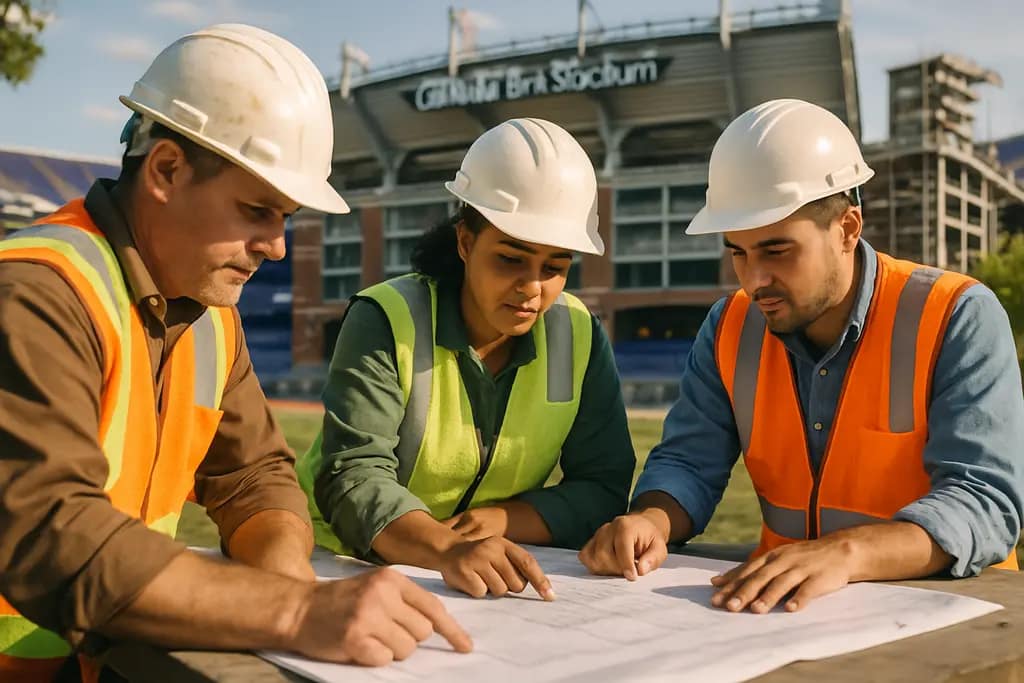
M&T Bank Stadium Renovations have moved the Baltimore venue beyond a standard NFL game-day improvement project. The changes added premium areas, social decks, concourse capacity, hospitality space, event infrastructure and measurable sustainability initiatives. For local sports tourism, the central question is not whether the building looks newer. The better question is whether the public and private investment can create more usable event days, better visitor flow and lower environmental costs per large gathering.
The available official data supports a cautious reading. The renovation record shows clear venue upgrades delivered in phases from 2024 through 2026. The sustainability record shows renewable energy, waste diversion and local food-sourcing targets. What is less clear, from the sources available here, is the direct post-renovation effect on hotel occupancy, neighborhood spending, transit use or youth and community sport participation. Those measures should be tracked before any firm tourism return claim is made.
M&T Bank Stadium Renovations And Tourism Demand
M&T Bank Stadium Renovations By Phase
The phased work matters because sports tourism depends on more than seat count. Phase 1, completed in August 2024, included the Miller Lite Gatehouse & Roof Deck, described in the project record as more than 5,000 square feet of social space per level. That phase also upgraded the Club Level, modernized elevators and escalators, and relocated and redesigned the press box. Phase 2, completed in September 2025, added three premium club areas, upgraded concourses and included infrastructure improvements. Phase 3 added The Talon & Backstage concert and event venue, The Overlook and The Perch concourse expansions, added hospitality space and increased restroom fixtures by 30%, according to the Maryland Stadium Authority project page.
Those details are significant for tourism planning because they change how the stadium can be sold, staffed and operated. Premium clubs can support corporate gatherings. Expanded concourses can reduce pinch points during high-attendance events. More restroom fixtures can improve dwell time and reduce avoidable stress for families, older adults and visitors with access needs. None of those changes guarantees new tourism spending, but each one removes a practical barrier that can limit a venue’s ability to host visitors outside the NFL schedule.
Event-Day Design Versus Year-Round Use
A football-first stadium often produces an uneven tourism pattern: a few intense event days, followed by long periods of limited visitor activity. The renovation program appears designed to reduce that gap by creating more areas that can operate for concerts, private events and hospitality uses. The Talon & Backstage is especially relevant because it added an open-air event venue with three viewing levels, a main stage and an indoor sports bar. That kind of space can serve different audiences than a Ravens home game, including conference groups, alumni events, sponsor gatherings and regional music audiences.
For comparison across venue projects, a related fan-planning analysis of stadium renovation impacts raises similar questions about entrances, concourses and amenities. The same logic applies here: tourism performance will depend on whether visitors can arrive, move, gather, buy food, use restrooms and leave without unnecessary friction.
Sustainability Signals For Sports Tourism
Energy, Waste And Food Metrics
The sustainability data is unusually concrete for a stadium tourism discussion. In 2025, the stadium’s solar installation was reported to provide 435,000 kWh of renewable energy and avoid 309 metric tons of carbon dioxide annually, described as comparable to powering 40 to 50 average U.S. homes per year. Waste and sourcing measures were also reported: compost service frequency rose 334% year over year, 91.5% of construction and demolition waste was diverted from landfill, and game-day hand-sorting produced an average 53% diversion rate from landfill or incineration at Ravens games, according to the Ravens sustainability report.
- Energy: 435,000 kWh of renewable electricity from solar panels.
- Carbon: 309 metric tons of carbon dioxide expected to be avoided annually.
- Construction waste: 91.5% diverted from landfill.
- Game-day waste: 53% average diversion through hand-sorting.
- Food sourcing: 65% of seafood from the Chesapeake Bay and 38% of produce grown within 200 miles.
- Service ware: 40% of disposable plates, flatware and cups shifted to compostable materials.
Why These Metrics Matter To Visitors
Sustainability can sound abstract unless it is tied to the visitor experience. Waste sorting affects concourse operations. Local seafood and regional produce affect food identity and supply chains. Compostable service ware affects back-of-house handling and public disposal points. Solar generation affects the stadium’s energy profile, though it does not remove the need to measure transportation emissions from visitor travel.
For sports tourism, the most defensible claim is that the stadium now has better sustainability inputs than it did before these measures were reported. A stronger claim, such as a verified reduction in total event emissions per attendee, would require full event-by-event accounting. That should include travel mode, energy use, waste volume, disposal outcomes and food procurement. Without that data, sustainability should be treated as a promising operating direction rather than a completed performance result.
Practical Measures For Local Sports Planners

Track Visitor Value, Not Just Attendance
M&T Bank Stadium Renovations created the physical conditions for more varied event use, but local sports tourism depends on whether visitor value is measured in a disciplined way. Attendance alone is too blunt. A sold-out event and a regional youth sports weekend can have different lodging, food, transit and neighborhood effects. Public agencies, venue managers and tourism offices should separate local attendees from out-of-market visitors, then connect those groups to room nights, length of stay and spending near the stadium.
For community sport leaders, the lesson is practical. Large-venue upgrades should not be judged only by premium revenue or concert capacity. They should also be judged by whether smaller community groups can access spaces, whether public transit information is clear, whether low-cost gathering options exist and whether event scheduling avoids pushing local users out of nearby fields and recreation corridors.
Plan For Inclusion Around Peak Events
Inclusive tourism planning starts before visitors reach the gate. The renovation record references elevators, escalators, concourse upgrades and restroom expansion, all of which can affect comfort and movement. Still, access should be evaluated in use, not only on drawings. Planners should measure queue times, elevator waits, accessible route clarity, family restroom access, sensory stress points and the distance between transit stops, entrances and seating areas.
The same standard applies to the hospitality economy around the stadium. Restaurants, hotels and regional visitor stops can benefit from event traffic, but they need early information about crowd timing, accessible arrival options and expected demand. In a different local tourism setting, Bass Lake Roadhouse exemplifies how hospitality sites often integrate into a broader event and travel network. Baltimore planners should view stadium tourism in that same connected way: venue, transit, lodging, food and public space all shape the visitor outcome.
M&T Bank Stadium Renovations Tourism Test
The clearest supported finding is that M&T Bank Stadium Renovations expanded the stadium’s event toolkit. The building gained social spaces, premium clubs, concourse areas, a concert and event venue, hospitality areas and more restroom fixtures. It also added documented sustainability measures in energy, waste and food sourcing. Those are meaningful changes for a venue trying to serve visitors beyond regular NFL dates.
The unresolved issue is measurement. A credible sports tourism review after August 2026 should compare pre- and post-renovation event calendars, hotel room nights, visitor origin data, transportation mode share, neighborhood sales indicators and event-level waste and energy outcomes. It should also ask whether community sport groups gained any practical access to improved spaces or whether the benefits stayed mostly in premium and commercial categories. Until those figures are public and consistent, the safest assessment is that the project improved Baltimore’s capacity to host sports and entertainment tourism, while the full local return still needs evidence.