
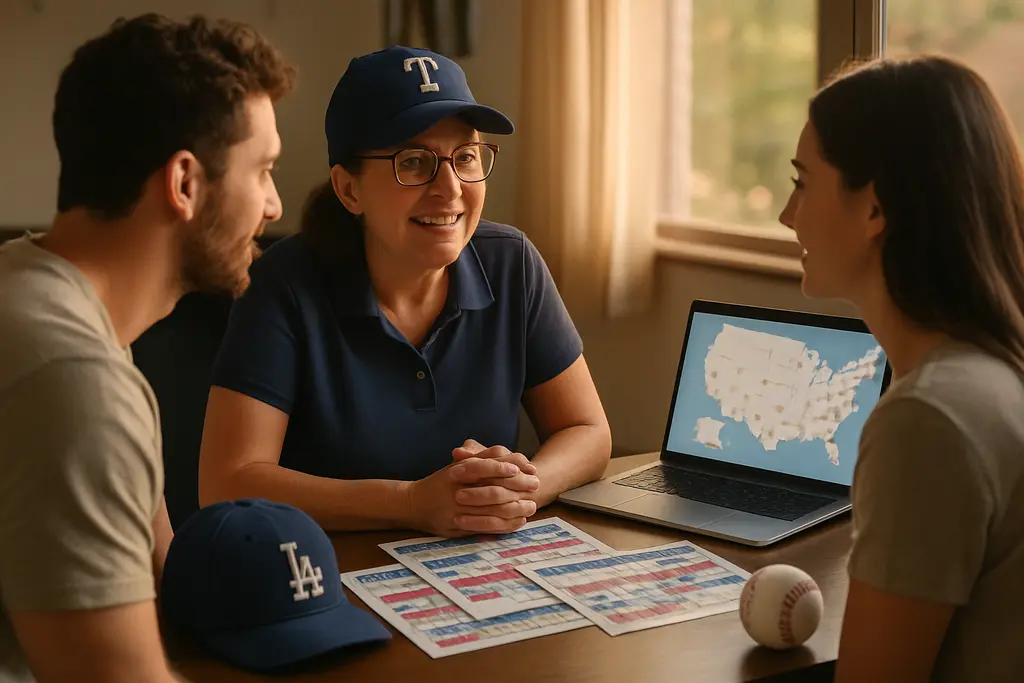
MLB playoff travel in October 2026 requires a different planning model than a regular-season baseball trip. As of October 17, 2026, the postseason had already moved past its opening phase, while the World Series window still sat ahead from Friday, October 23, through Saturday, October 31, if a Game 7 became necessary. That gap matters for supporters: plans must be built around uncertainty, possible city changes, and transport prices that may not wait for a bracket to settle.
The most useful approach is not to predict every matchup. It is to identify the fixed parts of the calendar, price the flexible parts with caution, and decide which costs are acceptable before emotion takes over. Community sports leaders can use the same method for youth tournaments and regional championships, where families often face short booking windows and limited local lodging near venues.
MLB playoff travel Calendar Pressure Points
MLB playoff travel Timing After October 17
By October 17, 2026, supporters were no longer dealing with a blank postseason map. The Wild Card Series had started on Tuesday, September 29, 2026, and each completed round had reduced the number of possible host cities. Yet the most expensive travel decisions often appear late, especially once a club reaches the league championship stage or the World Series.
That makes MLB playoff travel a timing problem as much as a loyalty problem. A supporter who waits for full certainty may avoid backing the wrong destination, but may face higher fares or fewer lodging options. A supporter who books early may secure better travel terms, but risks cancellation fees if the series shifts or ends sooner than expected. The practical answer is to separate refundable and nonrefundable decisions. Airfare, hotels, ground transport, and time off work should not be treated as one single purchase.
World Series Home-Field Pattern
The World Series schedule is the clearest official anchor. MLB listed Game 1 for Friday, October 23, 2026, and Game 7, if necessary, for Saturday, October 31, 2026. The National League team was scheduled to host Games 1 and 2, the American League team Games 3 through 5 if needed, and the series would return to the National League park for Games 6 and 7 if needed, according to the official MLB World Series FAQ. That format creates two distinct travel clusters rather than one continuous destination.
For families, the split-site format changes the risk calculation. Games 1 and 2 invite a short first-city trip. Games 3 through 5 may require a longer stay in the American League city, but Game 5 only exists if the series has not ended. Games 6 and 7 carry the highest uncertainty because they depend on the series lasting long enough to return to the National League venue. Supporters who cannot absorb wasted hotel nights should treat later games as higher-risk plans unless cancellation terms are clear in writing.
Budget Signals Supporters Can Verify
Airfare Is The Clearest Official Cost Signal
For MLB playoff travel, air pricing is the cost category with the strongest official warning sign in the supplied data. The Bureau of Transportation Statistics reported that the average U.S. domestic airfare reached $428 in the first quarter of 2026, up 4.7% from the fourth quarter of 2025, based on its air fare release. That figure is not a postseason-only price, and it should not be read as the exact cost of any playoff route. It does show that supporters were operating in a higher airfare environment before October pressure was applied.
A practical baseball trip budget should test at least three flight scenarios: a same-city round trip, an open-jaw trip if the series changes cities, and a no-flight option for supporters within driving range. The last option deserves serious review. Driving can shift costs from tickets and fares toward fuel, parking, tolls, meals, and fatigue. It may still be preferable for regional supporters if multiple family members share the car and the return date is uncertain.
Lodging And Ground Transport Need Local Checks
The supplied research points to lodging rates rising more modestly than some other travel categories, but the official evidence available here is stronger for airfares than for hotel pricing. Supporters should avoid assuming that national lodging trends reflect a host city during a championship week. A downtown hotel within walking distance of a ballpark may behave very differently from a suburban property connected by rail, bus, or a manageable drive.
Ground transport also needs site-specific review. A lower daily car rental quote may be less useful if the ballpark area has scarce parking or if postgame congestion adds time for families with children or older adults. A hotel outside the core can reduce nightly costs, but those savings can fade if the group needs multiple rideshare trips. Supporters should price the full door-to-seat route, not just the room rate.
Venue Area Choices And Fan Wellness
Build The Trip Around Arrival Windows
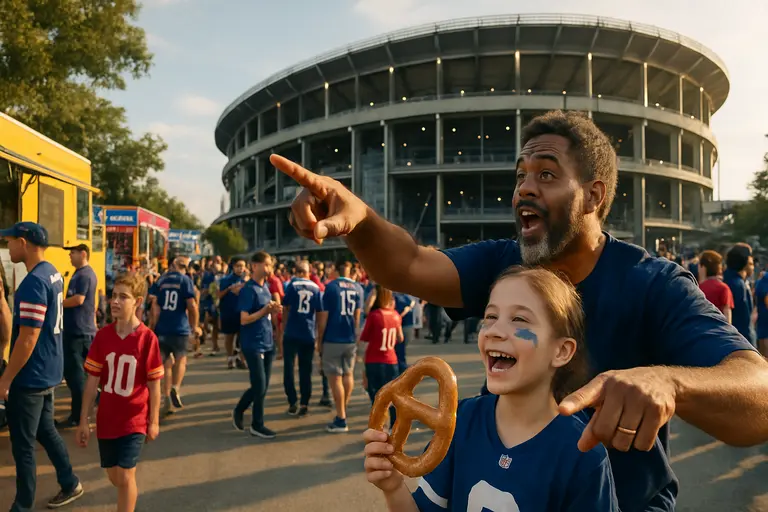
Postseason baseball stretches the usual stadium routine. Security lines, nearby restaurant demand, public transit crowding, and weather exposure can all affect the day. A cautious plan starts with arrival windows rather than first pitch alone. Supporters should decide when they want to be near the park, where they will eat, and what backup plan they have if the first choice is full.
For health and comfort, planning should include hydration, medication timing, mobility needs, and a clear exit plan after the final out. A related Aplevante analysis on fan wellness in October sports is relevant because playoff calendars compress travel, emotion, and venue demand into short windows. Supporters often budget for tickets but under-budget for rest, meals, and waiting time.
Family Groups Need A Different Cost Model
A solo supporter can accept tradeoffs that do not work for a family of four or a youth team group. A late flight, distant hotel, or long postgame walk may be manageable alone but risky with children, grandparents, or anyone with access needs. Group leaders should write down the non-negotiables before comparing prices: maximum walk distance, earliest acceptable return time, luggage limits, and whether the group can split up if plans change.
Dining and postgame gathering plans should be treated as part of the travel budget, not as an afterthought. A related site in this network, Bass Lake Roadhouse, reminds us that meals, meeting places, and recovery time can shape how a sports trip feels beyond the ticketed event. For playoff travel, the same logic applies near ballparks: a cheaper hotel or flight may not be the better value if it creates poor food options or long waits for the group.
MLB playoff travel Decisions For Supporters
A Practical Decision Sequence
A practical MLB playoff travel budget should begin with the official schedule, then move to refundable lodging, then transport, then tickets and daily spending. The sequence matters because the calendar determines the city pattern, while cancellation terms determine how much risk the supporter is carrying. If a plan depends on a Game 6 or Game 7, the supporter should assume that the game may not happen and decide in advance how much sunk cost is acceptable.
- Mark the fixed World Series dates: October 23 through October 31, 2026, with Game 7 only if needed.
- Separate National League host games from American League host games before comparing routes.
- Price airfare against driving, including parking, fuel, tolls, meals, and lost rest.
- Choose lodging based on cancellation rules, transit access, and walking distance, not nightly rate alone.
- Set a family spending ceiling before ticket demand and team emotion push the budget upward.
What Community Sports Planners Can Learn
October baseball offers a useful case study for community sports development. Families are more likely to participate when schedules, transport options, and facility access are clear. The same pressures seen in postseason baseball appear at smaller scale in school tournaments and club showcases: short notice, changing venues, uneven lodging access, and limited guidance for families that have different budgets.
For local organizers, the lesson is practical. Publish dates early, explain parking and transit choices, name accessible entrances, and give families a realistic sense of how long a venue day may last. Supporters can accept uncertainty if the fixed facts are easy to find. The 2026 postseason shows that travel planning is not only a fan issue; it is an infrastructure and communication issue that affects who can take part, who stays home, and how much strain a sports event places on a community.