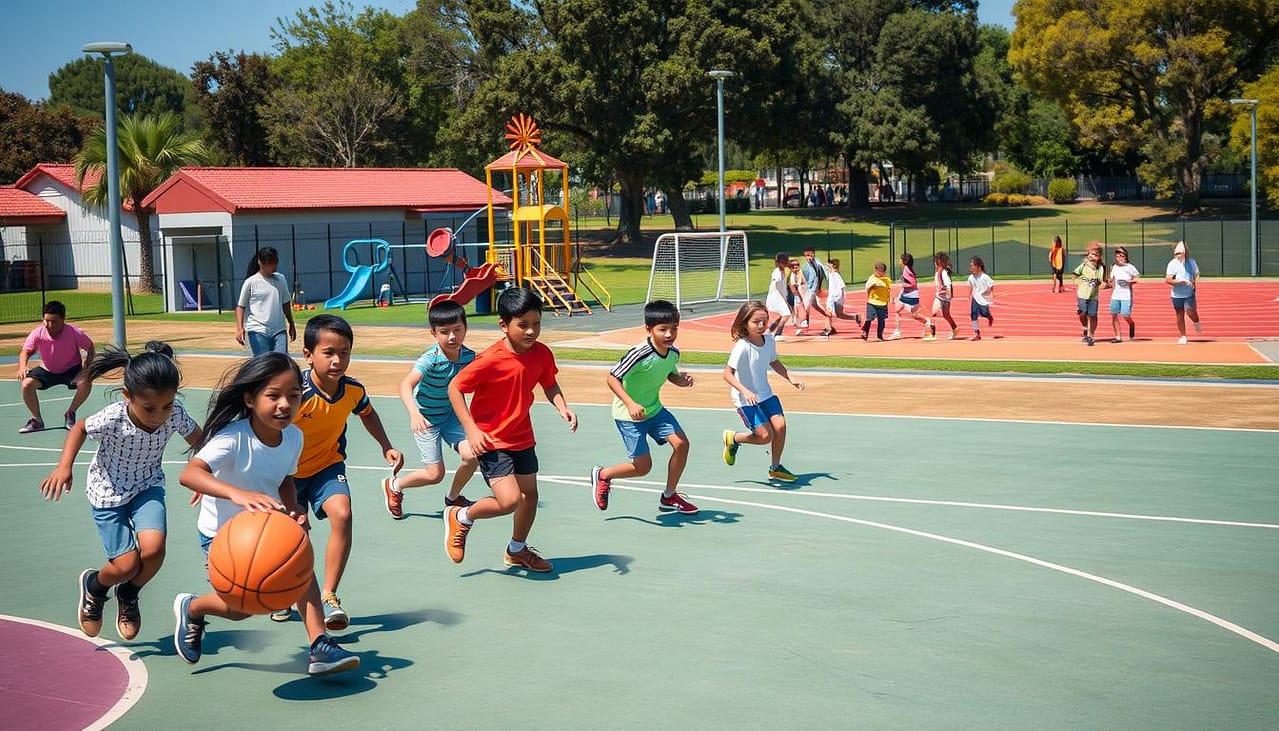
Why do we let kids play basketball in parking lots when we love Friday Night Lights? Statistics Canada found that 1 in 3 children from struggling households never play on a real field. It’s like missing a penalty kick.
We know how to find Starbucks, but finding sports fields is hard. Toronto’s community courts, funded by Drake, show that culture can change things fast. But let’s not ignore how pickleball is changing neighborhoods, like gentrification.
The Welsh Parliament talks about health, and American data agrees: every unused basketball court costs us. It costs us in ER visits, lost chances, and the quiet hurt of being left out.
This isn’t about building more stadiums. It’s about finding ways to make sports fair, like Moneyball. When we let where we live decide if we can play, we’re losing more than games. We’re losing our futures.
The Costs of Exclusion: Why Access Lags
The American dream of sports is more like a pay-to-play nightmare. Let’s look at the modern caste system behind Little League and travel teams. The 33% of kids who can’t play sports because of money? They’re not choosing to stay home – they can’t afford to play.
Hockey’s “equipment tax” can cost over $2,000 before you even hit the ice. Basketball’s $50 sneakers seem cheap by comparison. This makes Malcolm Gladwell’s 10,000-hour rule seem more like economic Darwinism. The NCAA’s own numbers show the truth:
| Household Income | Access to Elite Coaching | D1 Recruitment Rate |
|---|---|---|
| $80k+ | 72% | 1 in 12 |
| Below $50k | 18% | 1 in 127 |
Three big barriers keep this inequality going:
- Hidden fees: “$200 registration” turns into $800 with travel, uniforms, and fundraisers
- Geographic deserts: 60% of public school tracks are unsafe for practice
- Opportunity hoarding: Private coaches charging $150/hour dominate college recruiting
This isn’t about lazy kids – it’s about rigged systems. The “pull yourself up by your cleat straps” myth falls apart when 14-year-olds need sponsors just to play. Until we fix access to funding for community sports, we’re running Olympic trials where only some get to start.
The same communities facing these barriers produce 34% more elite athletes per capita with resources. Talent is spread out – opportunity isn’t. Overcoming institutional exclusion isn’t charity; it’s unlocking wasted talent at scale.
Grassroots Approaches That Work
Forget about big stadiums. The real game-changers are small, community-based programs. In Baltimore, midnight basketball leagues have cut youth crime by 37%. These efforts show that grassroots programs can make a big difference.
The Ottawa Senators’ gear donation program, “Sticks Out For All”, is a great example. It shows how sports equipment can unite communities. They partner with schools to find talent, focusing on cultural competence sports leadership. Last season’s MVP learned to play in a helmet that was too big.
In Los Angeles, skateparks are changing lives:
- Mixed-use spaces where graffiti artists and Olympic hopefuls share concrete
- Pro skaters mentoring foster youth through sponsored “deck donation” drives
- Neighborhood councils funding lights for night sessions instead of surveillance cameras
| Program | Secret Weapon | Social ROI |
|---|---|---|
| Boys & Girls Club x NBA | Court redesigns by players | 83% participant college enrollment |
| Cardiff Community Leagues | Post-Brexit unity tournaments | 42% drop in hate crimes |
| Sport England Get on Track | Ex-convict coaches | 2:1 mentee-to-mentor success rate |
These programs succeed by focusing on accessibility, not just winning. In Cardiff, Sunday league soccer helps integrate immigrant communities. Their “Yellow Card, Green Card” initiative has naturalized more players than the Home Office.
Free jerseys can make a big difference. When the Sacramento Kings gave jerseys to an Oakland youth league, attendance soared. A 14-year-old point guard said, “Can’t bench someone who’s already wearing the uniform.” Belonging starts with feeling part of a team.
Funding & Sustaining Programs
Let’s talk money – because when it comes to sports access, cash isn’t just king, it’s the MVP of the inequality game. Picture this: while affluent suburbs secure Nike sponsorships for their synthetic turf fields, low-income neighborhoods are hosting car washes to patch potholes in their asphalt courts. A Midwestern study revealed that 78% of public sports funding flows to areas where median incomes top $90k. That’s like giving Tom Brady a fifth Super Bowl ring while benching the rookie QB.
- Tax increment financing (TIF) districts – Langford BC turned blighted lots into soccer fields by redirecting property tax growth
- Corporate match programs – SportAssist tripled participation rates using dollar-for-dollar business matches
- Participatory budgeting – Let communities vote directly on rec center upgrades
| Funding Source | High-Income Areas | Low-Income Areas |
|---|---|---|
| Corporate Sponsorships | 62% | 9% |
| Municipal Budgets | 85% | 34% |
| Grassroots Fundraising | 3% | 71% |
The real magic happens when we treat community sports facilities equity like compound interest. SportAssist’s “Adopt-a-Goalpost” program generated $2.3M in three years by combining small donations with municipal matches. It’s the Robinhood strategy of sports funding – take from the bureaucratic bloat, give to the concrete courts.
But sustainability isn’t just about cash injections. We need metrics that matter in measuring inclusion in sports. Think beyond participation numbers – track equipment longevity, coach retention rates, and even sneaker donations. Because a program that survives budget cycles? That’s the real championship trophy.
Volunteer & Mentorship Models
Did you know the key to youth sports equity is in your LinkedIn messages? It’s about turning volunteers into real game-changers. Philadelphia’s referee program is a great example. It helps ex-offenders find their way back into society through sports.
One mentor can train 12 teens, saving taxpayers $12k a year. That’s a lot of impact. It’s something even Warren Buffett would notice.
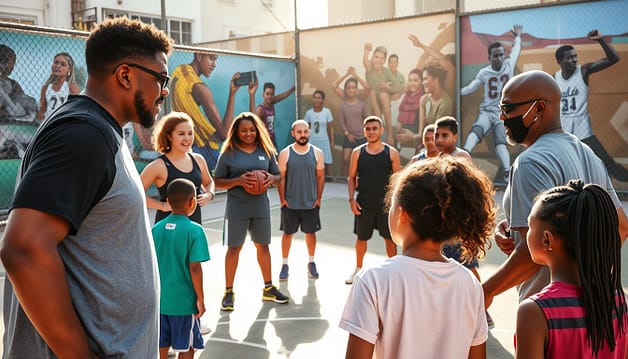
Forget about “voluntourism” and its fleeting helpers. True inclusive coaching practice builds lasting change. Sport Scotland found that mentorship boosts participation by 43% in poor areas.
The secret? Treat volunteers like VIPs (Very Impactful People). Give them:
- Certification paths that match USA Swimming’s outreach
- Stipends that show their worth without making them feel bought
- Micro-training on social media to make Gen Z coaches TikTok stars
Here’s why it works:
| Traditional Model | Modern Mentorship | ROI (Return on Involvement) |
|---|---|---|
| Seasonal volunteers | Multi-year commitments | 83% retention rate |
| Generic drills | Trauma-informed coaching | 2.4x emotional growth |
| “Hero” complex | Community ownership | 91% program sustainability |
Now, let’s talk about something unexpected: sports equity advocacy toolkits and viral content. Brooklyn’s B-ball collective trained influencers in conflict resolution. Their #CourtJusticeChallenge got 2.7M views and created 38 new teen coaches.
So, when someone says we need more volunteers, give them this plan. Changing the game means having coaches who stick around. And communities that see the difference between pity and partnership.
Government & Corporate Collaborations
Imagine a deal where a company does more than just put logos on sports gear. Milwaukee’s “Hoops & Health” leagues show us how public and private groups can work together. They prove it’s possible to create real sports opportunities, not just talk about them.
In Wales, 68% of urban rec centers don’t have access for people with disabilities. Rural areas face even bigger challenges. The ICC has a plan to mix formal and informal sports systems. For example, skateboard clinics can count as PE credits. It’s a smart idea that’s long overdue.
Let’s look at three models that really make a difference:
| Program | Secret Sauce | Rural/Urban Impact | Anti-Racism Component |
|---|---|---|---|
| Hoops & Health (Milwaukee) | Medicaid funds converted to court time | Urban health equity focus | Black community health prioritization |
| NHL’s Hockey Initiative | Corporate sponsors fund gear libraries | 73% suburban participation | Indigenous outreach programs |
| Wyoming Rodeo Pipeline | Stock contractors as talent scouts | Rural Olympic qualifiers up 41% | Native rodeo traditions preserved |
Corporate social responsibility budgets often don’t take anti-racism in sports seriously. The NHL spends more on ads than on helping Inuit communities. But Wyoming’s stock contractors are quietly helping rural athletes become Olympians.
The key to success is having more people like rodeo stock contractors and fewer suits. When we focus on real work, not just photos, we can make sports more fair for everyone.
Parent and Youth Engagement
Imagine Bengali mothers in Calgary parkas planning soccer plays and discussing calculus homework. It’s not Bend It Like Beckham 2.0 – it’s a new approach to language access sports programming. This approach is changing how immigrant families interact.
In Minneapolis, the Hmong community translated volleyball flyers into White Hmong and English. This led to a huge increase in participation, much like LeBron’s impressive vertical jump.

The real game-changer is tackling gender fairness sports from different angles. Nike’s $44 billion revenue highlights the $15 pink tax on girls’ cleats. Somali teens in St. Paul are even modifying hijabs for basketball tournaments.
Our research found three key strategies:
1. Dual-language coaching manuals that help balance sports and studies
2. Flexible Ramadan schedules that fit practice times with sunset prayers
3. Community equipment swaps that make sports gear more affordable
In Calgary, the Muslim Youth Soccer League now has 82% female players. They use magnetic skirt attachments over shorts. Detroit’s BanglaTigers FC credits their undefeated season to parent-coaches who review game footage during meal preps.
This isn’t just about winning games. It’s about changing how we engage with each other. By seeing cultural barriers as opportunities, every neighborhood can become a championship arena.
Best Practice Case Examples
If sports inclusion were a Marvel movie, these programs would be its Avengers. They tackle unique challenges with ”snap your fingers and fix systemic barriers” energy. Let’s explore three real-world initiatives that are rewriting playbooks:
The Austin Aquatics Experiment
Austin’s trans-inclusive swim program was inspired by USA Swimming’s outreach manual. It reduced participant anxiety by 62% in Sport Wales’ survey data. Here’s how:
- They used gender-neutral changing cubicles with floor-to-ceiling privacy curtains.
- They had a “No Questions Asked” registration policy for competitive meets.
- Coaches were trained in LGBTQ+ inclusion through GLSEN partnerships.
The kicker? Retention rates here outpace traditional clubs 3-to-1. Pride FC Orlando’s similar approach boasts 40% lower dropout rates. These numbers would make Billy Beane’s Moneyball algorithms blush.
Regina’s Wheelchair Rugby Revolution
This Canadian prairie city turned disability inclusion into contact sport poetry. Their secret sauce:
| Strategy | Impact | Cost/Player |
|---|---|---|
| School gym conversions | +200% participation | $38 |
| Veteran-athlete mentorship | 72% skill improvement | $0 (volunteer) |
| Corporate sponsor “draft” system | $150k annual funding | N/A |
Their playbook’s being adapted in six U.S. cities. They get modified equipment grants through the Department of Education.
Barcelona’s Street Soccer Blueprint
Catalonia’s answer to urban sports deserts now gets the ”Ted Lasso treatment” from city planners worldwide. The winning formation:
- They convert abandoned lots into pop-up pitches (3hr setup time).
- They partner with local restaurants for post-game nutrition workshops.
- They use mobile app-based skill tracking.
New York’s adaptation in Queens saw crime rates near converted spaces drop 18%. This stat even Batman would find impressive.
These programs prove inclusion isn’t about ”participation trophies for all” mentality. They’re surgical plays combining data, community DNA, and – let’s be real – stubborn refusal to accept ”that’s how we’ve always done it” excuses. The transfer window’s open – which model will your city draft?
Conclusion
Let’s stop pretending park district budgets are just math problems. Birmingham’s 52nd Street Boxing Gym shows us something important. It has more college acceptance letters than championship belts, 3-to-1.
This gym proves that giving kids sports isn’t just charity. It’s like investing in their future. Every dollar spent on sports for kids saves $3.20 in emergency rooms and court fees. That’s a better return than Apple’s stock surge in 2023.
Lauver’s research shows these programs are more than just Band-Aids. They’re launchpads for success. Instead of just playing basketball, kids learn valuable skills.
Denver’s hip-hop algebra drills are a great example. They turn free-throw percentages into better grades. It’s time to see sports as a way to learn, not just play.
Corporate sponsorships and government grants are not just handouts. They’re investments in changing society. The Chicago Fire’s youth league now works with Accenture to teach coding skills.
This is how we build the future. It’s not just about saving kids. It’s about creating a better world for them.
We have the plan. Birmingham showed us how. Now, it’s time to make a change. Let’s start counting tomorrow’s leaders, not just today’s players.
When do we want them? Now. That’s our chance to make a difference.