

any given weekend across the United States, highways fill with minivans, SUVs, and charter buses carrying youth athletes to tournaments hundreds of miles away. Hotel parking lots become temporary team headquarters. Families schedule entire seasons around travel logistics.
What once looked like an occasional regional tournament has evolved into a defining feature of modern youth sports: travel competition.
Travel teams promise higher levels of competition and broader exposure for young athletes. But they also reshape how communities participate in sports. Local leagues compete with regional circuits. Participation costs rise. Environmental impacts increase as teams travel longer distances for games that once happened in neighborhood parks.
Understanding the transportation dynamics behind travel sports helps communities rethink how youth athletics should function in the future.
The Rise Of Travel Teams In Youth Sports
Travel sports began expanding in the late 1990s and early 2000s as youth athletics became more competitive and organized. Specialized clubs formed to provide advanced training, stronger competition, and opportunities for college exposure.
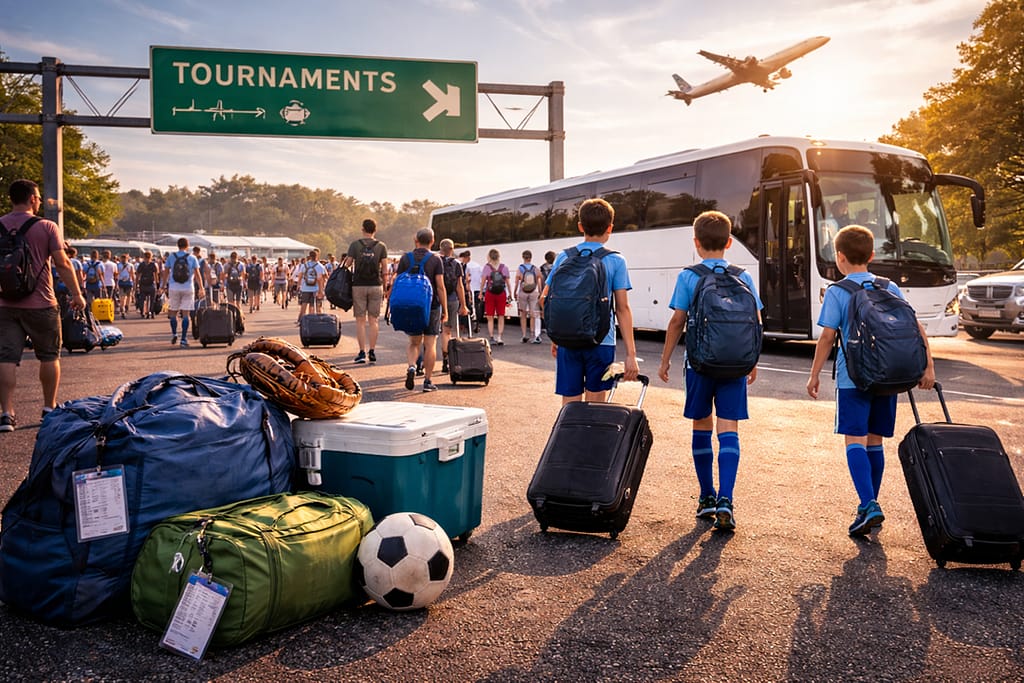
Over time, these clubs developed tournament circuits requiring teams to travel regionally—or even nationally—to compete.
Today, many youth sports calendars revolve around travel events rather than local leagues. Baseball, soccer, basketball, volleyball, and softball programs commonly schedule tournaments several states away.
Several factors accelerated this shift:
- Competitive specialization at younger ages
- Tournament-driven league structures
- College recruitment exposure opportunities
- Private club sports organizations
For families seeking high-level competition, travel teams often appear to be the only pathway forward.
But the growth of travel sports also introduces broader consequences for community-based athletics.
The Economic Impact On Families
Participating in travel sports can significantly increase the financial burden on families.
Beyond registration fees and equipment costs, travel programs require transportation, hotel stays, meals, and time away from work. These expenses accumulate quickly over the course of a season.
Typical travel sports expenses may include:
| Cost Category | Examples |
|---|---|
| Transportation | Gas, flights, team buses |
| Lodging | Hotels during tournaments |
| Tournament Fees | Entry fees paid by clubs |
| Meals & Miscellaneous | Dining, team events |
For many families, these costs can reach several thousand dollars per season.
As travel sports expand, concerns about equity and accessibility in youth athletics have grown. When participation depends heavily on travel budgets, community leagues risk becoming less inclusive.
Environmental Costs Of Travel Competition
Transportation also carries a significant environmental footprint.
A single youth tournament may attract hundreds of teams, each traveling long distances by car or bus. When multiplied across dozens of events per year, the resulting carbon emissions become substantial.
The environmental impact of transportation is well documented. According to the U.S. Environmental Protection Agency’s transportation emissions data, transportation accounts for the largest share of greenhouse gas emissions in the United States.
Youth sports travel contributes to this broader trend. Weekend tournaments generate large concentrations of vehicle traffic around sports complexes, increasing both emissions and local congestion.
Some communities have begun to evaluate how tournament-heavy sports models affect long-term sustainability.
Local Leagues And Community Identity
Before the expansion of travel sports, youth athletics were often centered around local leagues. Teams represented neighborhoods, schools, or community recreation programs.
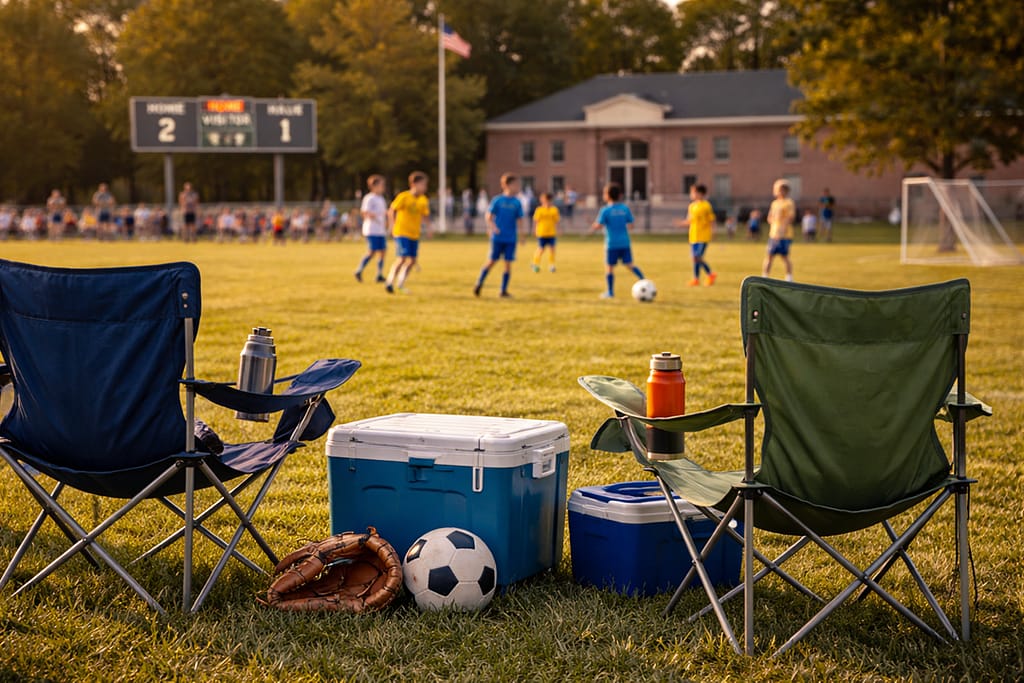
Games were played on nearby fields, and schedules typically involved short drives across town rather than long-distance travel.
These local leagues helped strengthen community ties. Parents volunteered as coaches. Families gathered at neighborhood parks. Athletes competed alongside classmates and neighbors.
Travel sports can disrupt this model. When teams pull players from multiple communities and compete primarily at distant tournaments, the connection between athletics and local identity weakens.
Some recreation leaders worry that the shift toward travel competition may reduce participation in community leagues.
Infrastructure Pressures On Tournament Facilities
The growth of travel sports has also influenced sports infrastructure planning.
Large tournament complexes are designed specifically to host traveling teams. These facilities often include multiple fields, expanded parking areas, concession zones, and nearby hotel partnerships.
While such complexes generate economic activity for host cities, they also place pressure on infrastructure:
- Increased weekend traffic near sports facilities
- Higher maintenance demands on fields and equipment
- Larger parking and transportation needs
Communities investing in these facilities must carefully consider how they balance tournament tourism with local recreational access.
These infrastructure challenges connect closely with the broader planning questions discussed in our article on multi-use community sports fields, where flexible facility design allows both tournaments and local leagues to coexist.
Rethinking Travel In Youth Sports
Travel sports are unlikely to disappear. Many families value the competitive opportunities and experiences they provide.
However, some leagues and organizations are beginning to explore ways to reduce the logistical and environmental impact of long-distance competition.
Emerging strategies include:
- Regional scheduling clusters that reduce travel distance
- Rotating tournament hosts within smaller geographic areas
- Hybrid models combining local leagues with limited travel events
Technology may also influence the future. Data-driven scheduling systems can group teams based on location, minimizing unnecessary travel while maintaining competitive balance.
The goal is not to eliminate travel entirely but to create a more sustainable balance between competition and community participation.
The Future Of Community-Based Athletics
Youth sports continue to evolve alongside broader social and economic changes. Travel competition has expanded opportunities for many athletes, but it also challenges the traditional role of community-based leagues.
Cities, recreation departments, and youth organizations must now ask difficult questions about accessibility, sustainability, and long-term participation.
The future of youth athletics may depend on finding a balance between regional competition and local engagement—ensuring that sports remain accessible, environmentally responsible, and rooted in the communities where young athletes first learn to play.
Travel teams may shape the modern landscape of youth sports, but the strength of community athletics still begins close to home.