
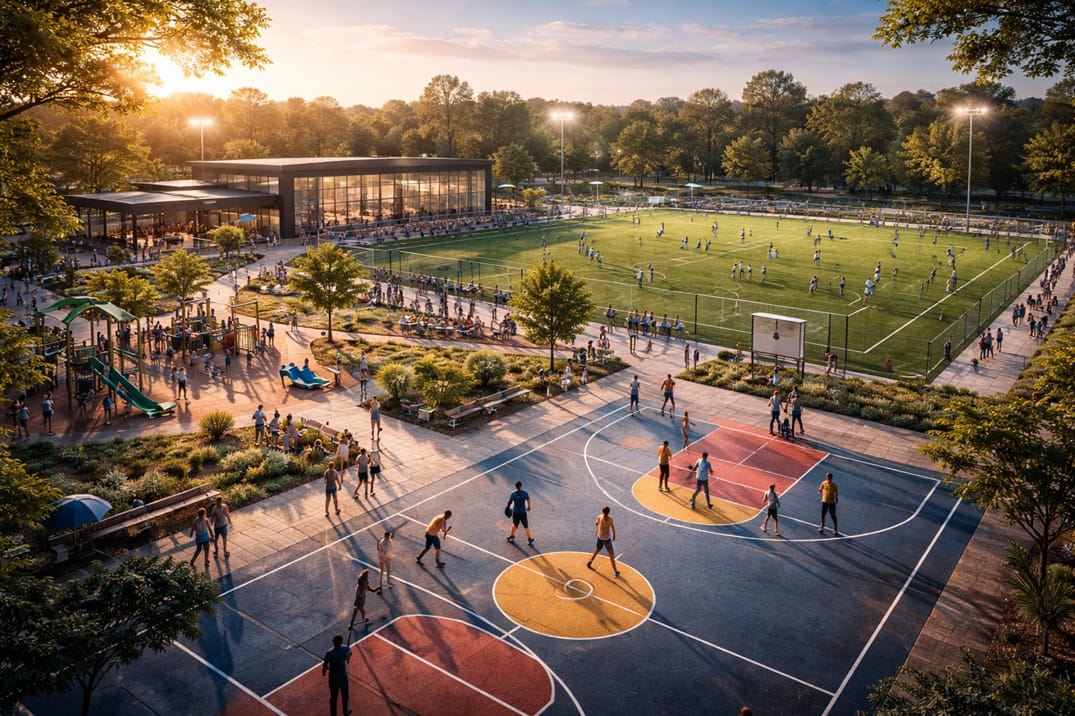
Across rapidly growing urban regions, a quiet transformation is underway. Traditional single-use sports facilities—once designed for one field, one sport, and one schedule—are being replaced by adaptable, multi-sport hubs that reflect a new reality: land is limited, demand is rising, and communities need infrastructure that can serve multiple functions simultaneously. This shift is not just architectural—it is economic, environmental, and deeply tied to how cities plan for youth engagement and public health.
The Urban Constraint Driving Multi-Use Design
Urban expansion has fundamentally changed how sports infrastructure is planned. In dense cities, large parcels of land are scarce and expensive, making it increasingly difficult to justify single-purpose facilities that sit idle for large portions of the day.
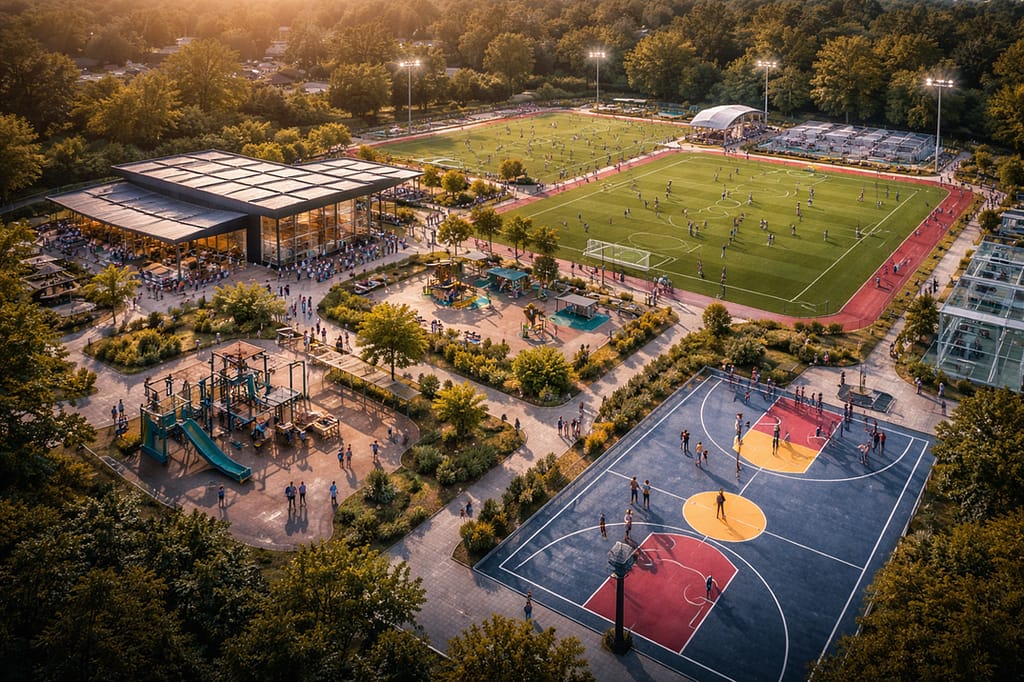
Multi-sport hubs address this inefficiency by maximizing usage across time and activity types. A single site can host soccer in the morning, basketball in the afternoon, and community programming in the evening. This layered use model transforms infrastructure from a static asset into a dynamic system.
Recent municipal initiatives—such as the revival of integrated sports hubs in fast-growing regions—demonstrate how cities are prioritizing flexibility over specialization. These projects are not just about adding fields; they are about optimizing space to meet diverse community needs within tight urban constraints.
From Single Fields To Integrated Community Systems
The modern multi-sport hub is no longer defined by the number of fields it contains, but by how effectively it integrates different functions into a cohesive system. These facilities often combine:
- Multi-surface courts adaptable for various sports
- Shared locker rooms and training areas
- Open community spaces for events and recreation
- Green infrastructure elements such as permeable surfaces and shaded zones
The result is a facility that operates as both a sports venue and a community anchor. By design, these hubs blur the line between athletic infrastructure and public space, reinforcing their role in social cohesion.
This evolution mirrors broader trends in urban planning, where infrastructure is expected to serve multiple purposes—recreation, health, and environmental sustainability—within a single footprint.
The Economics Of Flexible Infrastructure
Multi-sport hubs are not just spatial solutions—they are financial ones. By increasing utilization rates, these facilities generate more consistent revenue streams while reducing the per-user cost of operation.
| Infrastructure Type | Utilization Rate | Maintenance Efficiency | Revenue Potential | Community Reach |
|---|---|---|---|---|
| Single-Sport Facility | Low | Moderate | Limited | Narrow |
| Multi-Sport Community Hub | High | Optimized | Diverse | Broad |
Higher utilization translates into stronger financial sustainability. Facilities can host tournaments, training sessions, and community events without the downtime that often limits single-use venues.
This model also attracts broader funding opportunities. Public agencies, private sponsors, and community organizations are more likely to invest in infrastructure that demonstrates measurable impact across multiple user groups.
Sustainability As A Core Design Principle
Flexibility in modern sports infrastructure is closely tied to sustainability. Multi-sport hubs are increasingly designed with environmental performance in mind, incorporating features that reduce resource consumption and improve resilience.
Common strategies include:
- Water-efficient turf systems
- Solar-powered lighting and facilities
- Rainwater capture and drainage integration
- Urban tree coverage for temperature control
These elements are not add-ons—they are integral to long-term viability. As outlined in urban sustainability planning frameworks from organizations like UN-Habitat, integrating green infrastructure into public facilities enhances both environmental outcomes and community well-being.
In this context, multi-sport hubs function as both recreational assets and environmental buffers within urban ecosystems.
Technology And Modular Design Enabling Adaptability
Advancements in materials and construction methods have made flexibility more achievable. Modular design allows facilities to be reconfigured over time, adapting to changing participation trends or demographic shifts.
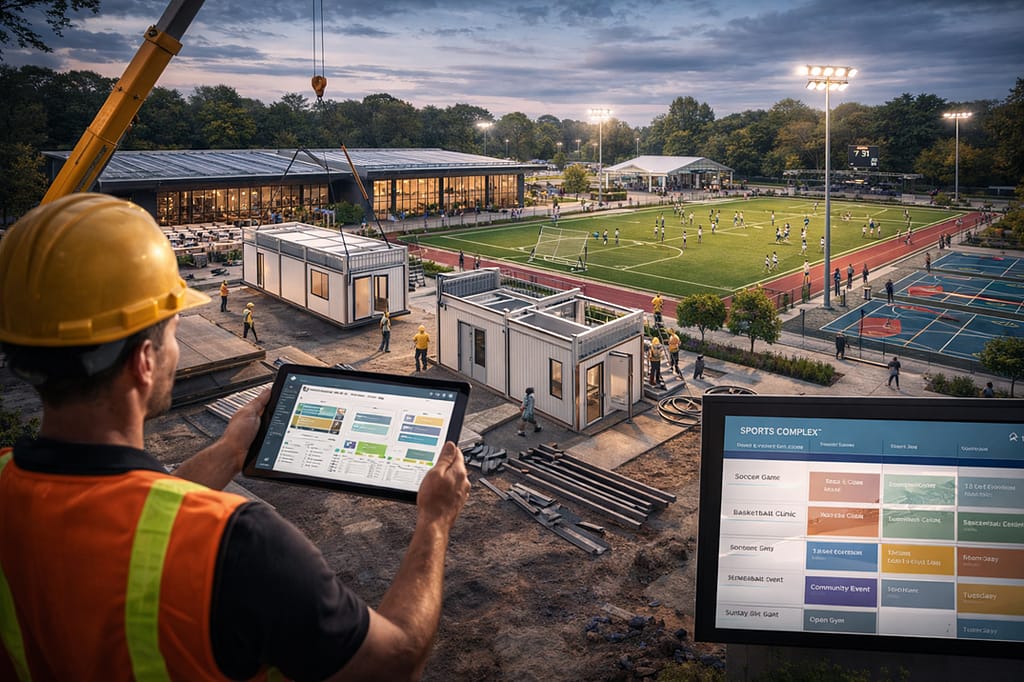
Digital scheduling systems and smart facility management tools further enhance efficiency by optimizing usage patterns and reducing operational waste.
This adaptability is critical in urban environments where demand is not static. Youth sports participation can fluctuate based on seasonality, cultural trends, and population changes. Infrastructure must be capable of evolving alongside these dynamics.
Equity And Access In Dense Urban Environments
While multi-sport hubs offer efficiency gains, they also present an opportunity to address longstanding access disparities. By centralizing resources in well-designed facilities, cities can expand access to high-quality sports environments for underserved populations.
However, location and planning decisions remain critical. If hubs are concentrated in already advantaged areas, the benefits may not reach the communities that need them most.
Lessons from recent flood-resilient sports infrastructure projects highlight the importance of aligning facility placement with both environmental risk and community need. Equitable distribution must be built into the planning process from the outset.
The Role Of Policy In Scaling Multi-Sport Infrastructure
The transition toward flexible sports infrastructure is not occurring in isolation—it is being shaped by policy decisions at municipal and regional levels. Zoning regulations, funding frameworks, and public-private partnerships all influence how and where these hubs are developed.
Forward-looking policies are beginning to:
- Encourage multi-use land designations
- Provide incentives for shared-use facilities
- Integrate sports infrastructure into broader urban development plans
These measures recognize that youth sports infrastructure is not a standalone sector—it intersects with transportation, housing, and environmental planning.
Redefining The Future Of Urban Sports Spaces
The rise of multi-sport community hubs represents a fundamental shift in how cities approach sports infrastructure. Efficiency, adaptability, and sustainability are no longer secondary considerations—they are central to design.
As urban populations continue to grow, the demand for accessible, high-quality sports environments will only increase. Meeting this demand requires infrastructure that can do more with less space, fewer resources, and greater inclusivity.
The future of youth sports in cities will not be defined by the size of individual facilities, but by the intelligence of the systems that connect them. Multi-sport hubs are emerging as the blueprint for that future—flexible, resilient, and deeply integrated into the fabric of urban life.