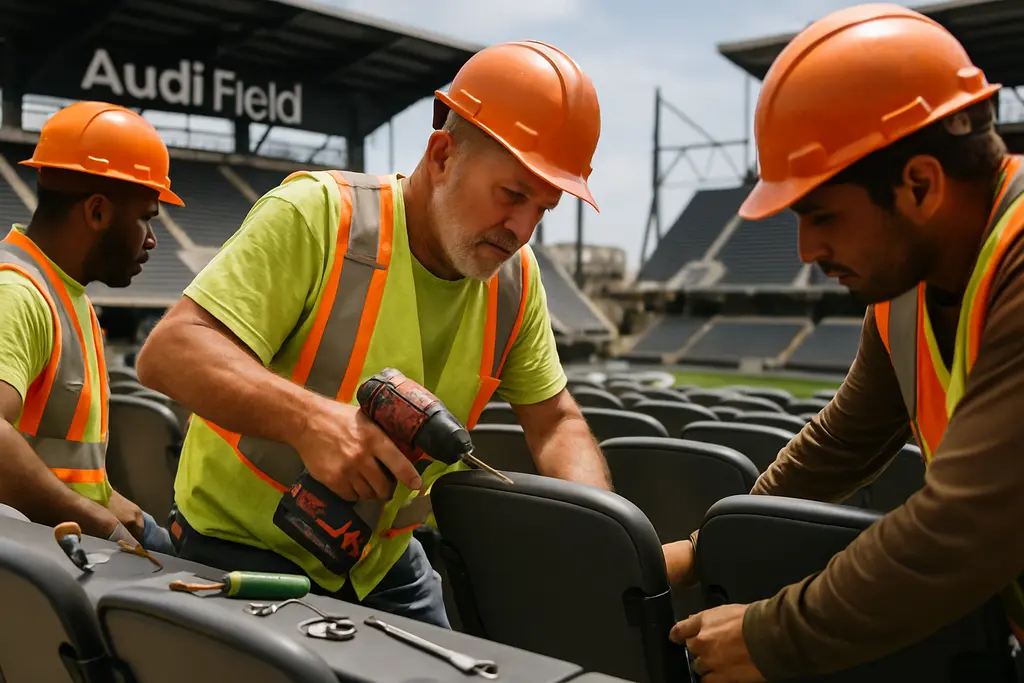
Audi Field Upgrades became a public finance and community development question on July 14, 2026, when D.C. Council Chair Phil Mendelson introduced legislation for a proposed $620 million public-private expansion of the stadium. The proposal, as reported by Sports Business Journal, would add about 8,000 seats, install a climate-controlled roof, and create ancillary facilities intended to support year-round use. As of October 20, 2026, the facts available from the cited reporting describe a proposal, not a completed redevelopment.
For community sports advocates, the main question is not whether a larger soccer venue sounds attractive. The test is whether public spending, event growth, housing commitments, and long-term maintenance rules can be measured in ways residents can understand. A stadium can help a neighborhood only if the benefits are specific enough to track and the costs are clear enough to debate before contracts are locked in.
Audi Field Upgrades And Public Cost
The proposal’s headline figure was $620 million. The District contribution was reported at about $300 million, while D.C. United would cover about $320 million to $360 million, including overruns. That split matters because public funding changes the standard of review. A private club can choose its own risk tolerance. A city has to weigh the same project against parks, schools, transit, recreation centers, public safety, and debt capacity.
What Audi Field Upgrades Would Change
The physical plan would raise capacity from roughly 20,000 to about 28,000 seats. The proposed climate-controlled roof is the more significant operational change because it could reduce weather limits and support events outside the normal outdoor soccer calendar. Sports Business Journal reported that the roof was expected to allow around 100 additional events per year, including concerts, conferences, and special events.
The Audi Field Upgrades proposal therefore should be evaluated as a year-round venue plan, not only as a matchday seating plan. More seats may improve ticket inventory for high-demand games, but year-round programming would place different demands on staffing, transport, sanitation, policing, and neighborhood noise management. Those operating details are where many stadium benefit claims either become real or remain aspirational.
Public Share Versus Public Return
A $300 million public contribution needs a defined return framework. The most basic questions are practical: how much incremental tax revenue is expected, which revenue streams flow back to the District, what maintenance costs remain public, and how event-day costs are allocated. The cited reporting identifies the proposed cost split and added-event concept, but it does not provide a verified return-on-investment model. That gap should be treated as an open issue rather than filled with assumptions.
One useful comparison for local officials is to separate capital cost from operating exposure. If the public pays for infrastructure that enables more private events, the District should publish how much of the resulting revenue is protected for maintenance, public services, and community benefits. Without that split, residents are left judging the plan by headline attendance estimates rather than net public value.
Economic Upside And Where The Risk Sits
The strongest economic argument for the stadium plan is utilization. A climate-controlled venue can hold events in months when an open-air facility is harder to program. If the projected additional events materialized, restaurants, hotels, rideshare operators, transit services, vendors, and part-time event workers could see more activity near Buzzard Point and nearby commercial corridors.
Visitor Spending Is Not The Same As Net Gain
Community leaders should separate gross spending from net new economic activity. If a District resident spends money at a concert instead of another local venue, the city has not necessarily gained new spending. If out-of-town visitors stay overnight, eat locally, and pay District taxes, the fiscal picture improves. The public case is stronger when analysis distinguishes between redirected local entertainment spending and new regional or national visitation.
The venue’s location also matters. Audi Field is part of a growing event district, and added activity could support businesses that can handle irregular peaks. Yet small businesses often need predictable calendars, loading access, and clear public-space rules to benefit. A sports infrastructure plan should not treat “more events” as a complete economic strategy. It should include vendor access rules, workforce reporting, and post-event transportation performance.
Maintenance Funding Needs Clear Rules
WTOP reported that the redevelopment proposal included a Soccer Stadium Preservation and Improvement Fund to collect stadium-related income for ongoing maintenance, and that the surrounding development plan included 467 residential units, including 122 senior affordable units and 144 affordable housing units, plus retail or office space and publicly accessible open space WTOP’s report. The fund concept is useful, but residents should ask what revenues flow into it, who controls spending, how balances are disclosed, and whether the fund reduces future pressure for public repairs.
Those questions are not hostile to sports. They are basic safeguards for any publicly supported venue. Community sports programs often struggle because operating funds are less visible than ribbon-cutting budgets. A maintenance fund can help only if it is governed with routine reporting and independent review.
Community Benefits Beyond Matchday
The housing component is central to the community debate. The reported 467 residential units, including affordable and senior affordable units, shift the proposal from a stadium-only discussion to a mixed-use development discussion. That can broaden public value, but the details matter: affordability duration, income eligibility, senior housing operations, and whether residents near the stadium face displacement pressure from higher land values.
Housing Commitments Need Enforceable Terms
Affordable housing numbers are a starting point, not a complete policy result. Council review should identify when units would be delivered, what happens if the stadium work advances faster than the housing, and which agency monitors compliance. If public money supports the project before community benefits are built, the District should consider phased funding triggers tied to housing delivery milestones.
Publicly accessible open space also needs operational clarity. Open space near a stadium can become valuable neighborhood infrastructure if it is safe, clean, and available outside event windows. It can also become a crowd-management buffer with limited everyday use. The difference depends on hours, programming, maintenance responsibility, seating, shade, lighting, and community access policies.
Women’s Sports And Local Access
The research record states that community development requirements in the bill included support for women’s sports, with an intent that these events make up a majority of annual events. Because the allowed cited sources here do not provide the full statutory language, that requirement should be verified against the bill text during public review. If confirmed, it would be a meaningful test of whether the venue serves more than men’s professional soccer and large concerts.
For youth and amateur sports advocates, the key is access. A larger stadium can still feel distant from neighborhood athletes if community use is limited or priced beyond local groups. The District could require a public calendar report showing how many dates serve women’s sports, youth clinics, school events, local tournaments, and nonprofit uses. A related local analysis of the project’s infrastructure questions is available through this Audi Field expansion analysis.
Practical Metrics For Council And Residents

Large venue proposals often produce impressive claims early and uneven reporting later. A better approach is to set metrics before final approval. These measures should be plain enough for residents to read and firm enough for agencies and the team to follow.
- Capital exposure: public dollars committed, private dollars committed, cost overruns, and any future public repair obligations.
- Event delivery: number of additional annual events, event type, attendance, and share of events tied to women’s sports or community use.
- Fiscal return: stadium-related tax revenue, fund deposits, maintenance spending, and net public service costs per event.
- Housing delivery: total units, affordable units, senior affordable units, completion dates, affordability terms, and compliance reports.
- Neighborhood performance: transit crowding, curb access, noise complaints, public safety staffing, sanitation response, and small-business participation.
These metrics should be published on a regular schedule. Quarterly reporting during construction and annual reporting after opening would let the public see whether the promised benefits are being delivered. Community groups do not need promotional summaries; they need comparable data over time.
Lessons For Smaller Community Venues
The same discipline applies beyond major stadiums. Smaller sports and recreation sites also need a clear link between capital spending, participation, maintenance, and neighborhood use. Operators reviewing community venue planning examples, including Copeland Hills Golf Club, can learn from the same principle: infrastructure investment is strongest when use, access, and upkeep are measured from the start.
That lesson is especially relevant for publicly assisted sports projects. Communities tend to support facilities when they see who benefits, when access is available, and how repairs will be funded. Trust declines when projections are broad and post-approval reporting is thin.
Audi Field Upgrades Accountability Tests
The Audi Field Upgrades debate should remain focused on verifiable public value. The proposal offered a larger venue, a roof that could support more events, a reported public-private financing split, a maintenance fund concept, housing units, retail or office space, and open space. Those are concrete pieces. The unresolved policy question is whether the District can bind them together with enforceable terms.
For Audi Field Upgrades, the most useful next step would be a public scorecard before final commitments are made. That scorecard should show the cost split, event assumptions, housing timeline, maintenance fund rules, neighborhood service costs, and community access requirements. If those items are clear, residents can judge the proposal on evidence. If they remain vague, the project should face harder scrutiny before public dollars are committed.