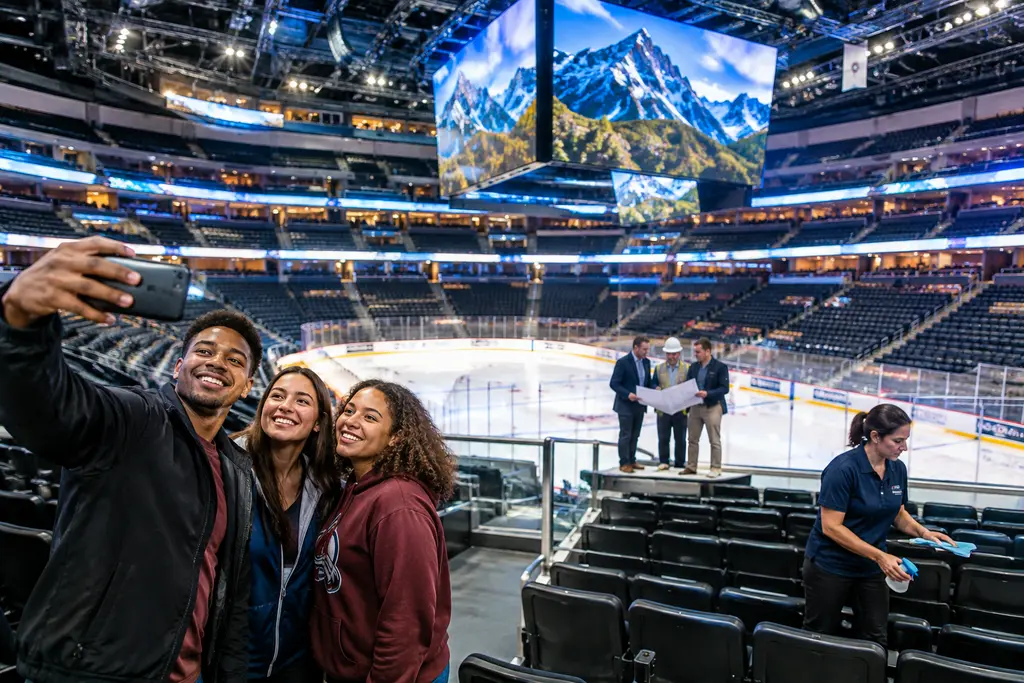
Ball Arena Renovation moved from concept to a defined capital plan on September 18, 2026, when Kroenke Sports & Entertainment announced a $135 million upgrade to Denver’s 27-year-old arena. The economic question is not whether a major venue can produce activity around games and concerts. It can. The harder question is whether the spending, access improvements, and district commitments can be measured in a way that benefits Denver’s sports culture rather than only raising the value of premium inventory.
What The Ball Arena Renovation Changes
KSE’s announcement described a venue modernization program rather than a replacement. That distinction matters. A new arena would likely carry a different public-cost debate, a longer construction schedule, and a larger displacement risk for surrounding activity. The announced work keeps the Nuggets and Avalanche home arena in service while upgrading fan circulation, premium areas, and transaction systems. KSE said the work includes an expanded East Atrium with a large glass facade, new escalators, and a team shop; wider ingress, egress, and concourses; point-of-sale technology upgrades; and three new premium clubs, including one with direct access to reserved 100-level seating, according to the Denver Nuggets announcement.
Ball Arena Renovation Scope And Timing
The project’s schedule is phased, with completion targeted in time for the 2028-29 NBA and NHL seasons. That timing is central to the economic impact analysis because a phased approach can reduce the loss of event activity during construction. It does not remove disruption risk. It shifts the test toward how well KSE manages concourse bottlenecks, temporary wayfinding, contractor staging, and access to nearby streets during seasons already shaped by basketball, hockey, lacrosse, concerts, and other large gatherings.
For Ball Arena Renovation planning, the strongest near-term indicator will be operational continuity. If the building keeps hosting events while work advances, nearby restaurants, hotels, rideshare drivers, parking operators, and transit connections have a better chance of retaining event-night demand. If construction creates recurring access problems, some spending may move away from the district even if attendance remains strong.
Premium Space, Fan Flow, And Revenue Signals
The premium-club component points to one likely revenue path: higher-yield seating and hospitality. That can support private investment and long-term team retention, but it also creates a cultural question. Denver’s sports identity is not built only in clubs. It is built in upper bowls, concourses, pregame walks, family outings, and shared rituals around postseason runs. The public-facing test is whether wider concourses, better entry and exit, and faster concessions improve the experience for the broad ticket base, not only for patrons buying premium products.
The Ball Arena Renovation is therefore best assessed as two projects at once: a business upgrade for ownership and a capacity-management upgrade for fans. Those interests can align if the fan-flow investments reduce stress, shorten lines, and make event nights easier for people who do not buy club access.
Denver Sports Culture And Visitor Demand
Denver’s sports culture is unusually concentrated near the core of the city. Ball Arena sits close to downtown and is tied to a wider entertainment district plan. The research record for this analysis states that the larger first phase around the arena addresses 55 acres and includes a hotel, a mid-size entertainment venue, two residential buildings with roughly 300 homes, and mixed-use space. That mix changes the economic impact from a single-building question into a district-performance question.
Event Density Near Downtown
Event density creates opportunity and pressure. More reasons to stay before or after a game can spread spending across more hours. A hotel near the arena could capture visitors who come for sports, concerts, or multi-event weekends. A mid-size entertainment venue could fill dates when the arena is dark. Residential buildings can add everyday demand that is not tied to a final score.
But district growth can also price out smaller businesses and shift the area toward a narrow event-consumption model. Denver should track whether the redevelopment produces locally accessible spaces or mainly higher-cost experiences. The practical question for community sports advocates is simple: does a major arena district make the city easier to use for fans, workers, youth teams, and neighborhood residents, or does it become a gated event economy with public benefits mostly described after the fact?
Recovery Context For Sports Anchors
The recovery context supports a cautious reading. The 2024 Colorado Business Economic Outlook reported that downtown Denver visitation in October 2023 had reached 67% of 2019 levels, and the report discusses downtown activity within the state’s broader economic conditions in the Colorado economic outlook. That figure does not prove that arena investment will close the gap. It does show why sports and entertainment anchors attract attention from policymakers and property owners.
A renovated arena can help by bringing predictable surges of people into the city. Yet visitation is not the same as shared prosperity. Denver needs measures that separate transferred local spending from new visitor spending. If a resident simply shifts dinner from one neighborhood to another on game night, the citywide economic gain is smaller than the district sales figures may suggest. If out-of-town visitors stay overnight, use local services, and extend their trip, the impact is more meaningful.
Community Infrastructure Tests
The arena work sits beside a broader access and development package. The research record identifies Wynkoop Crossing, a pedestrian and bike bridge over Speer Boulevard connecting downtown Denver to Ball Arena’s east entrance, as approved by Denver City Council in July 2026 with expected operation in 2029. That bridge matters because sports infrastructure is not only the building. It includes how people arrive, how safely they cross streets, and whether fans can choose walking, biking, transit, or shared rides without unreasonable delay.
Housing, Bridge Access, And Equity
The October 2024 Community Benefits Agreement for the arena district included obligations to build more than 1,000 affordable homes and establish a $16 million Community Investment Fund tied to development and retail sales projections. These commitments should be treated as measurable obligations, not public-relations language. Denver’s review should ask: how many affordable units are delivered, when they open, what income levels they serve, and whether the fund reaches community priorities connected to displacement risk, youth opportunity, or neighborhood access.
For sports culture, housing near venues is not a side issue. Event districts without affordability can become places people visit but cannot live near. A better model links major-event economics to mixed-income housing, safer crossings, and everyday public use. For a related access-focused reading of the same project, AplEvante’s analysis of the Denver access plan examines how fan flow and district connections can shape community value.
What Smaller Venues Can Borrow
Community sports facilities will not copy a $135 million NBA and NHL venue program. They can borrow the evaluation method. Start with the user journey: arrival, entry, movement, restrooms, concessions, seating, exit, and the trip home. Then ask which capital fixes reduce friction for the largest number of users. In many community settings, the answer may be shade, lighting, accessible paths, drinking water, bike parking, or safer crossings rather than premium seating.
For readers comparing regional venue planning and sports culture outside Colorado, the Texas Sportsmen website provides a related network perspective on community and sports issues. The shared lesson is that facility investments need public-facing metrics. A scoreboard tells the result of a game; an infrastructure scorecard should tell whether the venue is becoming safer, more accessible, and more useful to the surrounding community.
Ball Arena Renovation Economic Impact Scorecard
The most useful approach is to track a small set of indicators before, during, and after completion. Denver should avoid relying on headline spending alone. Capital cost shows scale, not public value. A better scorecard connects the arena work, the district development, and the community commitments.
Measures Worth Tracking Through 2029
| Measure | Why It Matters | Practical Test |
|---|---|---|
| Event Continuity | Shows whether phased construction protects sports and entertainment activity. | Compare event counts and cancellations during construction against pre-project patterns. |
| Fan Flow | Tests whether wider entries and concourses improve the regular fan experience. | Track entry wait times, exit clearance, concession transaction times, and accessibility complaints. |
| Visitor Spending | Separates district activity from wider economic gain. | Estimate overnight visitors, local substitution, and event-linked sales using transparent methods. |
| Housing Delivery | Connects redevelopment to affordability promises. | Publish units delivered, affordability levels, opening dates, and location data. |
| Bridge And Active Access | Measures whether the 2029 crossing improves non-car access. | Count pedestrian and bike volumes, safety incidents, and post-event crossing times. |
If Ball Arena Renovation succeeds, the evidence should be visible in more than premium revenue. It should show up in smoother event nights, credible public reporting, delivered affordability commitments, safer downtown connections, and a sports district that works for fans with different budgets. The project has enough scale to affect Denver’s sports economy. Its civic value will depend on whether Denver measures the right outcomes and publishes them plainly.