
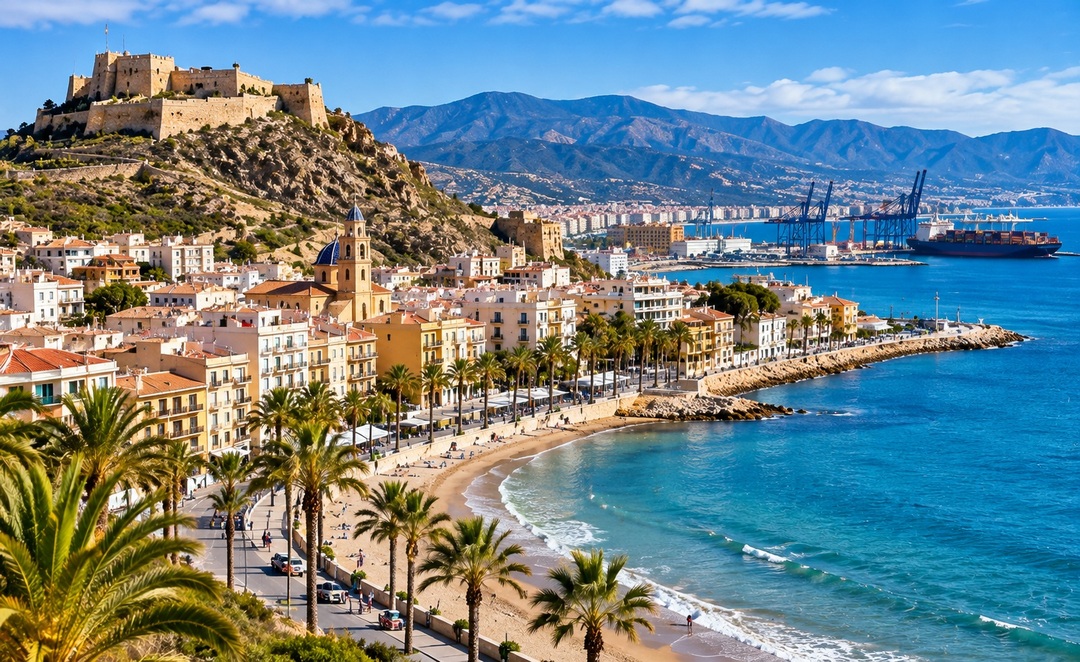
The eastern coastal arc of the Iberian Peninsula, traditionally designated as the Spanish Levante, represents one of the most productive, economically diverse, and export-oriented macro-regions in Southern Europe. Encompassing the historic commercial crossroads of the Valencian Community and the Region of Murcia, this littoral corridor generates nearly twenty percent of Spain’s gross domestic product and accounts for a decisive share of the nation’s agrifood and industrial exports. Despite its formidable economic density, the region has historically grappled with radial infrastructure models centered on Madrid that have constrained direct north-south freight and passenger logistics along the Mediterranean basin.
Addressing these structural bottlenecks has emerged as a generational imperative for regional business leaders, civic associations, and logistics authorities. Regional initiatives and socio-economic coverage highlighted across AP Levante emphasize that modernizing connectivity across the Levante is vital not only for local competitiveness but for the decarbonization of European supply chains. Completing the Mediterranean Corridor (Corredor Mediterráneo) standard-gauge railway infrastructure is serving as the primary catalyst for an unprecedented structural re-alignment of regional trade, port logistics, and sustainable industrial growth.
Strategic Foundations: The Mediterranean Railway Corridor
For decades, freight movement across the Levante faced severe operational frictions resulting from Spain’s historical use of Iberian broad-gauge railway tracks (1,668 mm), which necessitated cumbersome axle-gauge exchanges or direct cargo transfers at the French border. The systematic deployment of the Trans-European Transport Network (TEN-T) standard-gauge corridor across the Mediterranean coast directly connects maritime terminals in Castellón, Valencia, Alicante, and Cartagena directly to Lyon, Frankfurt, and Rotterdam without intermediate break-of-bulk operations.
Strategic oversight from the Ministerio de Transportes y Movilidad Sostenible has accelerated key intermodal sections, incorporating mixed-gauge third rails and dedicated high-speed tracks. By enabling 740-meter freight trains to link Mediterranean manufacturing nodes directly to central European consumer markets, the corridor achieves significant economies of scale. Shifting high-tonnage freight from highway haulage across the AP-7 motorway to electrified rail significantly reduces transportation overhead while curbing atmospheric greenhouse emissions.
Civil engineering milestones across the La Encina junction and the Castellón-Vandellòs sector demonstrate the technical complexity of threading standard-gauge freight lines through intensely urbanized coastal topographies. As these critical junctions become fully operational, regional transit times for perishable fruits, ceramics, and automotive assemblies drop dramatically, bolstering market access for regional producers.
Port Logistics: Valencia and Cartagena as Global Maritime Gateways
The economic vitality of the Levante is inextricably tethered to its maritime port clusters. The Port of Valencia stands as the busiest container gateway on the Mediterranean Sea and the fourth busiest in Europe, serving as the commercial entry and exit conduit for more than half of Spain’s foreign containerized trade. Concurrently, the Port of Cartagena has established itself as an indispensable energy hub, processing critical shares of liquefied natural gas (LNG) imports and refined petrochemical products essential to Southern Europe’s industrial capacity.
| Port Cluster | Primary Specialization | Annual Freight Volume (Approx.) | Key Infrastructure Expansion |
| Port of Valencia (Valenciaport) | Intermodal container logistics, automotive ro-ro | 78+ Million Tonnes / ~5M TEU | Northern Container Terminal development, rail intermodal integration |
| Port of Cartagena (Escombreras) | Bulk energy imports, LNG, chemicals, live cargo | 36+ Million Tonnes | Barlomar deepwater terminal expansion, railway spur connectivity |
| Port of Castellón (PortCastelló) | Ceramic raw materials, bulk clays, citrus exports | 20+ Million Tonnes | Internal south basin rail connection, intermodal logistics platform |
| Port of Alicante | Short-sea shipping, cruise tourism, regional general cargo | 3.5+ Million Tonnes | Digital logistics park, renewable cold ironing quayside systems |
Ensuring that these maritime gateways interface directly with the continental rail network avoids landside trucking gridlock. Data released by Puertos del Estado underlines that ports with dedicated on-dock rail terminals achieve superior operational resilience, enabling rapid container evacuation directly from shipside cranes onto waiting intermodal railcars bound for European distribution centers.
Agrifood Innovation and the Technological Shield Against Aridity
Beyond heavy industrial logistics, the Levante is celebrated as the “Orchard of Europe.” The fertile alluvial plains of the Huerta de Valencia and the Campo de Cartagena produce unmatched yields of citrus, stone fruit, leafy vegetables, and table grapes. However, maintaining this agricultural preeminence requires constant confrontation with structural water deficits. The historic reliance on the Tajo-Segura inter-basin water transfer has faced increasing regulatory constraints, compelling regional growers to adopt vanguard agronomic technology.
Growers across the Levante have turned structural water scarcity into a global showcase of hydraulic efficiency. Advanced drip-fertigation systems, sensor-driven soil moisture probes, and automated greenhouse climate chambers ensure that every cubic meter of water delivers optimal caloric and economic yield. Public institutions and cooperative research centers supported by the Ministerio de Agricultura, Pesca y Alimentación document that the Valencian and Murcian agricultural sectors reclaim and reuse over ninety percent of their treated municipal wastewater—an international benchmark unmatched across the European continent.
- Desalination integration: Advanced reverse-osmosis facilities powered by localized solar photovoltaic arrays stabilize coastal irrigation supplies.
- Precision fertigation telemetry: IoT-enabled probes monitor electrical conductivity and soil matrix potential in real time to prevent nutrient leaching.
- Circular agricultural runoff capture: Innovative bio-reactors and vegetative buffer zones filter nitrate runoff, safeguarding coastal ecosystems like the Mar Menor.
- Protected cultivation efficiency: High-tech shade structures and hydroponic substrates dramatically lower transpirational water losses during peak summer temperatures.
These sophisticated agronomic strategies decouple regional agricultural output from unpredictable seasonal rainfall patterns, safeguarding export competitiveness while advancing climate adaptation mandates.
Industrial Modernization: The Castellón Ceramic Cluster and Advanced Manufacturing
In the northern Levante province of Castellón, another core economic engine resides: the Spanish tile and ceramics industrial cluster. Generating over ninety percent of national tile production, this concentrated industrial district represents an international leader in materials science, digital printing technologies, and high-performance architectural porcelain. Like the agrarian sector, this energy-intensive industry is executing a profound structural modernization.
Spurred by European carbon neutrality mandates, the Castellón cluster is actively pioneering hydrogen-fueled kilns and advanced industrial heat recovery systems. By partnering with regional university institutes like the Instituto de Tecnología Cerámica (ITC), manufacturers are formulating raw tile pastes that require lower sintering temperatures, trimming energy consumption per square meter produced. Seamless integration with PortCastelló’s bulk terminals ensures rapid import of refractory clays and rapid export of finished designer surfaces to global construction markets.
Simultaneously, automotive and advanced battery manufacturing around Almussafes in Valencia confirms the Levante’s status as a top-tier mobility manufacturing corridor. Transitioning assembly lines to next-generation electric vehicle platforms anchors thousands of skilled engineering and technical jobs throughout the regional supply chain.
Navigating Future Competitiveness Across the Spanish Levante
The ongoing structural evolution of the Spanish Levante demonstrates how regional geographic assets can be magnified through focused capital investment, technological resilience, and coordinated territorial planning. By converting long-standing logistical obstacles into an integrated multimodal freight network, regional stakeholders are positioning the Mediterranean coast as Europe’s premier southern logistics gateway. Preserving the delicate equilibrium between industrial ambition, intensive agrifood production, and environmental protection will determine the Levante’s economic resilience for decades to come, ensuring this storied Mediterranean coastline remains an enduring engine of European prosperity.