Imagine Hippocrates in a toga, telling people to jump instead of drink potions. It turns out, those old doctors were right all along.
The link between moving and feeling good isn’t new. It’s been known for centuries. From ancient Greeks to 1950s bus drivers, the proof keeps growing.
Today’s science backs up what the old timers thought. A big study found active people are healthier. They do better in many ways.
But even with Peloton and fitness apps, we’re slow to get it. Movement equals better health. It’s simple, really.
It’s clear: moving helps, no matter what you do. The real question is, why are we arguing about it? Hippocrates knew 2,400 years ago.
Local Statistics on Activity & Obesity
Welcome to the uncomfortable truth about our community’s fitness landscape. Zip codes predict workout frequency better than weather apps predict rain. The data shows patterns that are almost poetic, but they break our hearts with systemic inequality.
In our least deprived areas, 73% of residents meet physical activity guidelines. But in the most deprived neighborhoods, that number drops to 57%. It’s like a fitness cliff dive. Your address shouldn’t decide how active you are, just like your astrological sign shouldn’t decide your career.
Ethnic disparities are even more striking. White British residents have 47.7% activity rates, while Black communities have 35.7%. Other groups, like Other ethnicities and Asian residents, have rates of 38.0% and 38.7% respectively. These numbers show big gaps, indicating structural barriers that are hard to ignore.
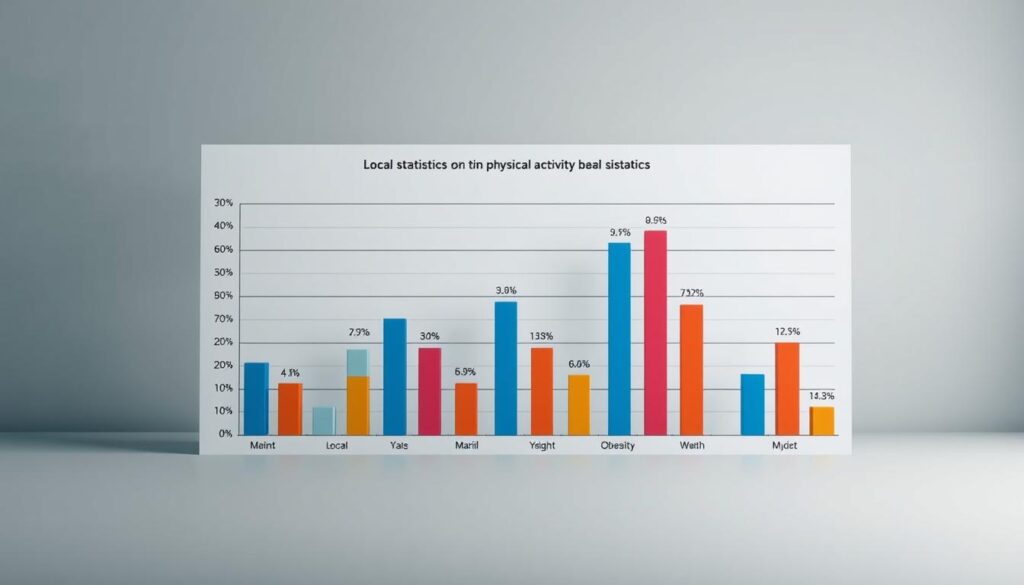
Weight prevalence statistics follow the same sad pattern. Most deprived areas have 14 percentage points higher excess weight rates. People with disabilities face a 12-point gap, showing our infrastructure failures. We’ve built cities that favor some bodies but exclude others.
These local patterns mirror global trends, as seen in the WHO’s 2025 NCD Progress Monitor. The consistency across datasets shows we’re dealing with systemic issues that need systemic solutions.
This isn’t just data – it’s a diagnostic of our societal health. The numbers tell us who can move freely and who faces invisible barriers. They show which communities we’ve invested in and which we’ve left behind. In the grand chessboard of public health, some pieces get moved while others remain stuck on squares of inequality.
What makes these statistics galling is their predictability. We could map exercise opportunities using income maps and get nearly identical results. The fitness haves and have-nots aren’t random distributions – they’re features of our built environment, not bugs.
As we digest these numbers, remember they represent real people making real choices within constraints we’ve created. The public health challenge isn’t convincing individuals to move more – it’s rebuilding systems that make movement possible for everyone, regardless of zip code, ethnicity, or ability.
Case Studies of Successful Interventions
Looking at real-world success stories in obesity prevention is inspiring. We see what actually works, not just theories. These are interventions that show real results.
Digital health tools are changing how we view physical activity. But, they work best when paired with human support. This combination is key to success.
Studies show that when AI coaching is paired with human support, people lose 2.12kg in three months. Without human help, the loss is only 1.22kg. This shows the power of human support.

The Moving Medicine program is a big win in healthcare. It helps doctors talk about physical activity easily. No more awkward conversations about lifestyle.
The Active Hospitals Programme is also making waves. It shows that everyone can benefit from being active, even in hospitals. Patients see big improvements when they move more.
But it’s not just hospitals. Community programs are also doing great:
- Walking programs that turn neighborhoods into social fitness networks
- Cycling initiatives that make two wheels better than four
- Sports interventions that transform parks into community wellness hubs
These stories are backed by data. They show how smart programs can fight obesity. The key is making physical activity easy, fun, and part of daily life.
The best programs mix technology with human touch. They make spaces active and supportive. They show that lasting change is possible with the right approach.
Partnerships with Schools & Parks
Let’s face it – telling people to exercise more in concrete jungles is tough. The lack of green space is a big barrier to being active. What if we turned our community spaces into “fitness ecosystems”?
Schools and parks are more than just places for kids to play. They’re key in the fight against sitting too much. Think about it – we have captive audiences at schools and beautiful green spaces in parks that go unused.
Creating partnerships can turn these spaces into health hubs. Imagine schoolyards open for fitness after school, park paths for activities, and programs that make moving the norm.
The WHO’s GenMove program from the Qatar World Cup shows us how to innovate. It uses big events to leave a lasting health impact, not just excitement.
Here’s what successful partnerships look like:
| Partnership Type | School Implementation | Park Implementation | Community Impact |
|---|---|---|---|
| After-Hours Access | Open gyms & tracks evenings/weekends | Extended hours for fitness activities | 24% increase in evening physical activity |
| Program Integration | GenMove adapted for PE classes | WHO walking trails with markers | 38% more residents regularly active |
| Infrastructure Sharing | School equipment for community use | Park spaces for school sports events | 57% better resource utilization |
| Joint Programming | Student-led community fitness events | Park-based senior-youth activity pairs | 41% increase in cross-generational activity |
These aren’t just ideas – they’re real models from places that work together. The best part? They use simple activities that don’t need fancy gear or trainers.
We’re talking about walking programs, yard work, play areas for kids, and biking paths. These activities feel like living, not exercising.
The beauty of these partnerships? They turn community resources into health assets without big costs. It’s about working smarter, not just building more.
When schools and parks partner, we make moving easy. This is when real change happens – not by telling people to move, but by making it irresistible.
How Leaders Can Promote Sports Programs
Leadership in public health is more than just opening fancy stadiums. It’s about making sure everyone has a chance to get involved, no matter where they live.
SEM consultants play a key role. They connect health care with community fitness. They use tools like PAR-Q+ and Moving Medicine’s frameworks. Sometimes, all it takes is a simple talk to start making a difference.
150 minutes of moderate activity a week is doable. That’s just 22 minutes a day. The real challenge is making sure everyone has access to these opportunities.
Great leaders use resources like the ICOPE handbook. They push for policies that encourage active transport. They fund sports programs that feel welcoming, not forced.
Public health improves when we treat exercise as a part of life, not just medicine. The best sports program is one that people actually use. That’s real leadership that gets people moving.