

Tuskegee Staffing Changes became a direct student-athlete development issue on October 4, 2026, when Tuskegee University announced that Aaron James had been relieved of his duties as head football coach and that assistant head coach and offensive line coach Keith Higdon had been named interim head coach while the university initiated a national search for a permanent head coach, according to Tuskegee University. That decision had already happened as of October 21, 2026, so the useful question is not whether change was coming; it is how the change should be assessed for its effect on practice habits, retention, academic progress, recruiting confidence, and player leadership.
Staff turnover in college athletics is often judged first by wins and losses, but student-athlete development requires a wider lens. A football player’s growth depends on coaching clarity, strength and conditioning continuity, position instruction, academic monitoring, mental readiness, and trust in the program’s direction. For a community sports advocate, the key point is practical: staffing change is not automatically damaging, but unmanaged staffing change can interrupt the daily systems that help athletes improve.
Tuskegee Staffing Changes And Development Risks
Tuskegee Staffing Changes In Football Operations
The football transition carried immediate operational risk because it occurred after five games of the 2026 season. FootballScoop reported that James’ teams went 5-6 with a 5-3 SIAC record in 2024, 4-7 with a 3-5 SIAC record in 2025, and opened 2026 at 2-3 before the change, as covered by FootballScoop. Those records explain part of the competitive pressure, but they do not by themselves measure whether linemen developed better technique, whether younger players were retained, or whether academic support stayed stable.
For Tuskegee Staffing Changes, the development risk sits in the details of transition. A new or interim coach may alter meeting structure, practice tempo, terminology, playing-time standards, and staff responsibilities. Even if the playbook is not fully changed, athletes must adjust to different communication patterns. That can affect freshmen and sophomores the most because they are still learning college routines and may depend more heavily on position-specific feedback.
Interim Leadership And Practice Consistency
Higdon’s appointment as interim head coach offered one stabilizing feature: he was already assistant head coach and offensive line coach. Internal interim appointments can reduce shock because players know the coach, the coach knows the roster, and daily logistics do not have to be rebuilt from the first step. Still, interim leadership has limits. Athletes and recruits may wonder who will be in charge after the national search, which can affect confidence in long-term development plans.
The most useful evaluation tool here is a short continuity audit. Tuskegee’s athletics leadership can track whether position meetings stayed on schedule, whether strength training blocks remained consistent, whether academic check-ins continued, and whether captains had a clear channel to report concerns. None of those measures require speculation. They are simple indicators of whether a staffing shift disrupted the athlete experience.
Academic Signals Around Athlete Development
Why Classroom Data Matters
The research record for 2025-26 showed strong academic outcomes across Tuskegee athletics, including leading SIAC academic honors, the highest combined cumulative GPA across men’s, women’s, and overall student-athlete categories, and 12 team academic championships. It also recorded a spring 2026 athletics department cumulative GPA of 3.25, with all but two varsity programs out of 12 sports and cheer above a 3.0 GPA. Those indicators matter because academic performance is one of the clearest ways to evaluate whether an athletics department is supporting the full student, not just the competitor.
That said, strong grades do not prove that any single administrator, coach, or staffing decision caused the results. The safer reading is that Tuskegee entered the October 2026 football transition with evidence of functioning academic expectations across the department. That baseline matters. If football staffing uncertainty starts affecting class attendance, study hall completion, eligibility status, or athlete retention, the department should be able to detect it against the recent academic benchmark.
Recognition As A Behavior Signal
At the 2026 All-Sports Awards Banquet in April 2026, the research notes identified Monica Rose with a 3.84 GPA, Ryan Morrow with a 4.0 GPA, and Men’s Tennis with a 3.45 team GPA. Public recognition of academic achievement is not a cosmetic detail. It tells younger athletes what the department rewards. In a period of coaching change, those rituals can help protect standards because they shift attention back to discipline, preparation, and consistency.
A practical reading of Tuskegee Staffing Changes should ask whether the same academic messaging reaches football players during the interim period. If coach turnover causes academic support to become less visible, the department should correct that quickly. If academic check-ins remain steady, then the coaching transition is less likely to harm long-term development.
Facilities And Program Expansion As Support Systems
New Programs And Recruitment Pathways
The research notes also identified broader athletics growth under Reginald S. Ruffin, who was elevated in November 2025 to vice president of intercollegiate athletics and athletic director. Men’s and women’s soccer were set to debut in late August 2026, with Mathew Tarpley and Emanuel Stephens hired in February 2026 as inaugural head coaches after a national search. For student-athlete development, the value is not only adding teams. New programs create fresh roster spots, new leadership roles, and a chance to set academic and training expectations from the first recruiting class.
Program expansion also changes the resource question. More teams can increase opportunity, but they also require adequate coaching attention, facilities access, athletic training coverage, academic support, and travel planning. For community sports development, this is a familiar tradeoff: participation growth is positive only when the support system grows with it. Readers curious about how community planning resources compare can review a related sports resource directory for broader insights.
Facility Upgrades And Daily Athlete Experience
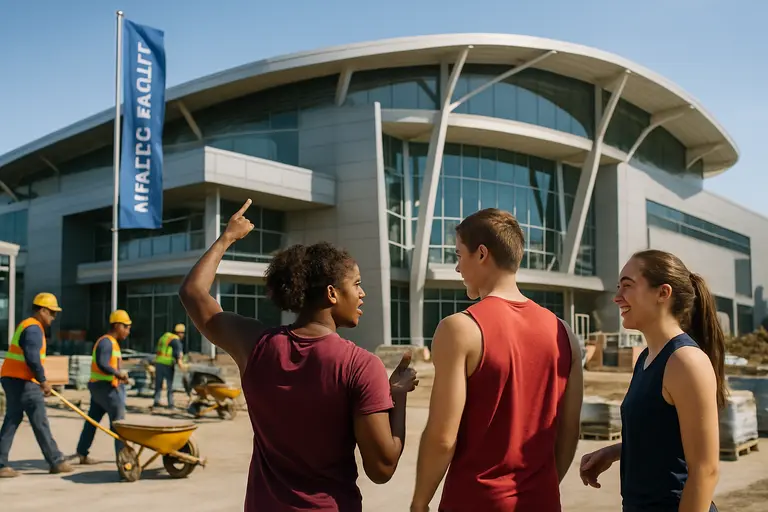
In March 2026, the research notes described facility upgrades at the Chappie James Center, including a new basketball court floor, LED arena lighting, and advanced digital scoreboards, with completion planned before commencement. Facility improvements can support athlete morale, training quality, and recruiting, but the effect should be measured rather than assumed. A better court or lighting system helps most when it is paired with fair access schedules, safe maintenance standards, and coaching plans that use the facility for purposeful development.
For Tuskegee Staffing Changes, facilities create a counterweight to uncertainty. If recruits or current athletes see visible investment in training spaces, they may view a coaching search as one part of a broader athletics plan rather than as a sign of instability. Still, the department should avoid relying on buildings to solve human concerns. Athletes need clear expectations, trusted coaches, and reliable academic support.
Tuskegee Staffing Changes: Development Scorecard
Measures Administrators Can Track Now
The most defensible assessment is a scorecard that combines competition, academics, retention, and athlete support. It should not be used to protect or criticize one individual. It should be used to identify whether the department’s development system is holding steady during transition.
- Practice Continuity: Track whether meeting times, position instruction, film review, and strength sessions remained consistent after October 4, 2026.
- Academic Stability: Compare football class attendance, study hall completion, eligibility status, and term GPA against the department’s recent academic baseline.
- Retention Signals: Monitor roster participation, transfer intent discussions where available, and player exit feedback without treating rumor as evidence.
- Recruiting Communication: Record whether recruits received accurate information about the interim coach, the national search, and academic expectations.
- Athlete Voice: Use captain meetings and anonymous check-ins to identify confusion before it becomes disengagement.
This type of scorecard gives Tuskegee a practical way to separate normal transition noise from development problems. It also respects the student-athletes most affected by the decision. They do not need broad claims about culture; they need predictable schedules, accountable adults, and a clear path for improvement.
As of October 21, 2026, Tuskegee Staffing Changes should be judged with caution. The football move was real and documented, the national search had been initiated, and the department’s broader academic indicators were strong in the 2025-26 record supplied for this review. The central test is whether Tuskegee can preserve that academic and developmental foundation while resolving football leadership. If it can, the staffing change may become a controlled reset. If not, the cost will show up first in daily habits before it shows up on a scoreboard.