Planning for U.S. Soccer tournaments now requires separating confirmed future matches from qualification events that already took place before October 6, 2026. The senior men’s calendar is centered on the 2026-27 Concacaf Nations League, while youth planning depends on the U-17 World Cups and the qualification pathway created by the 2026 Concacaf U-20 Championship.
The practical challenge for clubs, schools, supporter groups, and local sport agencies is not only knowing dates. It is deciding which events affect player release, community programming, facility use, travel budgets, and youth development messaging. That requires a calendar that treats official dates as fixed, treats opponents and rosters as uncertain until announced, and avoids assuming results that have not been supplied by official sources.
U.S. Soccer tournaments Calendar And Status
What U.S. Soccer tournaments Mean For Clubs
The core value of U.S. Soccer tournaments for community organizations is timing. If a national team competition lands during a school season, a local tournament weekend, or a coach education window, the event can either support participation or compete with it. The same is true for viewing events, local clinics, and recruitment campaigns. A cautious plan starts with confirmed competition windows and avoids building programs around unconfirmed matchups.
Concacaf confirmed that the 2026-27 Concacaf Nations League includes League A, League B, and League C competition, and that all matches count toward 2027 Concacaf Gold Cup qualification as well as promotion and relegation between leagues Concacaf competition format. For the U.S. men, the most relevant senior-team event is the League A quarterfinal in November 2026.
| Competition | Confirmed Dates Or Window | U.S. Status From Research | Planning Use |
|---|---|---|---|
| 2026-27 Concacaf Nations League | Group stage in September-October and November 2026; finals in March 2027 | United States received a League A quarterfinal bye as one of the top four ranked teams | Senior-team watch events, venue planning, Gold Cup pathway tracking |
| USMNT League A Quarterfinal | First leg on November 14, 2026; home return leg on November 17, 2026 | Return leg at TQL Stadium in Cincinnati; opponent to be determined | Travel checks, facility staffing, local soccer activation |
| FIFA U-17 World Cup 2026 | November 19 to December 13, 2026 | U.S. Under-17 Men qualified for their 20th appearance | Youth player education, academy scheduling, scouting discussion |
| FIFA U-17 Women’s World Cup 2026 | Morocco event; exact tournament dates not supplied in the research | U.S. Under-17 Women qualified after a 4-0 win against Puerto Rico | Girls’ pathway programming and club communication |
| 2026 Concacaf U-20 Championship | July 25 to August 9, 2026 | United States had direct entry into the final tournament | Retrospective pathway review for the 2027 U-20 World Cup and 2028 Olympics |
Separating Future Dates From Completed Qualifiers
The U-20 Championship had already taken place by October 6, 2026, so planning language should be retrospective. It served as the regional qualifier for the FIFA U-20 World Cup 2027 and the 2028 Summer Olympics. The research states that the four semifinalists qualified for the 2027 U-20 World Cup, but it does not provide a confirmed final table or team list. Any local report should avoid naming qualifiers unless those names are checked against official competition records.
The U-17 events are different because key tournament activity remained ahead of October 6, 2026. The U.S. Under-17 Men qualified for the 2026 FIFA U-17 World Cup in Qatar, scheduled for November 19 to December 13, 2026, after winning Group E in Concacaf qualifying and drawing 1-1 with the Dominican Republic on February 10, 2026. The U.S. Under-17 Women qualified for the 2026 FIFA U-17 Women’s World Cup in Morocco after a 4-0 win over Puerto Rico, finishing unbeaten in the Final Round group and conceding zero goals, according to the research supplied.
Senior-Team Planning Around The Nations League
Quarterfinal Timing And Venue Implications
The U.S. Men’s National Team will play the away first leg of its League A quarterfinal on November 14, 2026, against an opponent that had not been determined in the supplied research. The return leg is scheduled for November 17, 2026, at TQL Stadium in Cincinnati, Ohio, and the winner advances to the Nations League Finals in Los Angeles in March 2027 U.S. Soccer match announcement.
For community organizations in Ohio and nearby states, the Cincinnati match creates a short planning window. The safest work plan is to prepare transportation, communication, and staffing assumptions without presenting the opponent, kickoff time, or roster as settled until U.S. Soccer confirms them. For readers comparing venue movement and access checks across fall national-team matches, the site’s prior analysis of USMNT travel logistics offers a related framework.
Gold Cup Qualification Raises The Stakes
The Nations League should not be treated as a stand-alone tournament. Because all matches count toward 2027 Gold Cup qualification, each competitive window can affect the next summer’s regional pathway. That matters for local soccer groups because Gold Cup planning often touches different audiences: immigrant communities with strong Concacaf ties, youth players following senior-team role models, and clubs seeking civic partners for public events.
A practical approach is to build two plans. The first covers confirmed November 2026 activity, especially the Cincinnati return leg. The second covers March 2027 contingencies in Los Angeles if the U.S. advances. This keeps budgets disciplined and reduces the risk of promising programming that depends on a result.
Youth World Cups And Development Messaging
Using U-17 Qualification Without Overclaiming
Youth World Cups are useful for development messaging, but local leaders should be careful with claims. A player appearing at a U-17 World Cup does not prove that every pathway is open or that every local club has equal access to elite identification. What the confirmed information does show is that the U.S. had both a boys’ and girls’ U-17 team qualified for 2026 global competition.
That can support specific community actions: coach discussions about age-appropriate competition, parent education on long-term development, and girls’ soccer events tied to the U-17 Women’s team’s qualifying performance. For boys’ programs, the U-17 Men’s 20th appearance provides a clear reference point for continuity in international youth competition, though it should not be used to make unsupported claims about future senior-team outcomes.
Applying The U-20 Championship After It Happened
The 2026 Concacaf U-20 Championship took place from July 25 to August 9, 2026, so the useful work now is review rather than preview. Local organizations can examine how the event’s dual qualification role shaped roster planning, since it fed both the 2027 U-20 World Cup pathway and the 2028 Summer Olympics pathway. The research confirms that the United States was among six top nations given direct entry into the final tournament.
For clubs, the key lesson is calendar pressure. U-20 players may sit between academy, college, professional, and national-team demands. Even without naming any roster from the supplied research, administrators can use the tournament window to discuss release policies, academic support, and communication between families and coaches.
Community Planning Tools For Soccer Organizations
A Short Checklist For Local Administrators
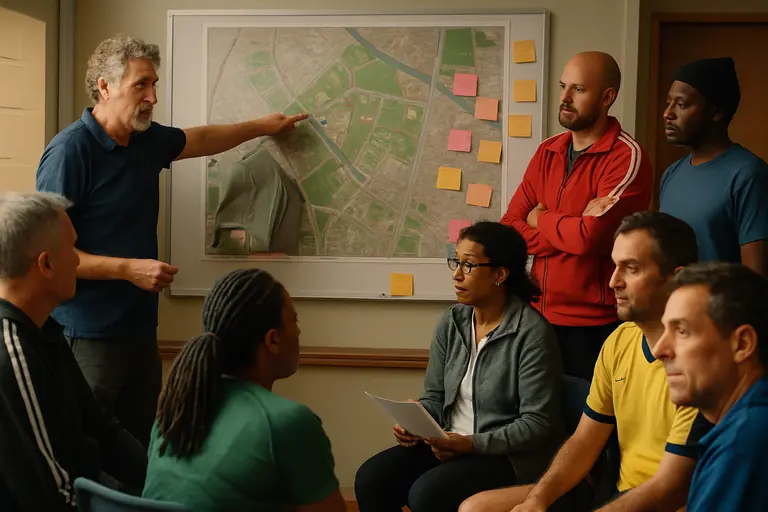
Good planning for U.S. Soccer tournaments is less about promotion and more about reducing avoidable gaps. The following checklist can be used by youth clubs, parks departments, schools, and supporter groups before creating programs tied to national-team events.
- Confirm the date source: use official federation or competition announcements before publishing calendars.
- Mark past events clearly: treat the July-August 2026 U-20 Championship as completed, not as an event still to attend.
- Hold flexible space: reserve rooms or fields for watch events only after checking match timing and staffing limits.
- Separate youth and senior goals: use U-17 and U-20 events for development education, not senior-team predictions.
- Track access needs: plan transportation, language access, and safe pickup points for any community event.
Operations teams that use shared calendars, mapping files, or facility documents should also keep a single source of truth for dates. For professionals in technical fields seeking to optimize planning workflows, CADCAMNet offers a useful reminder of the importance of version control in team coordination.
Evidence Standards For Public Communication
Public-facing materials should distinguish between official facts, reasonable implications, and unknowns. For example, it is accurate to say that the U.S. men’s November 17, 2026, return leg is set for TQL Stadium. It is not accurate, based on the supplied research, to name the opponent. It is accurate to say the U-17 Men’s World Cup runs from November 19 to December 13, 2026, in Qatar. It is not accurate to publish a youth roster unless an official roster has been released and checked.
This standard protects credibility. It also helps families and volunteers make decisions with fewer corrections later. In community sports, uncertainty is not a weakness if it is labeled honestly.
Planning U.S. Soccer tournaments For Local Programs
A careful calendar for U.S. Soccer tournaments can turn national-team competition into local value without overstating what is known. The senior men’s Nations League path gives organizers firm November 2026 dates and a possible March 2027 Finals connection. The youth calendar gives clubs a way to discuss development through the U-17 World Cups and a completed U-20 qualifying cycle.
The recommended planning stance is conservative: use official dates, name only confirmed opponents and venues, and separate watch-event promotion from player development education. That approach gives community groups a practical structure for 2026-27 soccer activity while leaving room for new official details as they are released.