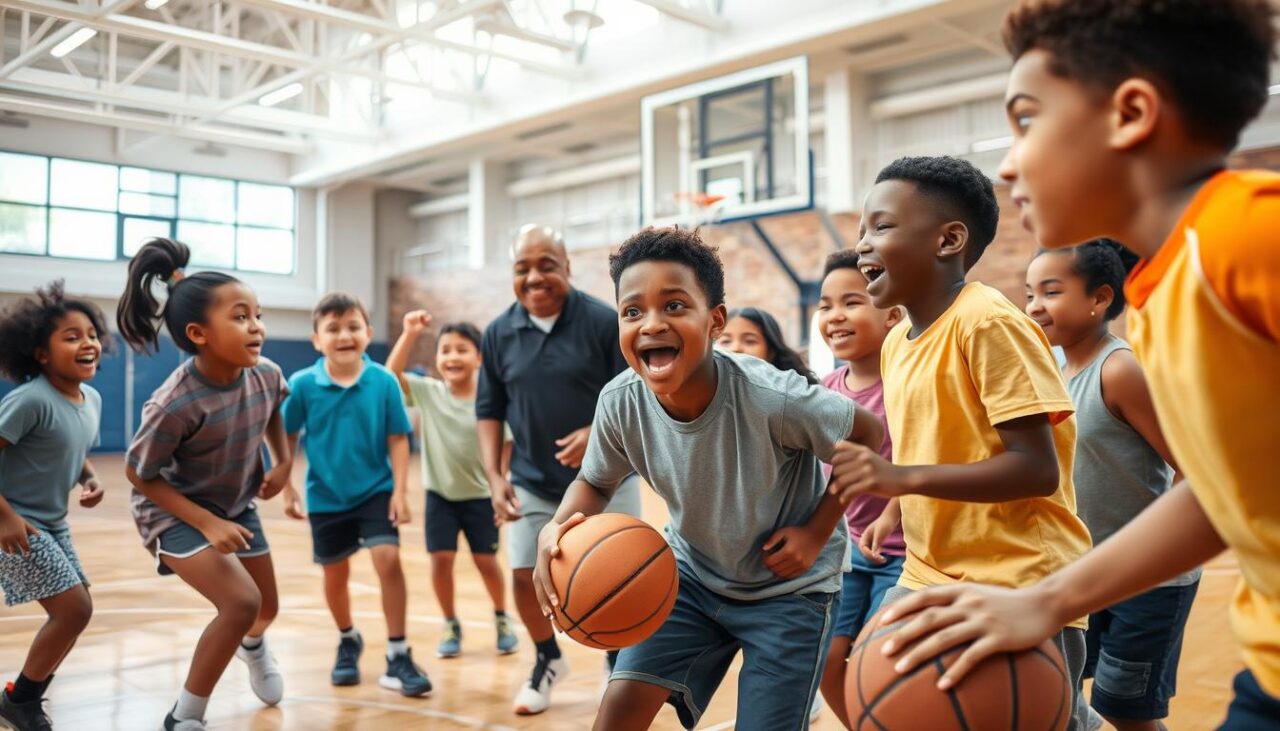
Imagine schools giving out mission statements on equity but cutting sports budgets. The latest NCES report shows a harsh truth—40% of teens can’t play team sports at school. Where’s the help? Local groups step up, becoming the real heroes in this urban battle.
Here’s a fact not taught in school: 15% of U.S. schools cut extracurriculars last year. At the same time, 73% of program leaders struggle to find funding. It’s not just about money—it’s about breaking down barriers.
Meet the Omar Littles of youth development: small community groups filling in where schools fall short. They work like a well-oiled team, combining local effort with strategic partnerships. They’re not just playing the game—they’re changing the rules.
The game-changer is when community courts and rec center coaches become more than just coaches. They’re not just teaching sports—they’re teaching life lessons. The game is fair for everyone, no matter where you live.
Why Afterschool Matters for Inclusion
Imagine if The Hunger Games arena had parent-teacher conference reminders instead of poisoned berries. Today, families face challenges like work deadlines and finding the right sports for their kids. They also deal with LGBTQ+ inclusion and gender fairness in sports.
A Pew Research study found that 52% of parents feel so stressed, it’s like living in a dystopian world.
Let’s look at some numbers that show the real struggle:
| Challenge | % of Parents Affected | Program Impact |
|---|---|---|
| Work schedule conflicts | 65% | Remote-friendly options up 300% in 2020 |
| Transportation barriers | 41% | Neighborhood hubs reduce no-shows by 58% |
| Cost concerns | 73% | Sliding-scale fees boost participation 22% |
Here’s a surprising fact: 91% of working parents say afterschool sports help them keep their jobs. This is more than the number of people in Silicon Valley who rely on caffeine.
But, when schools focus too much on tests and not enough on sports, kids suffer. This creates a system where social development is ignored.
So, how do we really know if we’re being inclusive? It’s not just about signing up. Good programs track things like:
- Participation gaps between cisgender and transgender athletes
- Equipment access for all income levels
- Coach training in cultural understanding
The rise in remote work has led to a big change. Parents want programs that work for them, not just the traditional 9-to-5 crowd. They want to see single dads and nonbinary teens valued as much as anyone else.
Next time you see a minivan pulling in late, remember it’s not chaos. It’s someone working to break down barriers, one practice session at a time.
Accessible Program Models
Why should sports be limited by ZIP codes like Netflix shows? We’re changing the game with Peloton caravans instead of CrossFit ice cream trucks. It’s all about making sports accessible to everyone.
Breaking Down Geographic & Economic Barriers
The current system is unfair, like Squid Game’s marble round. Families face transportation gaps, and coaches want easy locations. Mobile programs are changing this:
| Traditional Model | Mobile Solution | Impact Multiplier |
|---|---|---|
| Fixed facilities | Converted bookmobiles | +40% service radius |
| Seasonal sign-ups | Pop-up clinics | 3x engagement spikes |
| English-only coaching | Bilingual playbooks | 58% broader participation |
The Mobile Gym Initiative
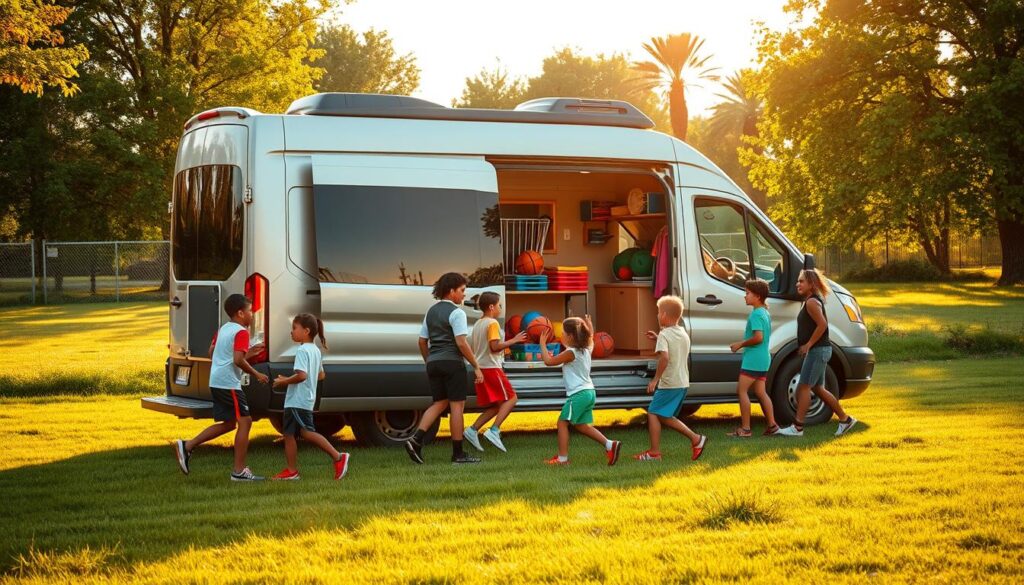
Imagine retired buses turned into mobile gyms. They have basketball hoops and yoga decks. These buses bring sports to rural areas and start new partnerships.
They offer soccer and capoeira in different places. The key is language access sports programming. Coaches speak Spanish and ASL, making everyone feel welcome.
QR code playbooks translate drills into 12 languages. This shows true community sports facilities equity. It’s about giving everyone a chance, no matter where they live.
This isn’t just about fairness. It’s about changing the rules. Sports should be available to everyone, everywhere.
Funding and Partnership Solutions
Imagine if community sports programs had budgets like Taylor Swift’s Eras Tour. Until we can sell friendship bracelets for equity, we need smarter plans. With 73% of programs struggling after ARP funds expire, it’s time to come together financially.
Creative Resource Stacking
We’re not looking for just one funding source. We’re making a financial lasagna. The sports equity advocacy toolkit needs layers:
- ARP dollars as the base
- NFT auctions for vintage jerseys
- Library co-ops lending gear
| Funding Source | Pros | Cons | Equity |
|---|---|---|---|
| Corporate Sponsorships | Big $$$ | Branding demands | Needs anti-racism in sports clauses |
| Crypto Philanthropy | Tech-forward | Volatile valuations | Funds blockchain referee training |
| Municipal Partnerships | Stable infrastructure | Bureaucratic speed | Prioritizes public court access |
Corporate Sponsorship Playbook
We’re looking for partners, not just logos. The sports resource mapping approach requires:
- Brands that fit your community
- Contracts that support diversity in coaching
- Profit-sharing for local artist merch
Pro tip: Keep ownership of your program’s rights like Taylor’s rerecordings.
Girls, Disabled, & Transgender Youth
Let’s get real about allyship: 97% of parents want more program hours than just hashtags. Yet, 55% struggle with getting kids to sports because of lack of transportation. True inclusion means more than just saying you support it. It’s about making sure a teenage athlete in a wheelchair has what they need, like tampons and sign language interpreters.
Intersectional Access Points
Imagine a transgender girl with cerebral palsy at a rec center. Does your program offer:
- Gender-neutral changing areas with grab bars?
- Coaches trained in anti-racism and neurodiversity?
- ASL interpreters who know “full-court press” in sign?
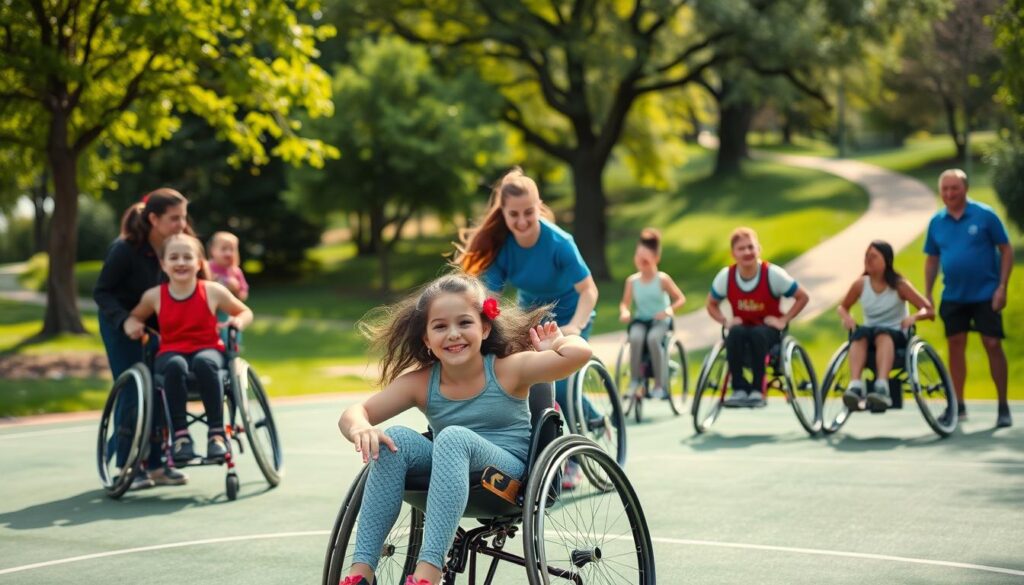
We’re talking about real change here. Separate facilities for disabled athletes are outdated. True disability inclusion in local sports means mixing able-bodied and disabled athletes. They share equipment and learn from each other.
Changing Room Revolution
Why do locker rooms look like Cold War bunkers? Progressive leagues are changing that:
| Old Model | New Standard | Impact |
|---|---|---|
| Binary signage | Neutral pods + private stalls | 23% ↑ trans participation |
| Metal benches | Adjustable seating | 41% ↓ injury reports |
| One-size lockers | Wheelchair-accessible units | 55% faster transitions |
The magic happens when cultural competence in sports leadership meets the right infrastructure. Milwaukee’s Pride League now has sensory-friendly hours and free Lyft vouchers. It’s about making sure everyone can get to the game.
Evaluating Reach and Impact
If you can’t measure it, you can’t meme it – welcome to the new era of sports equity analytics. Gone are the days when success was judged by participation ribbons and cookie-cutter surveys. Today, we need metrics sharp enough to cut through performative allyship and deep enough to map systemic gaps.
Metrics That Matter
The NCES dashboard now tracks more than just gymnasium square footage. We’re talking sports resource mapping that overlays socioeconomic data with community sports facilities equity. It’s like Google Maps meets The Hunger Games, but with actionable insights instead of dystopian despair.
Edge Research’s survey of 1,500 parents revealed a harsh truth: 63% couldn’t name a single adaptive sports program in their county. This isn’t just data – it’s a wake-up call wrapped in a spreadsheet. Our proposed scorecard grades programs on three radical criteria:
- Trans athlete inclusion rates (spoiler: 82% of programs score lower than a T-ball team)
- Accessibility swear jars – $1 fines for every time staff say “we don’t have the resources”
- Geographic justice scores comparing zip code advantages to program availability
Beyond Participation Trophies
Let’s be real: Counting heads doesn’t tell us whose needs are going unheard. The real magic happens when we cross-reference registration data with community sports facilities equity audits. Did that new wheelchair basketball program actually reach neighborhoods lacking accessible courts? Our metrics toolkit answers that while you’re brewing your third coffee.
| Metric Type | Traditional Approach | Equity-Focused Metric | Data Source |
|---|---|---|---|
| Participation | Total registrations | % from under-resourced zip codes | NCES mapping tools |
| Inclusion | Gender breakdown | Nonbinary athlete retention rates | Program exit surveys |
| Accessibility | ADA compliance checks | Transportation partnership depth | Community needs assessments |
This isn’t just number-crunching – it’s social justice archaeology. When a rural program shows 90% participation growth but zero transportation partnerships, our metrics shout what raw enrollment numbers whisper. The future of measuring inclusion in sports looks less like SAT score obsession and more like building live dashboards that communities actually use.
Community Feedback Loops
Imagine a world where youth sports feedback is as exciting as a TikTok duet. Gone are the dusty suggestion boxes. Today, programs use language access sports programming and listen closely to what families want. With 88% of remote workers valuing location flexibility, why not the same for rural sports access?
The Yelp-ification of Youth Sports
Missouri’s “Drag & Drop Feedback” initiative changed the game. It took inspiration from drag queen story hour. Now, coaches hold sessions where parents give feedback with sequin boards.
This approach, inspired by immediate, glittery feedback from RuPaul’s Drag Race, is effective. Here are some key changes:
| Old System | New Reality | Impact |
|---|---|---|
| Paper surveys | Video testimonials | 42% higher participation |
| Annual meetings | Live reaction polls | 63% faster issue resolution |
| Generic forms | ASL-interpreted Zoom hours | 2.5x rural engagement |
From Complaints to Coalitions
In Kansas, a viral TikTok about summer costs led to big changes. Instead of just cutting fees, they formed a cultural competence sports leadership council. Teen ambassadors helped create payment models that are fair and open.
This shows that anti-racism in sports begins with being open about money. Angry comments can become a chance to make things better.
This isn’t just feedback; it’s a crowdsourced revolution. Programs that mix meme culture with budgeting are not just surviving. They’re winning big.
Template: Starting a New Program
Creating an inclusive sports program needs the focus of Marie Kondo and the smart planning of Succession‘s Logan Roy. Let’s cut through red tape like a dodgeball through a $5 Walmart net. Here’s how to bring joy to community sports and banish exclusion.
5-Point Accessibility Checklist
The Afterschool Network’s 2022 survey found 63% of rural parents say transportation is their biggest barrier to youth sports. Let’s tackle that and four other key issues:
- Location Scouting 2.0: Work with churches, schools, and even grocery stores in food deserts. Creative real estate is key for rural sports access.
- Equipment Libraries: Start gear swap programs that outdo Netflix’s DVD service. Plus, include adaptive equipment for disability inclusion.
- Coaching Cross-Training: Require inclusive coaching practices. This means CPR and DEI workshops, not just for winners.
- Transportation Triage: Use school buses for reverse routes and recruit Uber drivers as volunteers. It’s legal in 38 states.
- Feedback Firehose: Set up suggestion boxes that get read. Offer free Gatorade for honest feedback.
Partnership Procurement Hacks
Funding community sports needs more effort than a Times Square Elmo. Here’s how to gather resources like a Jenga master:
| Strategy | Best For | ROI Timeline |
|---|---|---|
| Corporate Sponsorship Swaps | Equipment & Uniform Costs | 3-6 months |
| Municipal Grant Matching | Field Rental Fees | 6-12 months |
| Local Business Barters | Snack Supplies & Transportation | Immediate |
Getting funding for community sports isn’t about finding money. It’s about redirecting existing flows. Use that PTA bake sale money for adaptive equipment. And those unused school maintenance dollars? Perfect for portable wheelchair ramps!
Conclusion
Sports equity isn’t a quick race. It’s a long relay where we’ve been dropping the baton. Schools are missing out on basic programs, not just sports. But, community efforts are changing the game.
Imagine The Sandlot with a social twist. Squints once said, “Legends get remembered, but equity gets funded.” This idea is key. By combining resources, we can make spaces inclusive. It’s not just dreams; it’s real change.
Real progress means facing big challenges head-on. LGBTQ+ athletes deserve equal chances in sports. Girls’ teams need better equipment, and disabled athletes face extra hurdles.
It’s time to take action. Use the sports equity toolkit to help. Check local programs, push for better transportation, and track more than just sales. This is about building a stronger community, not just giving charity.
The game isn’t over yet. We’re in extra time, and every effort matters. We can’t wait forever. Let’s make sure “equity gets funded” is our new motto.