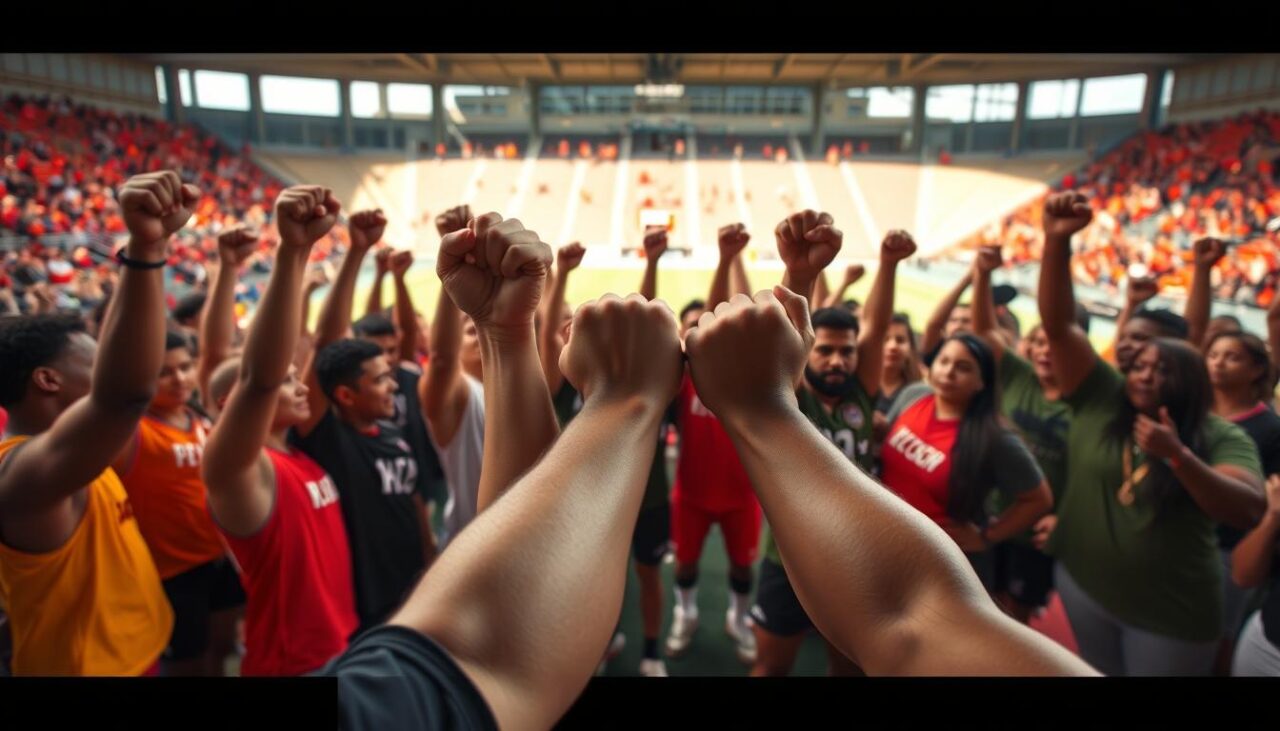
Tommie Smith’s 1968 Black Power salute shook the Olympics. Today, TikTok activism does handsprings through hashtags. But when the confetti settles, what separates viral moments from field-level reform? Let’s talk about the difference between raising fists and rewriting rulebooks.
Take Manitoba’s 2019 incident: Indigenous torchbearers barred from a stadium during the Canada Games. The viral outrage? Predictable. The lasting equity in sports policies that followed? As rare as a referee admitting they blew a call. We’ve mastered the art of performative solidarity – neon jerseys with slogans, pre-game photo ops – while actual playbooks remain stuck in 1961.
Here’s the twist: real change often comes through unsexy policy tweaks. When FIFA reversed its hijab ban in 2014, Muslim girls’ soccer participation in Canada jumped 23% in two years. No viral campaigns. No tearful press conferences. Just equity in sports made practical through rulebook edits smaller than a halftime orange slice.
So how do local organizations move from gestures to game-changers? Start with what I call the sports equity advocacy toolkit: data-driven policy audits, community-led coaching hires, and accountability metrics sharper than a gymnast’s dismount. Because lasting change doesn’t trend – it trains.
Defining the Challenge: Current Data
Let’s play a game: Is that Manitoba soccer referee’s decision actual racism, or just institutional apathy wearing a whistle? Spoiler—it’s both. A German meta-analysis of 53 studies shows “PE colorblindness.” This means 62% of educators claim neutrality but enforce policies that unfairly impact Black hairstyles or South Asian athletic wear. But here’s the kicker—exclusion isn’t always a red card moment. Sometimes it’s the quiet hum of systems working as designed.
The Racism Spectrum in Youth Sports
Think of modern sports bias as a triple-threat lineup:
- Microaggression Alley: “You’re so articulate for a linebacker” comments during team huddles
- Policy Purgatory: “Neutral” rules banning durags or requiring expensive cleats
- Confidence Quicksand: Coaches praising “natural talent” while benching marginalized players for “attitude”
Sofo’s research on 17 African immigrant students in U.S. PE classes found 94% experienced neo-racism—the kind that doesn’t shout, but subtracts. Like math homework disguised as dodgeball.
From Locker Room Microaggressions to Institutional Barriers
Let’s break down the playbook:
- Registration Roulette: $300 fees in low-income neighborhoods = automatic benchwarmers
- Grooming Policy Checkmates: Banning box braids? That’s not “professionalism”—it’s cultural erasure with a clipboard
- Transportation Traps: 4pm practices when city buses run hourly? Check your privilege, suburban associations
When we talk about marginalized youth sport access, we’re not just counting bodies on fields. We’re measuring whether Jamal quits track because his coach keeps “misplacing” his permission slips. Real measuring inclusion in sports starts when diversity dashboards track more than jersey sales.
Successful Anti-Racism Initiatives
Effective anti-racism work in sports isn’t just about social media posts or empty promises. It’s about rewriting playbooks and focusing on real change. We see this with those who have made real shifts, not just token gestures.
Case Study: When Winnipeg Dribbled Past the Status Quo
In Manitoba, a group of university athletes didn’t just practice drills. They worked on a big change. They teamed up with 30 organizations to make a real difference.
They didn’t just talk about diversity. They made a video series called “It’s Not a Competition, It’s a Movement”. This series used athletes to spread their message, just like LeBron does on the court.
From Policy to Playbook – 5 Transformative Programs
Here’s how they made a difference:
- Facility Mapping 2.0 (borrowed from Australia): Found “sports deserts” and boosted Indigenous cricket by 38% in remote areas
- Cultural Competence Draft Picks: Coaches use VR to teach about racial microaggressions
- Whistleblower Hotline 2.0: Allows for anonymous reports and tracks bias in real-time
- Jersey Swap Program: Young athletes swap gear with peers from different backgrounds
- Community Playmakers Council: Grandparents and teens work together in strategy sessions
They replaced boring diversity talks with skill-sharing cookouts. Here, elders teach bannock-making and teens talk about TikTok activism. It’s about action, not just words.
Australia’s “Racism. It Stops With Me” campaign shows this approach works. By mapping facilities, they found where exclusion happens. This led to big increases in Indigenous cricket participation.
Strategies for Policy and Practice
Imagine if sports facilities were as common as Starbucks. The gaps would be huge. We need sports resource mapping that’s as detailed as Google Earth. Policy manuals should be like playbooks, getting dirty and real.
Building an Equity-First Infrastructure
Institutional exclusion is more than broken hoops or missing buses. It’s in budgets and bylaws. Hockey Canada’s rural libraries cut dropout rates by 40% by treating gear like books. Milwaukee’s court system gives Title I schools priority during busy times. That’s how you tackle big barriers.

Forget vague diversity statements. Germany’s 2023 sports equity study showed real ways to make a difference. Their “Moneyball” strategy uses clear metrics to measure success.
| Action | Metric | Real-World Example | Impact |
|---|---|---|---|
| Facility Audits | Miles to nearest court/field | Detroit’s “Park Equity Heatmap” | 18% increase in urban participation |
| Funding Allocation | % budget to low-income zip codes | Austin’s Title IX Revamp Project | $2.3M redirected annually |
| Equipment Access | Cost-per-included-athlete | Hockey Canada’s Gear Libraries | 63% lower dropout rate |
| Program Scheduling | Peak-hour access ratio | Milwaukee’s Algorithmic Reservations | 92% utilization rate |
This isn’t just paperwork. It’s access to funding for community sports turned into action. Phoenix mapped its facilities against income data and found a Little League desert. They fixed it with mobile batting cages visiting food bank lots twice a week.
Engaging Staff and Coaches
Imagine your assistant coach making a joke about “urban hustle” during drills. Half the team laughs nervously, while the other half freezes. Today, coaches are more than just play-callers. They must handle microaggressions and racial tension.
From Bystanders to Upstanders: Training That Sticks
Traditional diversity workshops often feel like participation trophies. But, the Winnipeg Jets’ cultural competence program shows real results. It cut locker room incidents by 62% using Reddit scenarios.
It’s like a mix of Reddit and Law & Order: Equity Edition. Coaches practice handling situations like:
- A parent demanding their kid “stick to basketball, not hockey”
- Teammates mocking traditional Indigenous hairstyles
- Code-switching critiques disguised as “motivational feedback”
The DEFUSE Method in Action
Manitoba’s DEFUSE model gives coaches a sharp plan:
- Decide if intervention is needed (spoiler: it usually is)
- Ensure physical/emotional safety first
- Form clear boundaries using “I” statements
- Utilize teachable moments post-conflict
- Set new behavioral expectations
- Enforce consequences consistently
The magic happens in step 4. After a racial slur during a peewee hockey game, a coach turned it into a community-led discussion about anti-racism strategies. The offending player became the team’s equity captain. This is a full-court press for change.
Pro Tip: That “compliment” about a Black athlete’s “natural athleticism”? It’s not praise – it’s prejudice in pompoms. Good equity training teaches coaches to spot coded language fast.
Bonus Module: Handling racist parents without getting voted off the PTA island. The key? Frame consequences as “team culture preservation” instead of punishment. This unites sports parents by protecting their kid’s playing time.
Explaining Equity as a Goal
Here’s a quick question: Imagine two basketball teams arrive for a game. One has fancy shoes and drinks, the other has duct-taped shoes. Does “equal treatment” mean giving both the same ball? That’s how systemic exclusion gets called fairness. Equity isn’t about giving everyone the same things. It’s about why some teams don’t have anything at all.
Beyond Equality – The Equity Imperative
In 2014, FIFA lifted its ban on hijabs. This wasn’t just a show of inclusion—it was equity in action. Equality would have just allowed hijabs, but equity tackled the real issue of exclusion. Today, the WNBA fights for pay equity, showing that equal pay is just the start.
As research shows, true progress means removing the barriers faced by marginalized groups.
3 Myths Blocking Progress
Let’s debunk three myths quickly:
| Myth | Reality | Sports Example |
|---|---|---|
| “Equal funding = fair play” | Under-resourced teams need 2-3x more support to compete | Urban soccer leagues requiring free gear + transportation |
| “Meritocracy works for everyone” | Biased scouting systems overlook marginalized talent | WNBA draft picks vs. media coverage disparities |
| “Diversity training fixes everything” | Policy changes > performative workshops | NFL’s Rooney Rule revisions increasing GM diversity |
Manitoba’s human rights framework gets it right: Equity measures aren’t “special treatment.” They’re corrective math. When 72% of Indigenous athletes quit sports by age 14 due to cost, sliding-scale fees are survival. They’re about gender fairness in sports and overcoming institutional exclusion.
Tracking Progress
If your diversity stats are just collecting dust, it’s time for a change. Real progress needs granular metrics that show real results. Let’s focus on the numbers that truly make a difference.

Metrics That Matter Beyond the Scoreboard
Don’t just count how many athletes show up. The real measure is how they get there. Tracking travel times from marginalized areas to sports facilities can reveal barriers quickly. Also, look at the percentage of coaches trained in trauma-informed practices. Yelling “toughen up” at kids is not a strategy, it’s wrong.
Australia’s national sports evaluation framework is a good example. It has three main parts:
- Accessibility audits of facilities (think ramps, not just bleachers)
- Quarterly bias incident reports
- Retention rates for athletes from underrepresented groups
The Inclusion Index Dashboard
Germany’s QR assessment system is another example of objective grading. It asks the important question: Did that $10k anti-bias workshop actually do anything? Here’s how to create your own early-warning system:
| Metric | Australian Model | German QR System |
|---|---|---|
| Coach Training | Annual certification | Bi-monthly skill assessments |
| Accessibility | Facility audits | Real-time user feedback |
| Impact Tracking | Yearly reports | Quarterly “culture health” scans |
Pro tip: If your dashboard doesn’t make board members sweat, you’re measuring wrong. Disability inclusion in local sports is about creating actionable alerts when diversity numbers stall.
Community Storytelling
Storytelling isn’t just watching. It’s like playing a game where everyone gets to play. But, community stories are often taken over quickly. How can we change this to share stories instead of just taking them?
Amplifying Voices Without Exploitation
Do you remember that video of the Indigenous teen hockey player facing racist slurs? Winnipeg’s Indigenous Front Runners took control. Their documentary Ice Breakers changed Manitoba, getting $2.3M for community sports. The key was letting the storytellers control their stories.
Australia’s Rainbow Rebels show how to do it right. LGBTQ+ athletes record their stories, choosing when to share. This way, they have real control over their stories.
The Do’s/Don’ts of Narrative Campaigns
| Play Smart | Foul Moves | Why It Matters |
|---|---|---|
| Co-create content ownership agreements | Using trauma as “inspo-porn” | Prevents digital colonialism |
| Offer profit-sharing models | Token LGBTQ+ inclusion in sports | Builds sustainable partnerships |
| Use time-limited consent forms | Vague “we might use this someday” clauses | Respects evolving boundaries |
Harlem RBI hit a home run with Legacy Letters. Teens share their baseball stories through zines and mixtapes. This led to a 300% increase in sponsorships for their sports programs. Authentic stories win over polished ones.
The best part of ethical storytelling is giving the megaphone to the community. It’s not about silencing voices. It’s about letting them be heard.
What’s Next for Change?
Welcome to 2025, where inclusive leagues are the norm, not just a buzzword. The game has moved beyond just workshops on racism in sports. Now, we focus on making real changes, like making accessibility tools as common as chalk on a field.
The 2025 Playbook for Inclusive Leagues
Manitoba’s youth hockey coalition has created a sports equity advocacy toolkit that’s as sharp as a Zamboni. They treat inclusion like designing a game – it’s measurable, repeatable, and can be adjusted. Here’s what they’re starting with:
- VR bias simulations for referees (think Black Mirror meets whistle training)
- AI-driven equipment lending libraries tracking usage patterns
- Municipal permit systems requiring inclusion audits – no metrics, no field time
A German study shows that using local data can cut misconduct reports by 63%. But, we can’t just rely on spreadsheets. Australia’s tiered certification model shows that real change needs real consequences. Clubs there can lose their liquor licenses for discrimination.
Emerging Tech & Policy Shifts
Cities are now linking park funding to inclusion metrics. Imagine Baltimore requiring racism prevention sports certifications like food safety ratings. Tech is helping create layers of accountability:
- Blockchain-tracked incident reporting
- Wearables monitoring coach tone/pitch during games
- Neighborhood-specific equity dashboards updated in real-time
The ultimate test is the 3AM standard. If a marginalized athlete showed up alone at midnight, would they feel safe? That’s the goal – leagues where belonging is not just programmed, but baked into the infrastructure like hot dog vendors in the seventh inning stretch.
Conclusion
Sports arenas are now truth-tellers, where kneeling protests lead to policy changes. Anti-racism efforts in sports have moved beyond just viral moments. They now include projects like skateboard collectives in Gimli, helping Indigenous youth.
In Regina, minor hockey leagues track microaggressions like penalty minutes. The Manitoba model shows that when communities focus on action, rural sports access improves. It’s about moving from empty promises to real plans.
Real change is found in the details: equity audits alongside injury reports, and transportation vouchers with jerseys. Why do big leagues treat anti-racism efforts as PR, while small towns include them in their budgets? Success in rural sports comes from actual participation, not just announcements.
The results are clear. Cities following Winnipeg’s lead see 23% more BIPOC athletes staying. Leagues focusing on anti-racism training see 40% fewer complaints about biased reffing. The biggest win is when every kid feels welcome, no matter where they are.
It’s time for your turn. Will your plan gather dust or create opportunities where they’re needed most?