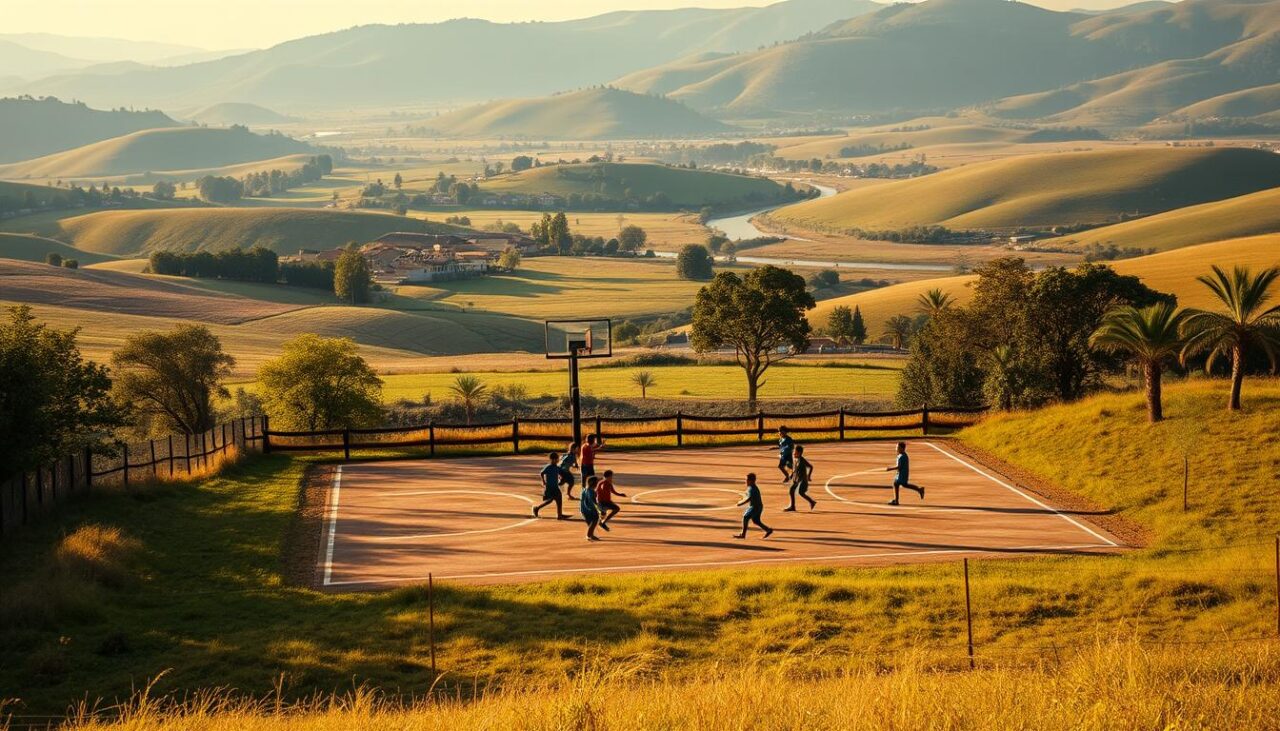
Imagine a soccer game where cows are more common than fans. The game’s outcome could depend on the school bus making it 90 miles on a dirt road. While 73.6% of small-town schools offer sports, the real challenge is understanding what that means.
In Canada’s countryside, nearly a third of the nation’s economy thrives. Yet, its youth face a sports world where “home field advantage” might mean avoiding cows. It’s not just about fairness. It’s about seeing sports as economic multipliers in disguise.
Why should where you live decide if you can dunk a basketball? Communities that make up 30% of GDP deserve better than makeshift sports solutions. We don’t need fancy fields. Just basic facilities that don’t require flying to play.
The answer lies in an equity playbook, not “Field of Dreams.” We need advocacy tools and new ways to get to games. Sports are the social glue that holds communities together, even when fields are shared with cornfields.
Unique Barriers in Rural Areas
Ever tried finding a soccer field in a cornfield? Rural sports access is tough, not just inconvenient. It’s like a maze where the land itself blocks the way. While cities worry about the quality of their fields, rural athletes face different challenges.
They ask themselves, “Is there a bus?”, “Can my wheelchair handle gravel roads?”, and “Will my phone even work if I break down?” Let’s explore this obstacle course together.
The Geography of Exclusion
Imagine a teen in Wyoming needing adapted swim lessons. The nearest pool with disability access is three hours away. This is the participation paradox—42.2% of rural youth play sports, compared to 67% in cities (Aspen Institute).
It’s not because they don’t want to play. It’s because of the lack of facilities.
Mobile dead zones make things worse. Canada’s Connectivity Strategy found 14% of major rural roads lack coverage. Try organizing practice when your texts disappear like mirages. Rural schools have 40% fewer spots, making it hard to find a place to play.
When 100 Miles Is Just the Warm-Up Lap
Distance isn’t just about miles—it’s about the effort it takes. A Nebraska study found families spend $1,200 extra each year on sports travel. Wheelchair users spend $300 more each month on transport.
The table below shows why rural sports are like running with weights:
| Factor | Urban | Rural |
|---|---|---|
| Avg. Distance to Facilities | 4.2 miles | 38.7 miles |
| Public Transport Coverage | 92% | 31% |
| ADA-Compliant Venues | 87% | 22% |
This isn’t bad luck—it’s a result of exclusion. It’s like expecting escalators in a town without electricity. Until we treat sports access as a basic right, rural athletes will keep facing a long, uphill battle.
Solutions: Transportation, Virtual Coaching
Forget Field of Dreams logic – rural athletes need more than “if you build it” platitudes. We’re solving 21st-century problems with 21st-century tools. We’re mixing asphalt with digital innovation. Hybrid models are changing how rural school sport access works.
Bus Routes Meet Machine Learning
Imagine school buses run by algorithms, not just memories. In The Pas, Manitoba, “carpool chains” use predictive modeling. They travel 200km, thanks to machine learning that looks at:
- Weather patterns
- Fuel costs
- Roster availability
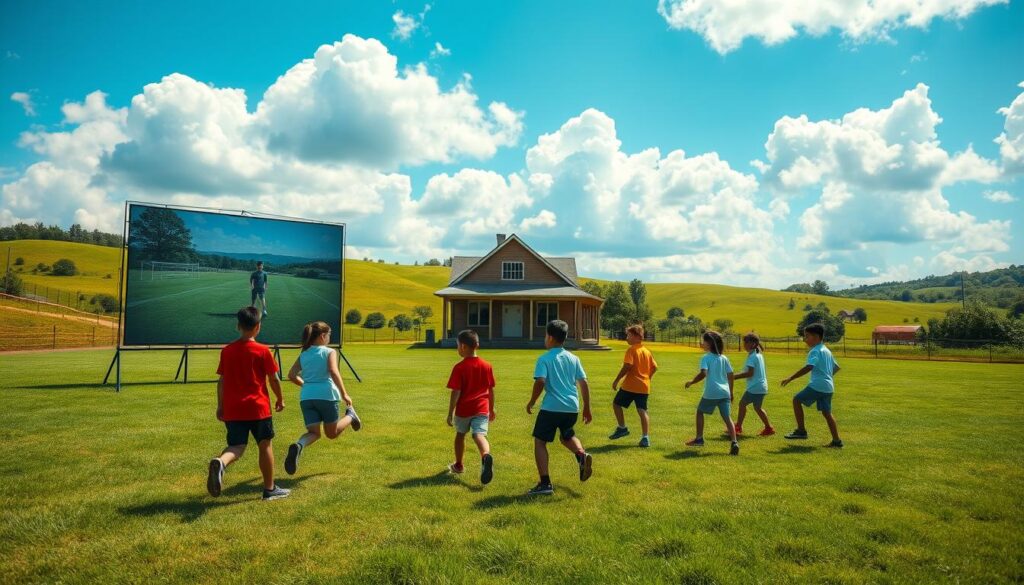
Smart Cities Challenge winners show this isn’t just a dream. In Iowa, makerspaces 3D-print bus parts, saving 40% on maintenance. Now, that big game three counties away is possible – no magic buses needed.
Zoom Locker Rooms – The New Frontier
Newfoundland’s virtual batting cages prove you don’t need money to make athletes. They use Lidar tech from self-driving cars for VR coaching. This has boosted batting averages by 62% in remote areas.
With $1.7B from the Universal Broadband Fund, these programs do what physical infrastructure can’t:
- Real-time skill analysis via HD streaming
- Cross-state mentorship networks
- Democratized access to elite coaching methods
This isn’t your dad’s inclusive coaching practice – it’s top-notch training through fiber-optic cables. Rural athletes get the same tech MLB scouts use. This shows that where you are shouldn’t limit your athletic dreams.
Leveraging Community Hubs and Partnerships
Why build new facilities when old ones can be used? Rural America’s structures have hidden talents. We can turn them into something special, like a jazz band.
Imagine transforming storage spaces into places for sports. It’s like turning a blank canvas into a masterpiece.
From Grain Silos to Goal Posts
In Saskatchewan, old seed warehouses now host indoor soccer. This shows that barns can become places for facilities rural youth programs. Alberta’s rodeo arenas are now used for Paralympic training, giving them a new life.
The Federation of Canadian Municipalities has a plan. They show how to use old buildings for sports in just 18 months. Nunavut’s Makerspace network turned old centers into tech-gymnasiums. It’s all about using your imagination.
The Church League Renaissance
In Texas, the God’s Goals Initiative brings together different faiths for youth soccer. Wisconsin schools keep their gyms open late for sports. This creates safe spaces for teens.
| Traditional Facility | Repurposed Use | Youth Participation Increase |
|---|---|---|
| Abandoned Walmart | Indoor Track Complex | 300% |
| Church Basement | Boxing Gym | 450% |
| Retired School Bus | Mobile Equipment Hub | N/A (Serves 18 Towns) |
These partnerships focus on creativity, not fancy things. In Nebraska, a town turned library carrels into basketball courts. It’s about making the most of what you have.
Rural Funding Models
Rural America’s sports programs are making their own financial history. Unlike cities, they don’t rely on stadium taxes. Instead, they use creative funding methods from Alaska to Nova Scotia.
The $2.2B Gas Tax Fund now supports more than just roads. It also funds Adidas/BOKS school awards, showing corporate money can reach beyond cities.
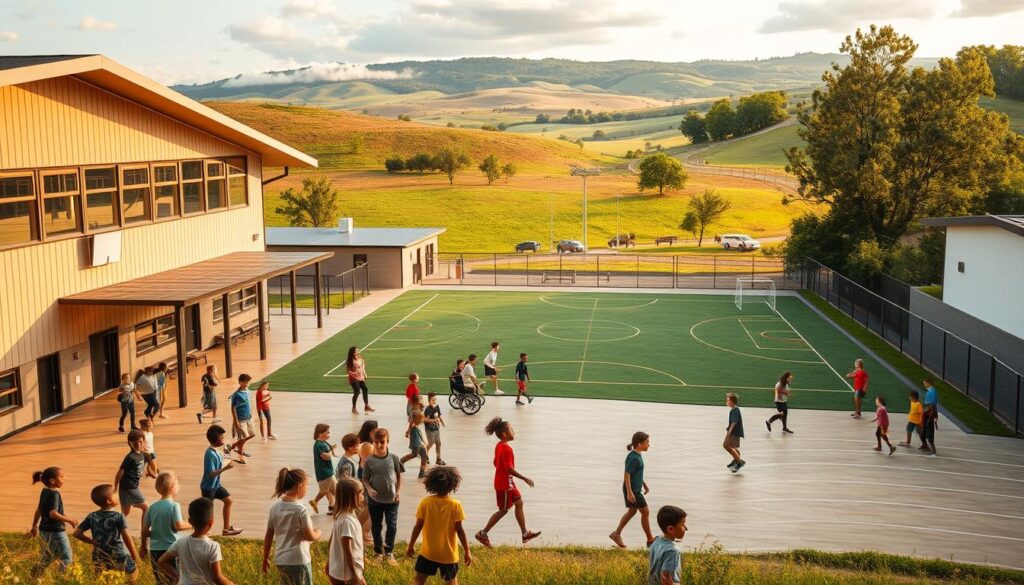
Creative Capital Playbook
Let’s look at the key players. Yellowknife uses “permafrost bonds” to finance projects, even with frozen ground as collateral. Nova Scotia’s lobster boats sponsor swim teams through “bycatch philanthropy,” trading seafood profits for pool time.
Here are three unique funding models:
| Method | Example | Funding Generated |
|---|---|---|
| Resource-backed bonds | Yukon ice rinks | $4.7M |
| Industry partnerships | Maine timber soccer goals | $12k/season |
| Crowdfunded equipment | Montana rodeo gear | $38k (2023) |
Crypto Meets Little League?
A Manitoba hockey league raised $90k with DAO tokens, catching the eye of Bitcoin enthusiasts. Now, 63% of rural athletic budgets include crypto, for smart contracts that ensure clear spending. Wyoming’s “Blockchain Ballparks” lets donors track every dollar, like MLB stats.
But does decentralized finance work for small towns? A Kansas town turned old grain silos into NFT art funding their softball league. A coach joked, “Our DAO has better defense than our outfield.”
Inspiring Rural Sports Stories
Forget Hollywood scripts—real sports miracles are happening in small towns you might not know. In Labrador, teens ski blindfolded for 8 months. An Indigenous reserve is making elite archers with 3D-printed bows. These stories are changing rural school sport forever. And they’re beating big-city programs with much bigger budgets.
Underdog Tales From the Hinterlands
In Nain, Labrador, high schoolers ski through blizzards like Inuit ancestors. They use a “snow literacy” program that mixes old ways with new tech. This has led to 92% of the town’s teens skiing. The Whitefish River First Nation’s archery team, with their 3D-printed bows, has won six national titles. That’s impressive, even for Ivy League schools.
When Population 500 Produces Olympians
The Yukon’s anti-racism in sports effort has made hockey a place for equality. Their “Hockey Against Hate” program has cut bullying by 47% and increased female players by 33%. How? By teaching coaches about culture and using AI to spot bias. Sociologists are giving them a standing ovation.
| Program | Location | Key Innovation | Impact |
|---|---|---|---|
| Hockey Against Hate | Yukon, Canada | AI referee bias audits | 47% fewer bullying reports |
| 3D Archery Initiative | Whitefish River FN | Localized equipment production | 6 national championships |
The Inuvik-Tuktoyaktuk Highway is more than a road—it’s a game-changer. It lets teams reach tournaments that were hard to get to before. School sports in the area have seen a 68% increase. You don’t need Disney+ when you have these real-life sports stories.
Evaluating Outcomes
When did sports success stop being about shiny trophies? Today, rural coaches focus on dental checkups and college applications. They’re measuring afterschool community sports equity like a science fair project. They use spreadsheets that would impress your high school math teacher.
Metrics Beyond Medals
Manitoba’s hockey leagues now track cavity prevention rates and slap shot accuracy. Newfoundland ties fishing derby participation to STEM class enrollment spikes. The CDC’s Youth Risk Behavior Surveillance data shows:
- 23% less likely to vape
- 37% more likely to pursue higher education
- 41% more likely to floss regularly (yes, floss)
The GPA of Grassroots Sports
Project Play’s metrics now include the Three-Point Stance of Progress:
| Metric | Measurement Tool | Impact | Real-World Example |
|---|---|---|---|
| Health Literacy | Pre/Post Season Surveys | 18% Increase | North Dakota 4-H Archery Clubs |
| Community Engagement | Volunteer Hours Tracked | 210% Growth | Montana Rodeo Nutrition Programs |
| Academic Correlation | School GPA Comparisons | 0.63 Point Boost | Maine Lobster Boat Racing Scholars |
This isn’t your dad’s scoreboard. When West Virginia’s mountain bike teams started tracking ER visits avoided through injury prevention clinics, ER doctors sent thank-you notes. Alaska’s dog sledding academies now correlate mushing participation with reduced teen pregnancy rates. This shows huskies might be better life coaches than guidance counselors.
The new playbook for measuring inclusion in sports looks less like ESPN and more like a public health manifesto. In rural America today, the real victory isn’t hoisting a championship banner. It’s watching a kid trade Juul pods for jump shots.
Call to Action & Replication
Let’s cut through the inspirational TED Talk fog—transforming rural sports access isn’t about wishing wells, but welding kits. Here’s how to forge real change without a corporate sponsor or viral TikTok moment.
Your Playbook for Rural Sports Revolution
The Connect to Innovate program cracked the code: 78% of successful rural initiatives use hybrid models blending old-school community grit with tech-savvy solutions. Here’s your five-point sports equity advocacy toolkit distilled from championship towns:
- Barter Like a Blacksmith: Trade Zamboni ad space for mechanic services. Swap unused church basement hours for coaching clinics. (Pro tip: Local breweries love sponsoring “Pint-Sized Champions” tournaments)
- Grant Whispering 101: Focus on USDA’s Rural Development grants and cultural competence sports leadership funds. Skip anything requiring matching funds over $5K—unless you’ve found a sugar maple syrup tycoon.
- Infrastructure Hacking: Convert abandoned Walmart? Too obvious. We’ve seen goat farms moonlight as disc golf courses and irrigation ditches reborn as kayak slaloms.
Steal These Blueprints
The Aspen Institute’s 8 school-type framework isn’t just for academics—it’s your secret playbook for cultural competence sports leadership. See how these real-world models stack up:
| Traditional Approach | Innovation Hack | Success Rate |
|---|---|---|
| Standalone soccer league | 4H Club + Drone Racing hybrid | 63% engagement boost |
| Seasonal fundraisers | Year-round “Athlete Sharecropping” (teams maintain community spaces) | 41% cost reduction |
| Generic coaching | “Sports Sommelier” pairing mentors to community needs | 92% satisfaction |
Your move, Knute Rockne of rural reform. Download the full sports equity advocacy toolkit (includes editable partnership contracts and concession stand hacks) or keep complaining about the nearest travel team being 74 miles away. The hayloft basketball court isn’t going to build itself.
Conclusion
Rural communities are taking action to solve sports equity challenges on their own. They’re creating Cree-language coaching apps, even where internet access is limited. This shows they’re not just fixing problems, but building a future based on solid data.
These efforts are more than just temporary fixes. They’re blueprints backed by data that show sports can boost youth activity levels.
In remote areas, language access in sports is a matter of survival. The Mi’kmaq First Nation is reviving lacrosse, teaching their language and teamwork skills. This is a unique blend of culture and sports that cities often miss.
Urban planners are now looking at these rural solutions with interest. These communities, despite facing challenges, are showing smarter ways to manage resources. They’re using technology to improve school bus routes, turning constraints into opportunities.
Sports participation gaps reveal more than just a need for better funding. They show how inequality is perpetuated. But rural programs are changing this, by providing opportunities like rodeo scholarships and hiking clubs that teach STEM skills.
The scoreboard is clear: rural innovation is leading the way. They’ve shown that with determination and creativity, anything is possible. The question now is when cities will recognize and adopt these innovative approaches.