
Don Garber’s “golden market” moment is not only about whether Americans watched the World Cup. It is about whether U.S. soccer can turn attention into infrastructure.
That distinction matters because World Cup 2026 gave Major League Soccer the kind of national soccer visibility the league has spent three decades trying to build toward. The tournament put American stadiums, cities, fan bases, broadcasters, sponsors, youth systems, and local soccer cultures under a global spotlight. Now the harder question begins: what happens after the final?
Garber, the MLS commissioner since 1999, has repeatedly framed the World Cup as a catalyst rather than a finish line. Recent reporting around his post-World Cup outlook describes a league preparing for “MLS 3.0,” a phase focused on global calendar alignment, broader fan conversion, stronger player recruitment, better youth access, and media strategy that reaches beyond existing supporters.
For aplevante.org’s Leadership category, this is the core issue. The United States may now look like one of global soccer’s most attractive growth markets, but market potential is not the same as leadership. The next test is whether MLS, U.S. Soccer, cities, clubs, youth organizations, broadcasters, and venue operators can build the infrastructure needed to keep the sport growing after the World Cup spotlight moves on.
That challenge connects directly to the wider need for World Cup 2026 youth soccer infrastructure, where the real legacy depends on fields, coaches, transit access, affordable programs, and local systems that can absorb new demand.
Why Garber’s Moment Is Bigger Than MLS Marketing
MLS launched its largest coordinated marketing campaign as the World Cup wound down, using the phrase “Thanks World, We’ll Take It From Here” to tell new fans that domestic soccer is ready for the next chapter. The campaign matters because timing is everything. MLS resumed regular-season play immediately after the tournament’s biggest moments, trying to convert casual World Cup attention into league habit.
But marketing alone cannot carry the moment.
A national campaign can invite fans in. Infrastructure determines whether they stay. That means stadium access, matchday atmosphere, affordable tickets, reliable broadcasts, youth pathways, local club identity, academy reach, women’s soccer connections, public fields, and neighborhood-level soccer culture.
This is where Garber’s “golden market” moment becomes a leadership test. If the United States is now one of the most promising soccer markets in the world, MLS cannot rely only on celebrity owners, imported stars, or tournament afterglow. It has to prove that the sport has become durable.
The World Cup showed that Americans will watch elite soccer. MLS now has to show that American soccer can become part of everyday sports life.
How MLS Infrastructure Has Changed Since 1994
The comparison with 1994 is unavoidable. The 1994 World Cup helped create MLS. The 2026 World Cup is testing what MLS has become.

The league now points to more than $11 billion invested in soccer-specific stadiums and training facilities over three decades. That is not a small detail. Soccer-specific venues changed the sport’s American footprint by giving clubs more control over matchday revenue, field design, supporter culture, concessions, local partnerships, and scheduling.
That infrastructure also helped MLS become useful to the World Cup itself. MLS club facilities and stadiums became part of the broader tournament ecosystem, supporting training, fan engagement, local organizing, and player preparation. In other words, the league was not only a beneficiary of World Cup 2026. It was part of the operating base.
That is a major shift from the early years, when MLS often borrowed oversized football stadiums and fought for visibility. The modern league has purpose-built stadiums, club academies, training centers, MLS NEXT Pro, local ownership groups, and stronger urban identities.
But the next phase is harder. Building stadiums was one infrastructure era. Building a complete national soccer system is the next one.
Why Calendar Alignment Is Really An Infrastructure Decision
MLS’s move toward a summer-to-spring calendar beginning in 2027 is often described as a competition decision. It is also an infrastructure decision.
Aligning more closely with the global soccer calendar affects transfer windows, roster building, player integration, competitive rhythm, media placement, weather planning, stadium operations, and youth-development timing. It also changes how clubs coordinate with other tenants, municipalities, broadcasters, and local event calendars.
This is why Garber’s “MLS 3.0” framing matters. A calendar shift is not just a new schedule graphic. It forces clubs and cities to operate differently. Cold-weather markets need better winter planning. Stadiums need field-care systems that can handle different seasonal demands. Broadcasters need more flexible windows. Fans need habits that can survive an unfamiliar format.
The change also reflects ambition. MLS wants to look more like a global soccer league and less like an American sports outlier. But global alignment only works if the local infrastructure can support it.
A league can change its calendar by vote. Turning that calendar into a better soccer product requires operational leadership.
Why Media Reach Is Part Of Soccer Infrastructure
The post-World Cup question is not only whether MLS has fans. It is whether new fans can find the league easily.
MLS’s Apple TV partnership centralized the league’s broadcasts and created a more controlled digital product. But recent discussion around the post-World Cup opportunity has also raised a difficult issue: reach. If the next generation of fans discovers soccer through widely available World Cup broadcasts, then a mostly subscription-based domestic league product has to work harder to convert them.
That makes media distribution a form of infrastructure. Broadcast windows, free-to-air exposure, streaming access, highlight availability, social distribution, local-language coverage, and club storytelling all shape whether new fans build habits.
Soccer infrastructure is not only physical. It is also digital and cultural. A strong stadium means less if fans cannot regularly watch, follow, share, and understand the league.
Garber’s challenge is to balance revenue with reach. MLS needs media money to grow, but it also needs visibility to become part of the crowded American sports calendar. The World Cup created attention. MLS now has to make access simple enough for that attention to become loyalty.
Why Youth Access Is The Leadership Gap Beneath The Market
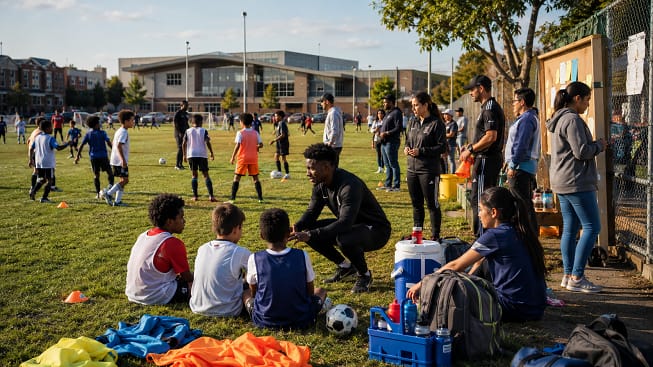
Garber has also acknowledged one of the sport’s hardest American problems: the cost and fragmentation of youth soccer.
That issue cuts directly against the “golden market” narrative. The United States can be a massive soccer market and still fail to develop enough players if participation remains expensive, travel-heavy, and unevenly distributed. Pay-to-play costs, field shortages, fragmented oversight, academy access, coaching gaps, and transportation barriers all limit the talent pool.
This is where MLS’s leadership responsibility expands beyond first teams. MLS NEXT, MLS NEXT Pro, club academies, community programming, and local partnerships all matter, but they must connect more deeply to public access. The league cannot simply rely on elite youth pathways if the base remains too narrow.
A true post-World Cup infrastructure strategy should include affordable local leagues, school partnerships, public-field investment, coach education, girls’ access, all-abilities programming, and stronger connections between MLS clubs and community soccer organizations.
If World Cup 2026 inspires more kids to play but local systems cannot welcome them, the country will waste part of the moment.
How Stadium Growth Must Serve Communities, Not Just Clubs
The next wave of MLS infrastructure is already visible. New York City FC has announced plans for its first match at Etihad Park in Queens in 2027, ending years of playing across baseball venues. D.C. United’s Audi Field is already part of a proposed major expansion conversation. MLS clubs are also continuing to develop training centers, academy facilities, and mixed-use stadium districts.
Those projects can help U.S. soccer grow, but they also raise public-value questions.
A soccer-specific stadium can transform a club. It can also change a neighborhood. That means cities should ask how projects support transit access, housing, public space, small businesses, youth programming, community fields, and year-round use.
The best soccer infrastructure does more than improve matchday revenue. It becomes a community sports asset. It gives young players a visible local pathway. It supports public events. It improves pedestrian activity. It strengthens regional identity.
That is why stadium leadership matters after the World Cup. MLS clubs must avoid the trap of building isolated sports real estate. The next generation of venues should be woven into cities, not walled off from them.
Why Local Club Identity Is The Real Conversion Tool
World Cup fans may arrive through national teams. MLS must keep them through local identity.
That is why the post-World Cup opportunity will not be equal across all markets. Some clubs have deep supporter cultures, strong stadium settings, visible youth systems, and clear civic identities. Others still need stronger local narratives.
A “golden market” is not one national market. It is dozens of local soccer markets. Seattle, Atlanta, Cincinnati, St. Louis, Los Angeles, Miami, Kansas City, Nashville, Austin, Philadelphia, Portland, New York, Dallas, and other MLS regions all have different fan cultures and infrastructure needs.
The leadership challenge is to make each club feel like more than a franchise in a league strategy. A club has to feel rooted. It needs neighborhood presence, supporter traditions, accessible games, local youth connections, and recognizable civic value.
The World Cup can introduce soccer to casual fans. Local clubs have to make those fans feel that the sport belongs where they live.
What U.S. Soccer Leadership Should Measure Next
If MLS and U.S. soccer leaders want to know whether the post-World Cup moment is working, they should measure more than attendance spikes.
They should track whether first-time attendees return. They should measure youth participation growth by income and geography. They should evaluate public-field access, coaching development, academy diversity, local TV and streaming reach, sponsor investment, women’s soccer crossover, supporter growth, and ticket affordability.
They should also measure whether cities are using soccer infrastructure as civic infrastructure. Are stadium districts walkable? Are training sites connected to local programs? Are clubs investing in community fields? Are transit agencies part of matchday planning? Are schools and parks departments included in youth strategies?
The next test is not whether soccer can produce one national surge. World Cup 2026 already answered that. The real test is whether the system can convert that surge into repeated participation, local identity, and better infrastructure.
Why Garber’s Legacy Depends On What Happens After The Spotlight
Garber’s MLS tenure has already reshaped American soccer. The league has expanded, stabilized, built stadiums, attracted global stars, deepened its ownership base, and survived periods when the sport was still treated as a niche bet in the United States.
But the World Cup creates a different kind of legacy test. It asks whether MLS can move from survival and growth into leadership.
The “golden market” moment is powerful because it shows that the old question — whether Americans care about soccer — is losing relevance. The better question is whether American soccer institutions can meet the demand they spent decades trying to create.
That means MLS has to think beyond the next campaign. It has to think about youth affordability, stadium integration, media access, player pathways, calendar alignment, public fields, coaching, fan culture, and local community value.
If the league succeeds, World Cup 2026 will not be remembered only as a tournament that filled U.S. stadiums. It will be remembered as the moment American soccer infrastructure matured.
If it fails, the sport may still be popular, but the system will have left growth on the table.
That is why Garber’s “golden market” moment is not a victory lap. It is the next leadership test.