Neyland Stadium tourism is a useful case study because it links three decisions that community sport planners often examine separately: stadium renovation, mixed-use development, and public access around major event days. In Knoxville, the University of Tennessee’s work around Neyland Stadium is not only a facilities project. It is also a test of whether a major college venue can support visitor spending, fan circulation, year-round use, and inclusive public space without pushing community needs to the side.
The available official record supports a cautious reading. UT’s stadium renovation budget was raised to $337 million in June 2023, with Phase I funding running through Fall 2026. The research record also says the stadium’s seating capacity is 101,915, making it the sixth-largest college football stadium in the United States after the renovation phase completed for the 2022 season. Those are large numbers, but size alone does not prove a tourism benefit. The harder question is whether the stadium district improves how people arrive, gather, move, and stay in Knoxville before and after events.
What Neyland Stadium Tourism Shows
Neyland Stadium Tourism Signals
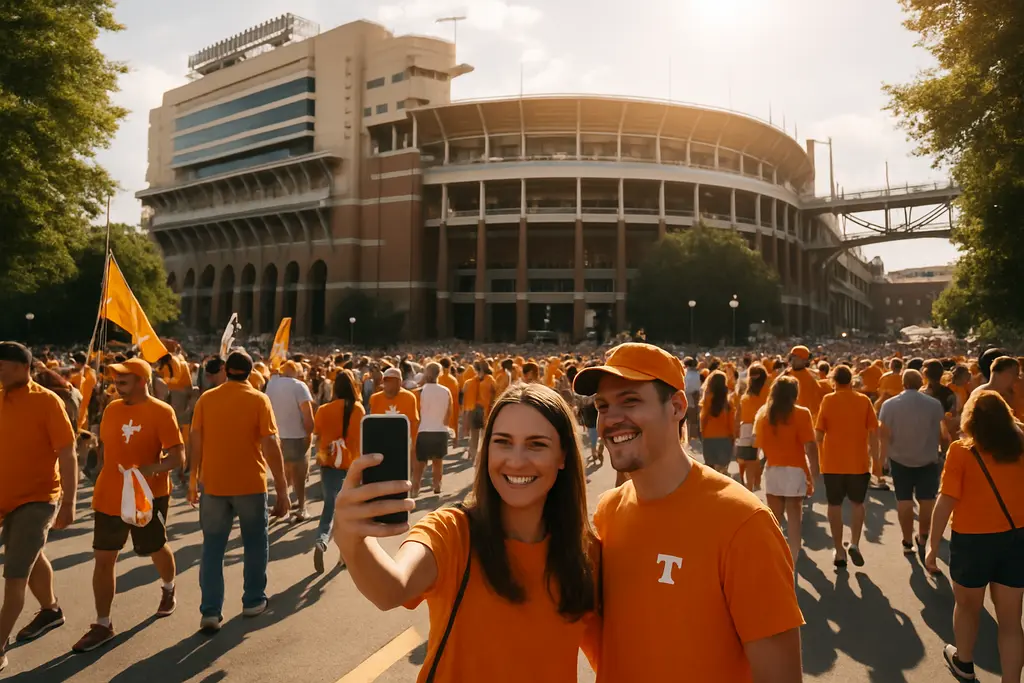
The first signal is scale. A 101,915-seat college football stadium can concentrate demand for parking, food, restrooms, hotel rooms, security, pedestrian routes, and accessible entry points within a narrow game-day window. That makes Neyland Stadium tourism different from ordinary campus visitation. The sport event is the anchor, but the visitor experience depends on infrastructure outside the seating bowl.
The second signal is sequencing. UT’s renovation work and the planned entertainment district are not the same project, but they are connected by visitor flow. The renovation phase expected to be substantially completed in Fall 2026 includes widening concourses, expanding gates and entryways, and adding restrooms and concessions on the south side and perimeter, according to the research notes. Those are not luxury details for many fans. They affect queue times, crowd comfort, older adult access, wheelchair movement, families with children, and spectators who need shorter routes to services.
From Event Venue To Visitor District
In May 2023, UT Athletics and Knoxville launched a public-private partnership process to explore a Neyland Entertainment District along the Tennessee River waterfront by the stadium. The district concept matters because sports tourism often leaks value when visitors arrive just before an event and leave immediately afterward. Dining, hospitality, retail, and public gathering spaces can extend dwell time. Yet those same elements can also narrow the audience if pricing, mobility, or design choices make the area feel closed to residents without premium tickets.
This is where community sport planning should be direct. A district next to a major stadium can serve tourists and residents, but only if non-event-day access is treated as a design requirement rather than a public relations point. Public seating, shaded pedestrian areas, clear links to adjacent venues, and accessible routes should be measured after opening, not assumed during planning.
Project Phasing And Public-Private Structure
What The Official Project Record Supports
The planned entertainment district is budgeted at about $280 million and is projected for completion by Fall 2028, with entertainment, dining, hospitality, retail, and public gathering spaces included in the scope listed by UT Facilities Services in its current projects record. That target date is still in the future as of August 25, 2026, so any claim about completed economic impact would be premature.
The University of Tennessee Master Plan approved by the Board of Trustees in February 2023 included the Neyland Entertainment District and identified three related parts: the entertainment district, the hospitality or “condotel” portion, and parking redevelopment, as shown in the UT Board materials for the May 4, 2026 meeting book. This separation is important for analysis. A public gathering district, a hotel-condominium project, and a garage replacement have different public benefits, risk profiles, and access questions.
Governance And Delivery Questions
On July 24, 2024, UT awarded the project to the 865 Neyland Project Team, identified in the research record as a consortium led by Dixon Greenwood, Hartland Hotel Group, Johnson Architecture, Jake Miller, and Taylor Gray. Key planned elements include a 175,000-square-foot entertainment district, a condotel with about 240 hotel rooms and 60 luxury condominiums, a full replacement of the G10 parking garage, and connectors to Neyland Stadium and Food City Center.
Those details point to a P3 model with several audiences: football fans, hotel guests, condo owners, basketball and arena-event patrons, students, local workers, and Knoxville residents. In April 2025, the Tennessee State Building Commission approved a Predevelopment Agreement for the public-private mixed-use hotel and entertainment district project, according to the research notes. For sports tourism, that agreement stage matters because it is where concept, public control, private delivery, and long-term operating expectations begin to take shape.
For related regional sports development coverage, readers can explore the insights available at Noticias BO.
Access Tests For Neyland Stadium Tourism
Practical Measures For Inclusive Planning
The strongest test for Neyland Stadium tourism is not whether the district looks active on football Saturdays. It is whether a wider range of people can use the area safely and predictably across event and non-event days. Community sport development should treat access as measurable infrastructure.
- Arrival options: Track whether visitors can reach the district by walking, accessible shuttle, rideshare, bike, transit, and parking without unclear transfers.
- Accessible paths: Audit routes between parking, Neyland Stadium, Food City Center, hotel areas, restrooms, elevators, and public gathering spaces.
- Queue pressure: Compare entry, concession, restroom, and exit conditions before and after concourse and gate improvements.
- Non-event use: Measure whether residents use public areas on days without football or arena events.
- Affordability signals: Review whether public gathering spaces remain usable without a purchase requirement.
These measures do not require speculative economic modeling. They require observation, user surveys, route audits, and transparent reporting. For families, disabled fans, older adults, and lower-income residents, access failures often appear as time costs: longer walks, unclear signage, inaccessible detours, or limited places to sit without paying for food or drink.
Parking Redevelopment And Pedestrian Flow
The full replacement of the G10 parking garage is one of the most consequential pieces of the district plan. Parking structures near stadiums are rarely just storage for vehicles. They shape pedestrian crossings, arrival peaks, postgame congestion, and the ability of disabled spectators to reach entrances without unsafe detours.
The planned connectors to Neyland Stadium and Food City Center may reduce friction between venues if they are clear, accessible, and managed during high-volume periods. If they are designed mainly for premium users or hotel guests, the public benefit will be weaker. That distinction should be documented through design review and post-opening evaluation.
Sports Tourism Risks And Measures

What Cannot Be Claimed Yet
The research notes supplied for this case study do not include official projected job totals, visitor spending estimates, tax revenue forecasts, or annual visitor-count targets for the district. That absence matters. It would be unsafe to claim a confirmed economic return without those figures. A careful analysis should say what is known: the stadium renovation budget, the planned district budget, the core components, the P3 milestones, and the projected Fall 2028 completion date for the entertainment district.
The 2024 sponsorship between Tennessee Athletics and Knoxville-based Pilot Corporation is also part of the venue story. The research record says the partnership preserves the Neyland Stadium name and includes experience upgrades such as new signage, restoration of “Home of the Vols,” and enhancements at Shields-Watkins Field. Sponsorship can support fan-facing improvements, but public value still needs a separate test: who benefits, who pays, who gets access, and what is measured after completion?
Sports-Business Benefits And Community Guardrails
For Knoxville, the potential sports-business benefit is clear in concept. A stadium district can keep more event-related spending near campus, create more reasons for overnight stays, and connect football, basketball, concerts, restaurants, hotels, and riverfront activity. That is the strongest argument for the P3 model.
The guardrails are just as clear. Luxury condominiums and hospitality space can raise the profile of a district while serving a narrower audience. Public gathering spaces can offset that risk if they are visible, open, accessible, and programmed beyond premium event windows. The most useful reporting after Fall 2028 would include public-space usage, accessible-route performance, parking and pedestrian safety data, and resident feedback from neighborhoods affected by event traffic.
Neyland Stadium Tourism Case Study
As of August 25, 2026, the case for Neyland Stadium tourism is promising but not proven. The stadium renovation is on a Fall 2026 timetable for substantial completion, while the adjacent entertainment district is projected for Fall 2028. The planning record shows a large venue, a major capital renovation, a $280 million mixed-use district concept, a hotel-condominium component, parking redevelopment, and formal P3 action.
For community sports leaders, the lesson is practical. A stadium district should not be evaluated only by ribbon-cuttings, renderings, seating capacity, or private investment. It should be evaluated by how well it moves people, welcomes non-premium users, supports disabled fans, gives residents usable public space, and reports outcomes after opening. If Knoxville’s project can do those things with clear data, it will offer a stronger model for college-town sports tourism than a district measured only by size and spending.