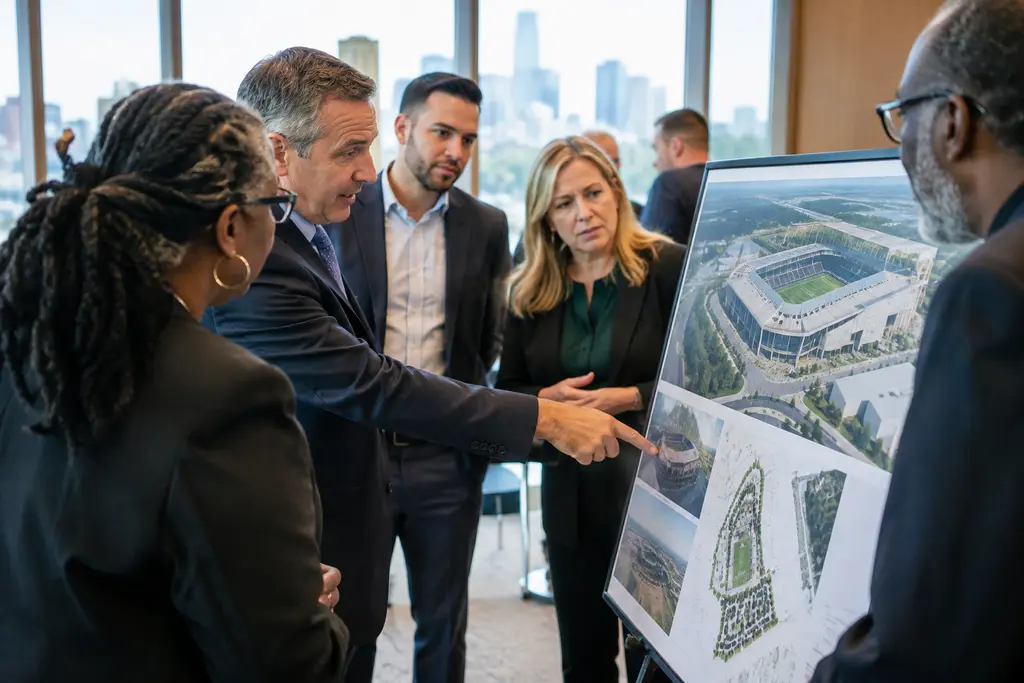
The Omaha Soccer Stadium moved from proposal to an approved public-private project on October 27, 2026, when the Omaha City Council approved the redevelopment agreement and stadium lease for Union Omaha’s downtown stadium and mixed-use district, according to Union Omaha’s approval notice. The decision matters beyond one professional soccer club. It sets up a practical test of whether a stadium district can expand sports tourism, create usable public space, and limit risk to existing taxpayers while serving residents north of Cuming Street and the downtown core.
The approved project is expected to total about $330 million, including the stadium and surrounding mixed-use development. The stadium is estimated at $140 million, will be owned by the City of Omaha, and is expected to be financed mainly through private investment, team lease payments, and revenues generated by the development. Those details make this less of a simple venue story and more of an infrastructure governance story: the benefits depend on how the district is built, scheduled, accessed, and measured after the ribbon-cutting.
Omaha Soccer Stadium Approval And Core Facts
Omaha Soccer Stadium Site, Cost, And Capacity
The stadium site is planned for 10th and Izard Streets, north of Cuming Street and just north of Charles Schwab Field. That location places the project near existing sports activity while also pushing development attention toward land described in the project materials as underused. The approved stadium plan includes about 6,500 fixed seats, with total capacity rising to roughly 8,500 when berms and standing-room areas are included. For concerts and similar events, the venue is expected to accommodate about 8,500 to 9,000 people.
The project timeline remains a key item to track. Groundbreaking was targeted for late fall 2026, and the stadium was planned to open in 2028. Because those are forward-looking dates as of November 2, 2026, community groups should treat them as planning assumptions rather than guaranteed delivery dates. Delays, cost revisions, and infrastructure coordination often shape stadium projects, even when the public approval stage is complete.
Public Ownership With Private And District Revenue
The financing structure deserves close reading. The City of Omaha is expected to own the stadium, while Union Omaha committed $23 million in private equity toward stadium construction and will make annual lease payments. The City will issue lease-purchase bonds. Public financing tools include Tax Increment Financing, an occupation tax in the district, and a state sales tax turnback incentive approved in May 2026. The turnback incentive allows 70% of new state sales tax generated near the stadium, up to $1.25 million per year for 20 years, to support the project.
That model aims to tie repayment to new activity generated around the district. The caution is that “new” revenue must be tested against substitution: spending that shifts from another Omaha district is not the same as spending imported from outside the city. A practical review should separate matchday spending by local residents, regional visitors, tournament travelers, concert attendees, and private development activity. Without that separation, the public will have a weaker basis for judging whether the district is expanding the tax base or rearranging existing entertainment spending.
Sports Tourism Upside And Limits
Event Volume Is The First Test
Sports tourism depends on dates, not renderings. KETV reported that the stadium district could support more than 100 other events annually and improve Omaha’s capacity to host youth tournaments, high school and collegiate championships, friendlies, and possibly international matches, according to KETV’s stadium report. That event pipeline is the strongest tourism argument for the Omaha Soccer Stadium, but it is not self-executing. Omaha will need bidding strategy, calendar coordination, hotel partnerships, and field-use policies that do not crowd out community events.
The tourism case is strongest when visitors stay overnight, eat locally, and add activity outside the stadium gates. Youth and school championships can create that pattern when they draw teams and families from outside the metro area. Concerts and friendlies may also help, though their visitor mix can vary widely. The city and team should publish annual event categories after opening: professional matches, youth events, school championships, nonprofit events, concerts, and other uses. That would turn a broad promise into a public performance record.
Mixed-Use Development Must Carry Its Share
The planned district covers about 25 acres and is expected to include housing, restaurants, retail, entertainment, and public spaces. This matters because stadiums create heavy peaks and quiet gaps. Mixed-use development can reduce those gaps if it supports daily activity, not only matchday spending. Housing can add consistent foot traffic. Restaurants and retail can serve workers, residents, and visitors. Public spaces can connect the project to nearby neighborhoods if they feel open and useful outside ticketed events.
For community sports planners, the lesson is straightforward: the stadium should be evaluated as part of a district system. A helpful comparison point is the site’s own infrastructure planning work on community sports venues, where capital projects are strongest when access, programming, maintenance, and public benefit are planned together. Technical readers comparing sports facilities with broader design and production systems may also find related built-environment coverage at CADCAMNET, a related site within the network offering more on infrastructure topics.
Community Development Safeguards
Access Should Be Defined Before Opening
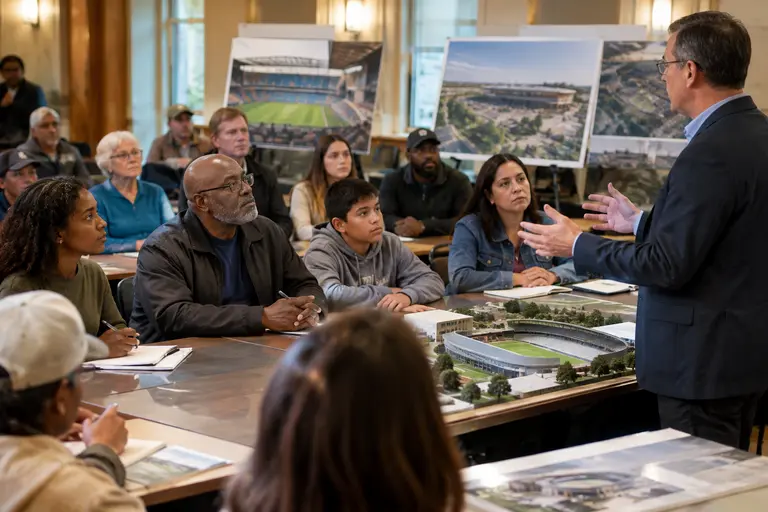
The stadium is intended to serve Union Omaha’s men’s USL League One team, a future women’s professional soccer team, a youth academy, concerts, nonprofit events, school championships, and other community activities. The women’s team was hoped to be added by 2030. Those uses create a wider public case than a single-team stadium, but only if access is written into operating practice.
Omaha should define community access in measurable terms. Examples include the number of nonprofit event days, school championship dates, youth academy participation targets, public plaza availability, and any reduced-cost rental windows for local groups. If the district is promoted as a public asset, the access plan should be specific enough for residents to check each year.
- Publish an annual event-use report by category, attendance, and visitor origin where available.
- Track stadium lease payments, district tax revenues, bond obligations, and public maintenance costs.
- Reserve visible calendar space for school, youth, nonprofit, and neighborhood uses.
- Report construction and operations benefits against the project’s stated economic output estimates.
Jobs And Output Need Post-Approval Verification
The approved materials anticipate about 200 construction jobs, about $27 million in direct construction spending, and $57 million in total local economic output during construction. Over 25 years, combining construction and operations, the project expects about $430 million in total local output. These are useful benchmarks, not final results. Public reporting should compare projected and actual outcomes after contracts are awarded and after the district opens.
For sustainability and advocacy groups, the key questions are practical. Were local firms able to compete for construction and service work? Did stadium operations create accessible jobs? Did housing and retail strengthen the urban core without reducing affordability for nearby residents? Did public spaces invite use by people who were not buying a ticket? The answers will determine whether the project functions as community development or mainly as event infrastructure.
Omaha Soccer Stadium Community Development Test
The Omaha Soccer Stadium has a clearer public case than many single-purpose venues because it combines public ownership, a professional soccer tenant, planned mixed-use development, and a wider event calendar. Still, approval is only the first checkpoint. The harder work begins with transparent finance reporting, practical access rules, event recruitment, and resident-facing measures of benefit.
The best outcome would be a district that does three things at once: gives Union Omaha a permanent home, adds credible sports tourism capacity, and creates public spaces that residents use on non-event days. The risk is a narrower result, where projected revenues and events are cited before opening but not measured with enough discipline after opening. Omaha can reduce that risk by publishing a short annual stadium district scorecard from 2028 forward, tied to finance, event use, community access, and local economic outcomes. That would give the public a fair way to judge whether the approved project delivered on its infrastructure promise.