
Houston’s World Cup story did not end at the gates of its stadium. It spilled into East Downtown streets, bars, restaurants, transit routes, fan zones, public-safety plans, and spontaneous supporter marches that turned the city into one of the clearest host-city leadership case studies of World Cup 2026.
At the center of that story is Chris Canetti, president of the Houston 2026 World Cup Host Committee. Canetti’s job was not only to help deliver seven World Cup matches. It was to help Houston turn a global tournament into a coordinated civic experience. The difference matters because a host city is not judged only by its field, seating bowl, or match schedule. It is judged by how thousands of fans move, gather, celebrate, spend money, and remember the city after the final whistle.
Houston’s fan walks became the clearest expression of that leadership model. The Netherlands’ Oranje fan walk reportedly attracted more than 25,000 people, helping inspire other supporter groups to create similar matchday moments. East Downtown, known locally as EaDo, also became a central World Cup gathering point, with peak Fan Fest attendance reaching 64,000 on Mexico match days.
That made Houston a useful example for aplevante.org’s Leadership category. The city’s success was not only about enthusiasm. It was about leadership that connected crowd movement, local businesses, temporary event infrastructure, global fan culture, and city identity. It also fits the broader lesson already visible in World Cup 2026 infrastructure planning: host cities win when they think beyond the stadium.
Why Chris Canetti’s Role Was Bigger Than Event Management
Chris Canetti entered World Cup 2026 with a background that made him unusually suited to the assignment. Before leading Houston’s World Cup work, he had years of experience in professional soccer operations, including his time with the Houston Dynamo. That background mattered because World Cup leadership requires both sports credibility and city-building instincts.

A tournament of this size is not managed through one department. It requires coordination among local government, FIFA, venue operators, law enforcement, transportation agencies, hospitality partners, sponsors, neighborhood businesses, volunteers, media, and fan groups. The public sees the match. The leadership challenge is everything surrounding it.
Houston’s planning timeline also shows the scale of the job. Canetti reflected that the city’s seven-match hosting run was the result of more than seven years of work. That timeline is important because the strongest host-city experiences do not appear in the final month. They are built through years of relationship management, permitting, testing, promotion, operational mapping, contingency planning, and public messaging.
The Houston World Cup Host Committee had to turn a massive global assignment into a local system. That meant treating the FIFA Fan Festival, the stadium, EaDo, transportation corridors, hotels, restaurants, and supporter traditions as connected parts of one event ecosystem.
That is where Canetti’s leadership model becomes instructive. He did not frame the fan walks as a side attraction. They became part of how Houston expressed its World Cup identity.
How Fan Walks Became Civic Infrastructure
A fan walk may look spontaneous on social media, but at World Cup scale it becomes civic infrastructure. Thousands of people moving through a city at once create questions about street closures, police presence, pedestrian safety, hydration, crowd density, business access, transit flow, emergency routes, and cleanup.
Houston’s Oranje fan walk showed how powerful that can be when it works. More than 25,000 Netherlands supporters and soccer fans moving together through the city created one of the tournament’s most memorable public scenes. It also showed that a host city can design space for celebration without forcing every fan experience inside a ticketed venue.
That is a leadership lesson. The best host cities do not simply manage crowds. They shape crowd energy into something safe, visible, and commercially useful.
The Houston example matters because U.S. sports venues often function as isolated event islands. Fans drive in, park, attend the game, and leave. The World Cup asks for something different. International fans expect plazas, marches, fan zones, chants, public gatherings, and citywide movement. The host city has to make that possible without losing control of the street.
Houston’s fan walks became a bridge between global soccer culture and American event operations. They allowed international supporters to bring their traditions into the city while giving Houston a chance to show organization, hospitality, and personality.
That combination is difficult. Too much control can make a fan walk feel sterile. Too little control can create safety and access problems. Houston’s success came from finding a middle space where fans could lead the atmosphere and the city could support the structure.
Why EaDo Became Houston’s Leadership Laboratory
East Downtown was the practical test of Houston’s host-city strategy. The official FIFA Fan Festival Houston ran from June 11 through July 19 and was free to the public on World Cup match days. FIFA’s own Houston page placed the festival at 2301 Dallas St, making EaDo the city’s central public gathering point for fans who did not have match tickets and for supporters looking to extend the day beyond the stadium.
That location mattered. EaDo already has a sports and entertainment identity because of its proximity to Shell Energy Stadium, downtown destinations, bars, restaurants, and walkable gathering areas. For World Cup purposes, it became a live test of how a city district can absorb global fan demand while still functioning for local businesses and residents.
The numbers show why this was not a minor activation. Houston’s Fan Fest reached peak attendance of 64,000 on Mexico match days, and Houston’s overall World Cup events drew hundreds of thousands of visitors. Spectrum News reported that, as of late June, Houston had welcomed more than 500,000 people attending World Cup events in the first two weeks, including about 231,000 people attending FIFA Fan Festival and related Major League Soccer celebration events.
Those figures point to the real leadership challenge. A Fan Festival is not just a screen and a stage. It becomes a temporary urban district. It needs shade, security, entrances, exits, medical support, food vendors, restrooms, communications, transit coordination, and heat planning. It also needs a personality that feels local rather than generic.
Houston leaned into that. The Fan Festival was presented as a local cultural experience, not only a tournament obligation. Food, music, public viewing, supporter movement, and neighborhood traffic all became parts of the same story.
How Local Businesses Became Part Of The Host-City Model
The strongest case for Houston’s fan-walk model is that it did not keep the World Cup contained inside official spaces. It pushed people into the surrounding city.
That is important because mega-events often make big promises about economic activity, but the benefits can stay concentrated around hotels, stadium owners, sponsors, and official vendors. Fan walks and district-based activations can distribute attention more naturally. Bars, restaurants, cafés, shops, parking operators, rideshare zones, and street vendors can all participate when fans move through a neighborhood rather than staying inside one controlled venue.
Houston Chronicle reporting noted that some East Downtown businesses saw major foot-traffic and revenue jumps during the tournament period, with some businesses seeing growth above 1,000%. That kind of figure should be read carefully because individual business spikes do not automatically mean every local operator benefits equally. Some businesses may gain, while others struggle with closures, access changes, or crowd-management disruptions.
Still, the broader lesson is clear. A host city’s leadership model should not measure success only by stadium attendance. It should ask whether the event helped nearby districts become part of the tournament.
Houston’s fan walks did that by making movement itself valuable. A supporter march turns the street into a stage. It creates media images. It attracts casual spectators. It gives businesses a predictable surge. It helps visitors remember the city beyond the match.
That is why Canetti’s approach matters for future U.S. host cities. The economic value of a World Cup is not only in the ticketed event. It is in the routes, plazas, districts, and small-business corridors that connect the match to the city.
Why Leadership Had To Balance Celebration And Control
Houston’s World Cup success also came with real operational pressure. Heat, traffic, public safety, weather, and crowd surges are not minor details in a summer tournament. They shape whether fan celebrations feel joyful or exhausting.
The Fan Festival model required daily decision-making. Houston had to manage entrances, closures, matchday schedules, weather interruptions, crowd density, and public messaging. The Houston Chronicle reported that the Fan Festival temporarily paused entry because of inclement weather before reopening the next day. That kind of situation shows why host-city leadership cannot be built only around celebration. It also has to handle interruption.
This is where Canetti’s role as a public-facing leader becomes important. Host committees need someone who can explain the plan, absorb criticism, communicate adjustments, and keep stakeholders aligned. That is especially true when international visitors, FIFA requirements, local residents, police, venue operators, business owners, and media all need different kinds of information.
The best host-city leadership does not promise a frictionless event. It prepares for friction and makes the response feel coordinated.
Houston’s experience with fan walks shows that public celebration depends on hidden discipline. Crowd routes must be understood. Police and volunteers need to know the expected movement. Businesses need to anticipate surges. Fans need clear gathering points. Transit and rideshare systems need to respond to changing pressure. Medical teams need to prepare for heat and crowd fatigue.
When those details work, the city looks effortless. When they fail, the event becomes a traffic or safety story. Houston largely stayed in the first category because planning turned fan energy into a manageable civic pattern.
What Other U.S. Host Cities Can Learn From Houston
Houston’s fan-walk model offers several leadership lessons for future mega-events, including the 2028 Los Angeles Olympics, future FIFA tournaments, Copa América events, Gold Cups, and large international club competitions.
The first lesson is that public fan culture needs a place to go. International soccer supporters will create atmosphere whether the host city plans for it or not. Smart leadership gives that atmosphere safe corridors, gathering points, and nearby services.
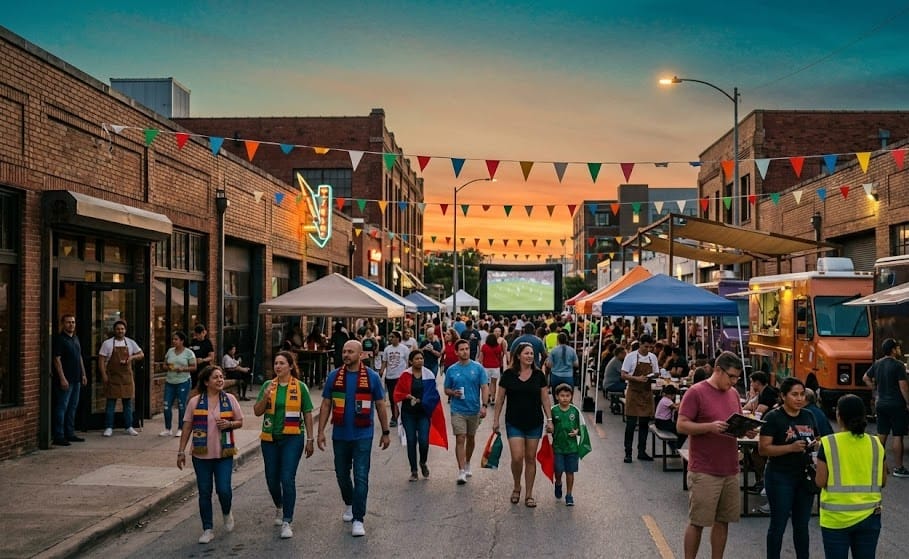
The second lesson is that districts matter as much as venues. EaDo gave Houston a public stage outside the stadium. Other cities should identify their own version of that space: a walkable district where fans can gather, spend money, access transit, and feel connected to the local culture.
The third lesson is that leadership has to make local businesses part of the plan early. If businesses learn about closures, fan walks, or activation zones too late, they may see the event as a disruption. If they are integrated early, they can staff properly, adjust hours, build menus, prepare inventory, and benefit from predictable crowd movement.
The fourth lesson is that the host committee leader needs credibility across sectors. Canetti’s soccer background helped him understand fan culture, but the role also required civic coordination. Future host-city leaders need both skill sets.
The final lesson is that legacy can be operational, not only physical. Houston may not build a new stadium because of the World Cup, but it can keep the playbook: fan-walk coordination, district activation, public viewing strategy, business engagement, and heat-aware crowd planning. That knowledge is infrastructure in its own right.
Why Houston’s Model Fits The Leadership Category
Leadership in sports infrastructure is often discussed through buildings, budgets, and executive titles. Houston’s World Cup example shows a different version. It shows leadership as the ability to turn people movement into civic value.
Canetti and the Houston host committee had to work within the shape of the tournament. They could not control which teams advanced, which fan bases traveled most visibly, or which matches produced the most emotion. What they could control was the city’s readiness to receive that energy.
That is the key leadership lesson. Houston did not just host fans. It gave fans a public operating system.
The fan walks were emotional, but they were also strategic. They created visibility. They helped animate EaDo. They connected international culture to Houston streets. They supported local business activity. They gave media outlets memorable images. They made the city feel like a participant in the tournament rather than only a venue provider.
That kind of leadership is especially important in the United States, where global soccer events are still teaching many cities how different international fan behavior can be from traditional American sports crowds. Tailgating, parking-lot culture, and arena entertainment do not fully explain World Cup culture. Fan walks, chants, public plazas, flags, and collective movement do.
Houston understood that distinction and benefited from it.
Why The Legacy Is Bigger Than One Tournament
The World Cup will leave Houston, but the host-city leadership model can remain.
The city now has proof that East Downtown can function as a large-scale international fan district. It has tested fan-walk routes, public viewing behavior, crowd surges, weather interruptions, security coordination, and business impact under global attention. That knowledge can support future soccer events, national-team matches, international friendlies, CONCACAF competitions, concerts, festivals, and civic celebrations.
More importantly, Houston has shown that leadership is not only about delivering the minimum requirement. FIFA needed matches played and fans served. Houston went further by helping fan culture become a central part of the city’s World Cup identity.
That is why Chris Canetti’s fan-walk model deserves attention beyond Houston. It gives other U.S. cities a practical blueprint: build the stadium operation, but also build the street operation. Support the match, but also support the march. Plan the Fan Festival, but also plan the neighborhood around it.
In World Cup terms, Houston’s leadership lesson is simple. The best host cities do not wait for atmosphere to happen inside the venue. They lead by making the whole city ready for it.