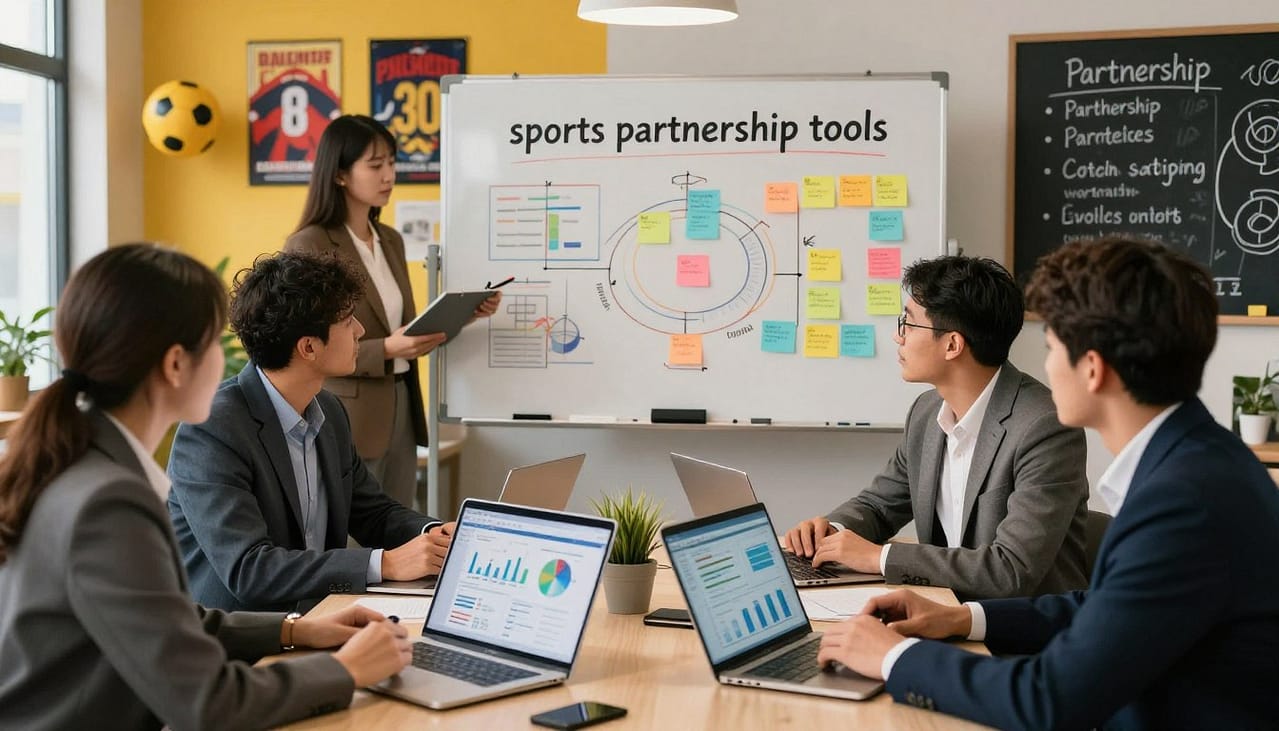
“Teamwork makes the dream work” sounds good on posters but is tough in sports advocacy. The right tools can make a big difference. They can turn a small idea into something big.
Many advocates feel weak when they ask for help. But, asking for help is smart. It shows you’re ready to make a real impact.
We’ll look at tools like the Special Olympics Sport Partnership Toolkit and the Aspen Institute’s School Sports Equity Toolkit. These tools help make some partnerships work while others fail. We’ll learn how to create strong alliances that really make a difference.
It’s time to stop thinking about solo heroes in sports advocacy. We need to build strong coalitions that can make a real change.
Types of Partnerships That Work
In sports advocacy, partnerships vary, each with its own benefits and challenges. Knowing these types can make a big difference. Let’s explore the categories that matter.
Formal vs. Informal Agreements: Knowing the Difference
First, we have formal versus informal agreements. Formal partnerships are like business suits — they have rules and signatures. These include written agreements like Memorandums of Understanding (MOUs).
Informal agreements are more casual, like jeans on a Friday. They are verbal or unwritten. While flexible, they lack the structure of formal agreements. So, when do you choose one over the other?
When a Handshake Suffices — and When It Doesn’t
In some cases, a handshake is enough, like in community settings. But in serious partnerships, a formal agreement is key to avoid confusion. It’s all about choosing the right agreement for the situation.
Sport Federation and Governing Body Partnerships
Now, let’s look at partnerships with sport federations and governing bodies. These alliances offer access to resources and expertise. They help set rules and organize competitions.
But, these partnerships need careful handling. You want to use their resources without losing your independence. It’s a delicate balance.
Leveraging Institutional Resources Without Losing Autonomy
To benefit from these partnerships, focus on clear communication and shared goals. Make sure your organization keeps its identity while getting support. The goal is to set boundaries that protect your mission.
Community-Based and Grassroots Alliances
Lastly, we have community-based and grassroots alliances. These partnerships come from local leaders and youth movements. Stories like Noor Abukaram and Ashley Badis show how students can fight for fair sports access.
These efforts highlight the power of local champions. They challenge the status quo and create change. Their innovative approaches can guide effective collaborations.
The Power of Local Champions and Youth-Led Movements
By engaging with youth-led movements, organizations can create strong partnerships. These partnerships challenge inequality. The key is to find the right structure for each relationship.
Drafting MOUs and Agreements
Drafting a Memorandum of Understanding (MOU) is key to a successful partnership. It turns good intentions into real actions. Let’s explore what makes a good MOU.
Anatomy of an Effective Memorandum of Understanding
A good MOU is the heart of any partnership. It outlines goals, responsibilities, and terms. Here’s what to focus on:
Goals, Responsibilities, and the Art of Specificity
Begin by clearly stating your goals and your partner’s. What do you aim to achieve together? What will each side contribute? Specificity is key to avoid confusion. Instead of saying, “We will work together,” say, “We will have monthly meetings to check on our projects.”
Proclamations and Letters of Intent
Now, let’s look at proclamations and letters of intent. These documents might seem simple, but they’re powerful. They show real commitment and can open doors.
Symbolic Gestures That Carry Real Weight
Proclamations can make your partnership more visible and respected. They act as a call to action, reminding everyone of your commitment. Think of them as your partnership’s mission statement.
Avoiding Common Drafting Pitfalls
Now, let’s talk about common mistakes in MOUs. Using vague language can let partners off the hook. Missing metrics can also be a problem. Without clear goals, how will you know if you’re succeeding?
Vague Language, Missing Metrics, and Other Silent Killers
Make sure your MOU has measurable goals and renewal clauses. These are not just formalities; they keep everyone accountable. The Special Olympics toolkit stresses the importance of clarity and documentation. You can’t fix what you don’t acknowledge.
In summary, use sports partnership tools and existing templates when drafting your MOU. Be clear and direct. This will help build a strong partnership that lasts.

Finding and Approaching Partners
Before you start looking for partners, it’s key to know what you need and what you offer. Many groups send out emails without a clear plan, leading to a lot of unanswered messages. Start by doing a needs analysis. This helps you figure out what you really need, like coach training or sports equipment.
It’s also important to think about what you can offer in return. Saying you just want exposure isn’t enough. What else can you offer? A SWOT analysis can help you see your strengths and weaknesses, and what opportunities and threats are out there.
Conducting a Needs Analysis Before You Knock
The SWOT Analysis and Knowing What You Actually Bring to the Table
With a SWOT analysis, you can understand your organization’s strengths and weaknesses. This helps you prepare for partnerships and explain your value clearly. A well-prepared partner is more likely to see the benefits of working together.
Vetting Partner Without Burning Bridges
Once you know what you need and what you offer, it’s time to check out possible partners. The toolkit’s questionnaire is great for this. It helps you see if a partner really fits with your mission or just wants to look good.
Alignment Checks, Red Flags, and Strategic Fit
When looking at partners, check if they match your mission and values. Look out for any red flags that might mean they’re not a good fit. Asking the right questions can help avoid problems later.
Crafting the Perfect Outreach Pitch
After you’ve done your research, it’s time to write your outreach pitch. Make sure your emails and proposals show you’ve thought about the partner’s goals. Highlight how working together can benefit both sides.
Emails, Proposals, and the Lost Art of Mutual Benefit
In your outreach, talk about how your partnership can help the partner achieve their goals. Make it so appealing that they can’t say no. The goal is to create a partnership that benefits both sides.
| Step | Description | Tools |
|---|---|---|
| 1 | Conduct Needs Analysis | Needs Analysis Workbook |
| 2 | Perform SWOT Analysis | SWOT Analysis Template |
| 3 | Vetting Partners | Checklist Questionnaire |
| 4 | Craft Outreach Pitch | Email Templates |

Resource Sharing Systems
Partnerships can be exciting, but managing them can be tough. That’s where resource sharing systems help. They make sure your collaboration runs smoothly. So, how do we keep our communication on track?
Building Communication Rhythms That Actually Stick
First, we need structure. Good partnerships need clear communication. It’s not just about sending emails; it’s about setting a rhythm. Try meeting regularly, like monthly or quarterly.
Make sure everyone knows what to expect. Use a shared workspace for documents. This keeps things organized and avoids lost emails.
Meeting Cadences, Shared Workspaces, and the Death of Endless Email Threads
Meetings are key to your partnership’s success. Regular meetings keep everyone on the same page. A clear agenda helps keep discussions focused.
A shared workspace is where the magic happens. It keeps information in one place, making it easy to collaborate and track progress.
Tracking Progress Without Micromanaging
Tracking progress is important, but don’t micromanage. Use metrics and dashboards to stay informed. They help you see how you’re doing without constant supervision.
Metrics, Dashboards, and Evaluation Frameworks
When evaluating, you want data that tells a story. Look at outcomes, not just inputs. A good evaluation framework turns achievements into compelling stories.
Renewal, Evolution, and Knowing When to Walk Away
As your partnership grows, check your goals. Is it delivering value? Renewal is key. Ask tough questions and be ready to change or end the partnership if needed.
The Strategic Action Plan as a Living Document
Your strategic plan should grow with your partnership. It should have clear goals and a way to track progress. This lets you adjust your approach based on data.
In summary, the best sports partnership tools include systems for sharing resources. They help with communication, tracking, and renewal. For more tips, check out this resource.
Sample Templates
Creating partnerships is not just about goodwill; it’s about structure. The right tools & templates can take your collaboration to new heights. Think of templates as your trusty GPS. They guide you through the complex landscape of agreements while letting you focus on the destination: success.
Memorandum of Understanding Template
Ready to formalize commitments? A well-crafted Memorandum of Understanding (MOU) template provides plug-and-play language for your goals, responsibilities, and timelines. It’s like a cheat sheet for legalese, ensuring everyone knows their role without the headache of drafting from scratch.
Partnership Proposal and Pitch Deck Template
Need to impress? The partnership proposal template helps you present your case with clarity and style. It structures your ideas, making your pitch stand out in a sea of generic requests. No one wants to be just another email in an executive’s inbox.
Announcement and Communication Templates
Once you secure a partnership, how do you spread the word? Use announcement templates for press releases, social media toolkits, and stakeholder letters. Consistent messaging ensures your collaboration is recognized and celebrated across all platforms.
Evaluation and Case Study Templates
Documenting your impact is key. Evaluation templates allow you to capture not just what happened, but how it happened. This knowledge transfer can inspire others and attract funding for future projects. The legacy of your work deserves to be showcased.
For more resources, explore the partnership tools & templates available online. These templates are designed to streamline your efforts and enhance collaboration.