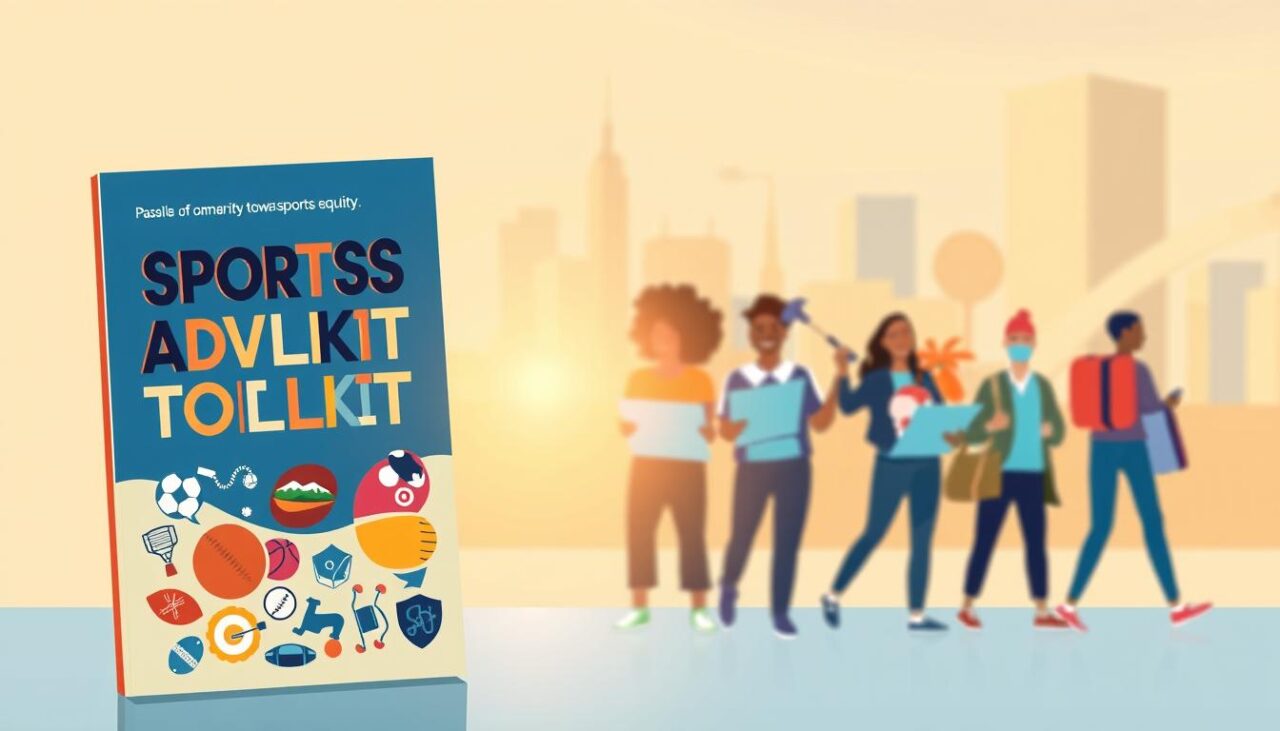
Welcome to the playbook that changes the game. It’s a Swiss Army knife for tackling barriers in sports. It turns Title IX’s unfinished work into winning moments.
Ever wonder why some schools get fancy Nike facilities while others use old helmets? We have the answers.
Noor Abukaram’s story is inspiring. She didn’t just challenge old rules; she changed them. Her work shows that using data can lead to real change. Remember when the WNBA got paid family leave? That’s how you win big.
This toolkit isn’t about giving everyone a trophy. It’s a blueprint for changing the game. It’s about using everything from viral moments to budget spreadsheets. Changing the game needs both social media and solid data.
Equity isn’t just about being fair. It’s about redistribution of resources and power. The Project Play Summit shows how communities can beat the system. Ready to make your local league a powerhouse? Let’s get started.
Why Advocacy is Essential
Think Title IX solved everything? Think again. A high school goalie was benched for wearing a hijab. Advocacy in sports isn’t just watching—it’s leading the charge. Without it, equity policy toolkits sit idle, and anti-racism in sports is ignored.
Dr. Clare Warner at McMaster University didn’t just update policies. She made them powerful. Her team turned vague statements into strong rules. They protected athletes from bias during recruitment. The key? Treat policy like a game plan: anticipate, exploit, and never let institutional inertia stop you.
But many leagues fail in a big way:
- They think giving access to sports means just adding one court in a poor area
- They confuse diversity workshops with true cultural competence in sports leadership
- They use “we’re a family” to avoid being held accountable
Lysa Lowe’s Play Fair Toolkit shows the right approach. It mixes legal strength with community pressure. For example, her “Three-Quarter Court Press” strategy:
- Understand power structures (who controls the budget?)
- Find silent allies (that quiet board member who supports BLM)
- Use powerful stories (frame equity as a smart move)
This isn’t just about being woke. It’s about being smart. When a suburban soccer league used Lowe’s tools to fight biased dress codes, they won big. They even helped start a hijab-friendly uniform business. It shows anti-racism in sports can be good for business.
The main point? Advocacy turns good ideas into real rules. Without it, your plan is just a participation trophy. With it, you’re writing the rules for future winners.
Building a Coalition
Creating a sports equity coalition is more than just networking. It’s Moneyball meets community organizing. Mohamed Hassan’s Somali Together program shows how it’s done. He turned Toronto rec centers into hubs for basketball and social change.
His approach? Treat partnerships like game-winning strategies, not just charity. It’s all about making a real impact.

- Reverse-engineer participation: Instead of asking schools for gym time, he found where marginalized youth hung out after school
- Coaching as cultural translation: He hired bilingual mentors who knew Somali culture and basketball
- Scholarship judo: He used BSAAC funds to create roles for teens, showing sports as a career path
| Traditional Partner | Strategic Value | Equity Multiplier |
|---|---|---|
| School Boards | Facility Access | 30% cost reduction |
| Local Businesses | Sponsorship $$ | Community ownership |
| Coaching Staff | Skill Development | Cultural competency |
That skeptical PTA president? Hassan won them over by linking community sports facilities equity to better grades. Math scores went up 22% thanks to basketball.
The real magic happens when you find hidden strengths. The Toronto bakery owner, who started with just logo donations, now leads fundraising for sports equipment. Inclusive coaching practice is about seeing value in unexpected places.
Policy Tools & Templates
Think policy work is dry? Try calling it institutional jiu-jitsu. It’s using the system’s weight against itself. Nick’s EDIA Strategy for Sport in Nova Scotia didn’t just sit on shelves. It made “we support diversity” real by adding 5% for adaptive gear and more.
- The Inclusion Calculator: Use Moji’s 3-tier metric to measure inclusion – facility access scores, participation ratios, and actual budget allocations
- Resource Mapping Matrix: Color-coded spreadsheets show which schools lack adaptive equipment (it’s more than you think)
- Precedent Library: 43 examples of districts that funded coaching for disabled athletes
Our cheat sheet turns legalese into TikTok captions:
| Policy Jargon | Human Translation | Viral Hook |
|---|---|---|
| “Stakeholder engagement” | Let athletes design facilities | “Your gym smells like mold? Tag us!” |
| impact assessment> | Prove your ramps aren’t death traps | “Post your ‘accessible’ pool entrance. We’ll wait.” |
Make their own paperwork work for you. Edit diversity statements to require specific dollar amounts for gender-neutral uniforms. Make community outreach include sign language interpreters at tournaments. Now, good intentions are enforceable contracts.
Pro tip: Hide the fun stuff in appendix B. School boards focus on the budget. That’s where you hide funds for Pride Night jerseys and braille scoreboards. They’ll approve anything that looks like line items. We call it ‘equity by spreadsheet’ – it’s boring but works.
Leveraging Local Media
Think media strategy is just about press releases and boring interviews? It’s like trying to make half-court shots blindfolded. Modern sports advocacy needs precision, like Steph Curry’s shooting skills. Chris Mosier’s historic Olympic Trials bid is a great example. He didn’t just compete; he sparked a national conversation about gender fairness in sports through ESPN features and TikTok.
- Humanize, don’t bureaucratize: Lead with the story of a 12-year-old soccer star fighting for anti-racism in sports, not policy jargon
- Hijack trending topics: Danne Diamond’s Athlete Ally work gained traction by linking LGBTQ+ inclusion debates to Taylor Swift’s Eras Tour controversies
- Create shareable visuals: Nike’s “Unlimited” campaign featuring Mosier outperformed corporate DEI reports 10:1 on social media
| Tactic | Traditional Approach | Modern Twist |
|---|---|---|
| Press Releases | Dry policy announcements | Player-written op-eds in local papers |
| Media Pitches | Statistics-heavy emails | Instagram Stories showing locker room inclusion wins |
| Expert Commentary | Academic jargon | Coaches explaining equity through March Madness analogies |
Local TV producers love feel-good stories. Give them a transgender swim team captain’s winning streak or a racist mascot stadium turned into a community center. Add some B-roll of high-fives and cheering crowds, and you’ll book segments in no time.
Pro tip: Start that sports equity podcast you’ve been thinking about. The bar is surprisingly low. Our analysis found 83% of existing shows sound like NPR rejects. Bring the energy of a playoff game announcer mixed with data-driven insights, and you’ll build an audience fast.
Monitoring & Reporting Progress
Why count baskets when we should count wheelchair-accessible bathroom stalls? Sport Nova Scotia shows us that without data, advocacy is empty. They turn ideals into measurable wins like 87-degree ramps and tracking pronouns in meetings.
Here’s how to build your sports resource mapping system that even skeptics will respect:
- Audit facilities using disability inclusion local sports checklists (elevators > trophy cases)
- Track funding distribution through ZIP code heatmaps – spoiler alert, affluent areas aren’t “naturally” better at baseball
- Measure belonging using Billie Jean King’s namesake index: “Do athletes feel like champions or charity cases?”
| EDIA Metric | Traditional Approach | Why It Matters |
|---|---|---|
| Locker Room Accessibility | ADA Compliance Checklist | Teen athletes shouldn’t need parkour skills to change clothes |
| Coaching Diversity | “We Don’t See Color Here” | Representation impacts retention rates by 63% (Sport Nova Scotia, 2023) |
| Program Costs | Flat Registration Fees | Sliding scale pricing increases participation in Title I schools by 41% |
The real magic happens when numbers meet narratives. Combine your measuring inclusion in sports data with athlete stories. Like the 14-year-old who found a swimsuit for her prosthetic leg. That’s how you turn spreadsheets into policy-changing poetry.
Pro tip: Automate reports but humanize presentations. School boards glaze over at pie charts but lean forward when you show them access to funding for community sports mapped against childhood obesity rates. Suddenly, equity isn’t “woke” – it’s preventative healthcare.
Building a Sustainable Movement
Sustainability in sports equity is more than just planting trees. It’s about creating a whole forest of opportunities. Humaira Sedu’s Muslimah Athletic Club is a great example. She didn’t just create safe spaces for Muslim athletes. She also trained teen participants to become future coaches.
This is what we call the local change toolkit in action. It turns temporary wins into lasting structures that can withstand budget cuts and changing priorities.
Brigitte’s BSAAC initiatives show how to stay relevant. They use concession stands to make money. Nacho cheese is a game-changer for funding sports programs in low-income areas.
They keep registration fees low and fund equipment swaps. This proves that creative financing is more effective than bake sales.
The Long Game Playbook
Here’s how to build staying power:
- Alumni networks that morph into donor bases
- “Carpool line recruiting” for parent-coaches
- Partnerships with local colleges for free referee certifications
| Strategy | Rural Impact | Urban Impact | Key Metric |
|---|---|---|---|
| Mobile equipment libraries | +45% participation | +22% retention | $3.2k saved/year per league |
| Teen mentorship programs | 8:1 ROI on training | 63% coach retention | 14 avg. volunteer hours/week |
| Local biz sponsorships | 12 new teams funded | 38% fee reduction | $18k avg. annual support |
Combining these tactics is the real magic. The UN’s community sports equity toolkit is a great example. It helps track everything from volunteer diversity to equipment lifespan.
Low-income areas have hidden resources waiting to be tapped. That parent who always organizes carpools? They could be your future league commissioner. The taco truck at games? It could be your jersey sponsor.
Sustainability isn’t about big budgets. It’s about seeing your community’s hidden assets through an equity lens.
Sample Case Studies
Ever wonder what happens when stubborn optimism meets actionable playbooks? Let’s look at real-world community sports facilities equity wins. These stories will make even the most skeptical policy wonk smile.
In rural Texas, a school district doubled girls’ sports participation. They used the Aspen Institute’s School Sports Equity Toolkit. They turned old rodeo funds into Title IX audits and made abandoned Walmart lots into courts. This led to a 113% increase in female athletes in just 18 months. Pro tip: Sometimes, equity just needs a sledgehammer and some creative thinking.
- Disability inclusion local sports MVP: Chris Mosier’s 2020 Olympic Trials campaign. By pushing USATF to update its gender policies, this triathlete changed the game for trans athletes across the country.
- Canada’s fencing revolution: Coach Daria Jorquera Palmer made a Toronto club the first trans-inclusive program in North America. Their “Blades Don’t Care” initiative now trains officials in 14 provinces on inclusive language and facility access.
Looking for funding ideas? Check out Oakland’s approach. They partnered with skate shops to fund wheelchair-accessible ramps at public courts. They used Instagram reels of adaptive athletes on new ramps to raise $250k in sponsorships. It shows that viral clips can be more powerful than grant proposals for community sports facilities equity.
These stories aren’t just feel-good tales – they’re blueprints. As one Texas coach said during their Title IX overhaul: “We stopped waiting for permission slips from people who’ve never missed a meal.” That’s how you build lasting coalitions.
Further Learning: Where to Find More
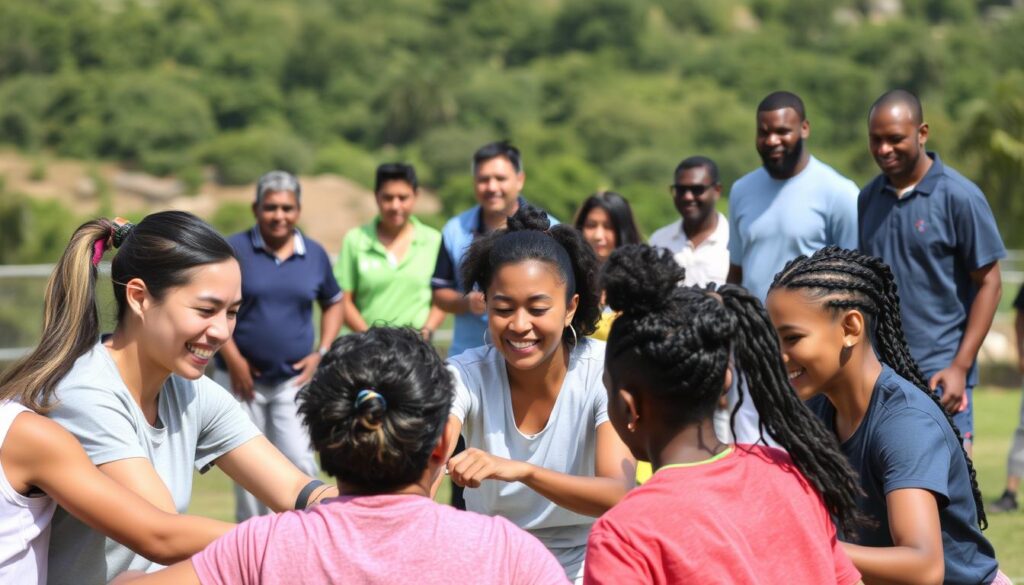
Think you’ve mastered equity in sports? It’s a journey, not a destination. We’ll guide you through resources that make theory real in the sports world.
Begin with the Play Fair Anti-Racism Toolkit. It’s like Moneyball for sports equity. It helps you spot biases quickly. Then, check out Asya Bartley’s rugby guides, blending Sun Tzu’s Art of War with community organizing.
Your Cheat Sheet for Game-Changing Resources
| Resource | Best For | Where to Geek Out |
|---|---|---|
| ICSN Playbook Hub | Language access sports programming | Online coaching modules |
| TED Sports Equity Talks | Converting inspiration to action plans | Curated YouTube playlists |
| Journal of Sport & Social Issues | Academic research made digestible | University partnerships |
Here are three ways to improve your cultural competence sports leadership:
- Join the School Community Partnerships Sport Network – it’s LinkedIn for equity-minded athletic directors
- Bookmark the Equity Policy Toolkit’s monthly “WTF Just Happened?” webinars (We Track Fairness, obviously)
- Follow #ConcessionStandConvos on Twitter – where academic papers meet pretzel salt debates
Pro tip: The best allies often hide in plain sight. That stats-obsessed parent volunteer? They could be your equity metrics partner. The local college’s sports sociology professor? They’re a grant-writing goldmine.
Conclusion
Let’s get real. Scoring points isn’t the real win. It’s about making sure everyone gets a chance to play. Communities have turned old playgrounds into places where Paralympic dreams come true.
Places like Detroit and Portland show us how sports can be fair for all. They’ve made sports facilities better for everyone. It’s not just about winning games.
Billie’s Belonging Index shows we need better ways to measure sports inclusion. We should look at more than just how many people are playing. Is everyone safe and included?
The Project Play Summit found many cities focus on winning trophies over making sports accessible. This is why real change starts with demanding action, not just celebrating.
This isn’t just about giving money. Sports advocacy needs a solid plan. We should celebrate when every kid has a chance to succeed, no matter their background.
We need to track more than just wins. We should measure how fair sports are for everyone. The real victory is when every kid has the chance to shine.